






Last updated: September 21, 2026
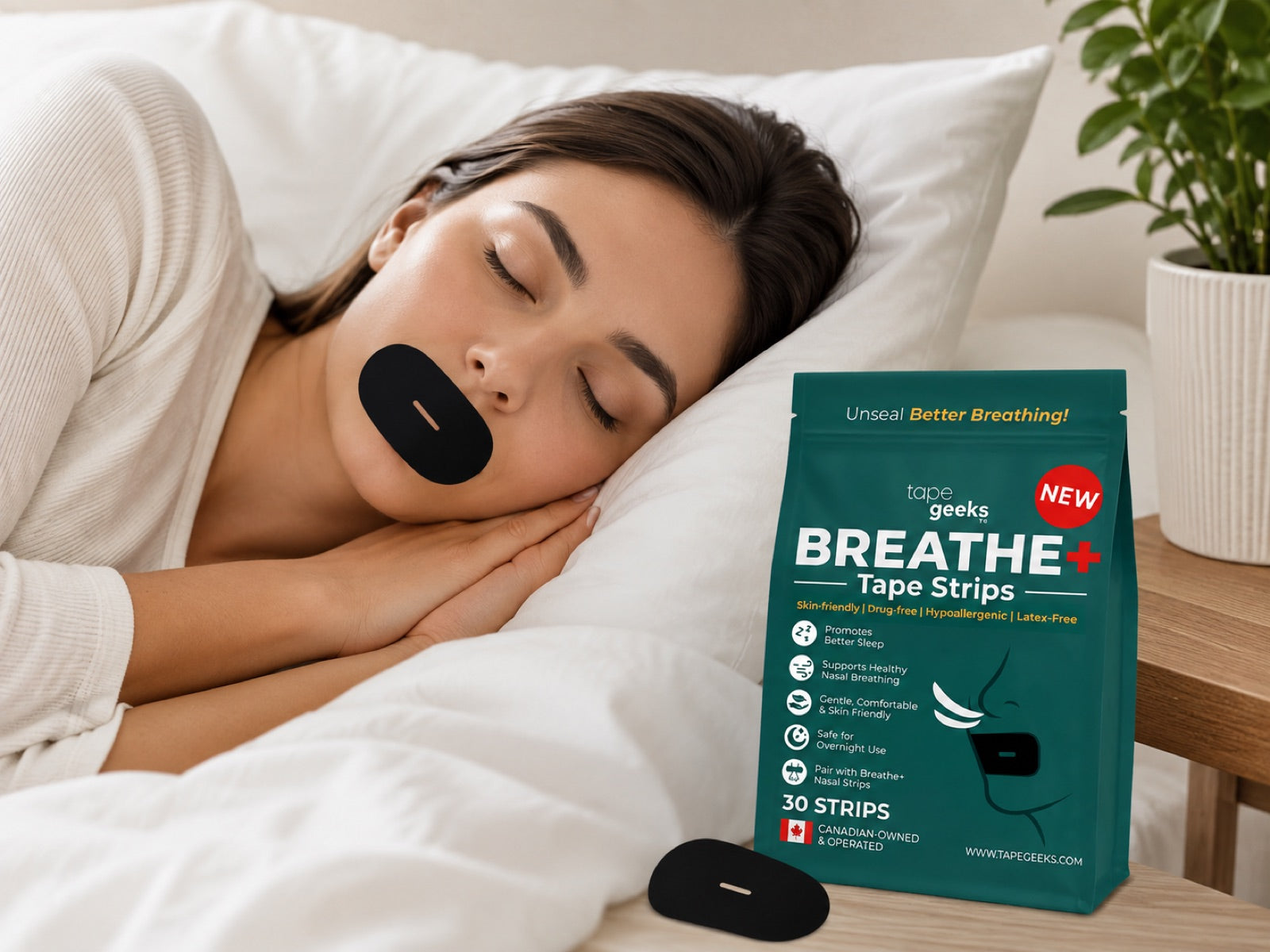
Quick answer: The best mouth tape for sleeping is a medical-grade, hypoallergenic, latex-free strip with a central breathing vent, which keeps a backup airway open if your nose blocks overnight. Vented options include SomniFix and TapeGeeks Breathe+. Skip mouth tape entirely if you have untreated sleep apnea, nasal congestion, or a deviated septum. Never use household tape.
What's in this guide
- Does mouth tape actually work?
- Does mouth tape help snoring?
- Why nasal breathing is worth the trouble
- Who should never use mouth tape
- Side effects and what to watch for
- How to choose mouth tape
- Mouth tape brands compared by design
- How to try it safely for the first week
- What to try instead of mouth tape
- Mouth tape vs nasal strips
- The bottom line
- FAQ
Does mouth tape actually work?
Mouth tape works for a narrow group of people, and the honest summary is that the evidence is real but small. If you are a healthy adult who breathes through your mouth at night and snores mildly, there is published data suggesting it helps. If you are hoping it will fix sleep apnea, reshape your jawline, or replace your CPAP, the research does not support you.
We go through every study, plus what doctors and dentists say, in our mouth taping evidence review.
The most-cited study is a 2022 preliminary trial published in Healthcare. Researchers enrolled 20 mouth-breathers with mild obstructive sleep apnea and sealed their mouths with 3M silicone hypoallergenic tape during a home sleep test. Thirteen of the 20 patients (65%) responded well. Median apnea-hypopnea index fell from 8.3 to 4.7 events per hour, and the median snoring index fell from 303.8 to 121.1 events per hour, both reductions of roughly 47% (Lee et al., 2022, Healthcare).
Twenty patients is a small sample, and everyone in it had already shown they could tolerate a sealed mouth. Read this as a promising signal in a selected group, not as proof it will work for you.
Two systematic reviews have since tried to make sense of the wider literature, and both landed in roughly the same place. A 2025 scoping review in the American Journal of Otolaryngology screened 177 studies and found only nine that qualified. Two showed significant improvements in sleep apnea metrics, one found better snoring, and a study of mouth taping in asthma found no benefit at all. The authors concluded the literature is "markedly heterogeneous" with "little consensus" (Fangmeyer et al., 2025).
The second review is blunter, and it is the one that should shape how you use mouth tape. Published in PLOS ONE in May 2025, it pooled 10 studies covering 213 patients. Two showed real improvement in apnea-hypopnea index or oxygen desaturation. Others showed no difference, and several raised the risk of asphyxiation in people with nasal obstruction. The authors' conclusion: there is "a potentially serious risk of harm for individuals indiscriminately practicing this trend" (Rhee et al., 2025, PLOS ONE).
That word indiscriminately is doing the work. Most of the studies showing benefit specifically excluded people with nasal obstruction. The tape was tested on people who could definitely breathe through their nose. If you cannot, none of the good results apply to you.
Does mouth tape help snoring?
Mouth tape reduces snoring for some people, and the effect measured so far is real but comes from small studies. In the Lee 2022 trial, the median snoring index fell from 303.8 to 121.1 events per hour, a 47% reduction, in mouth-breathers with mild sleep apnea. That is the strongest snoring number in the literature, and it comes from 20 people.
The mechanism is simple enough. When your jaw drops open at night, the tongue tends to fall backwards toward the airway, and the soft tissue at the back of the throat vibrates more. Keeping the lips together discourages that. It does nothing for snoring that comes from nasal obstruction, a deviated septum, or the airway collapse that defines sleep apnea, which is why taping over heavy snoring without a diagnosis is the wrong move. If snoring is your main complaint, our guide to what actually stops snoring covers the full range of options.
Why nasal breathing is worth the trouble
Nasal breathing does several things mouth breathing does not, and this is the actual case for mouth tape. Your nose filters particles, warms and humidifies incoming air, and adds resistance that slows your breathing down. Mouth breathing skips all of it, which is why habitual mouth breathers wake with a dry mouth, a sore throat, and morning breath that brushing does not fix.
There is also a nitric oxide story, and it is worth getting right because most articles overstate it. Nitric oxide is produced in the paranasal sinuses, which act as a reservoir holding concentrations orders of magnitude higher than those measured in the lower airway, and it is "physiologically important in airway regulation and defense" (Spector et al., 2023, Current Opinion in Allergy and Clinical Immunology). Breathing through your nose carries that nitric oxide into your lungs. Breathing through your mouth does not.
What that does not establish is the claim you will see repeated across mouth tape marketing: that nasal nitric oxide meaningfully lowers your blood pressure, regulates your blood sugar, or reshapes your jaw. Those leaps are not supported by the airway literature. We sell mouth tape and we are still telling you the jawline claim is marketing. If you want the underlying habit addressed rather than taped over, start with how to stop mouth breathing at night.
Who should never use mouth tape
Some people should not tape their mouth at night under any circumstances, and this list matters more than any product recommendation on this page. Sealing your mouth removes your backup airway. If your nose fails during the night and the tape holds, you have a problem.
This is the single most useful thing on this page. The reviews that found harm were describing people who skipped exactly this step.
Mouth tape is for adults only. Children who breathe through their mouth need assessment, not tape, and the adhesive-free route is the right one for them — see kids nasal strips for better sleep.
If you snore heavily, gasp, or wake unrefreshed despite enough hours in bed, get assessed for sleep apnea before you tape anything. Taping over undiagnosed apnea does not treat it. It hides the symptom your partner would otherwise have noticed.
Side effects and what to watch for
The common side effects of mouth tape are minor and mostly about skin, but there is one serious risk and it deserves naming plainly. Expect some or none of the following in the first week:
- Skin irritation or redness around the lips, usually from removing the tape too fast or too dry. Dampen the edge with warm water and peel slowly, downward.
- Adhesive residue, more common with stronger tapes and with facial hair.
- Chapped lips, particularly in winter or with a solid strip. A plain balm under the tape usually settles it.
- Anxiety or claustrophobia. Some people simply hate the sensation. That is a reason to stop, not a problem to push through.
- Disturbed sleep in week one as you adjust, which is why the practice-awake step below matters.
The serious risk is different in kind. If your nose blocks during the night and the tape holds, you have removed your backup airway. That is the harm the 2025 PLOS ONE review was describing when it flagged asphyxiation risk in the presence of nasal obstruction. It is also the entire argument for using a vented tape and for re-testing your nose every single night rather than once.
Stop and speak to a clinician if you wake gasping or short of breath, get morning headaches, develop skin reactions that do not settle within a few days, or your partner notices you stop breathing during sleep.
How to choose mouth tape: the four things that matter
Choosing mouth tape comes down to four decisions, and only one of them is about brand. Most buying guides rank products. We would rather teach you the criteria, because product lineups change faster than any article gets updated.
1. Vented or solid
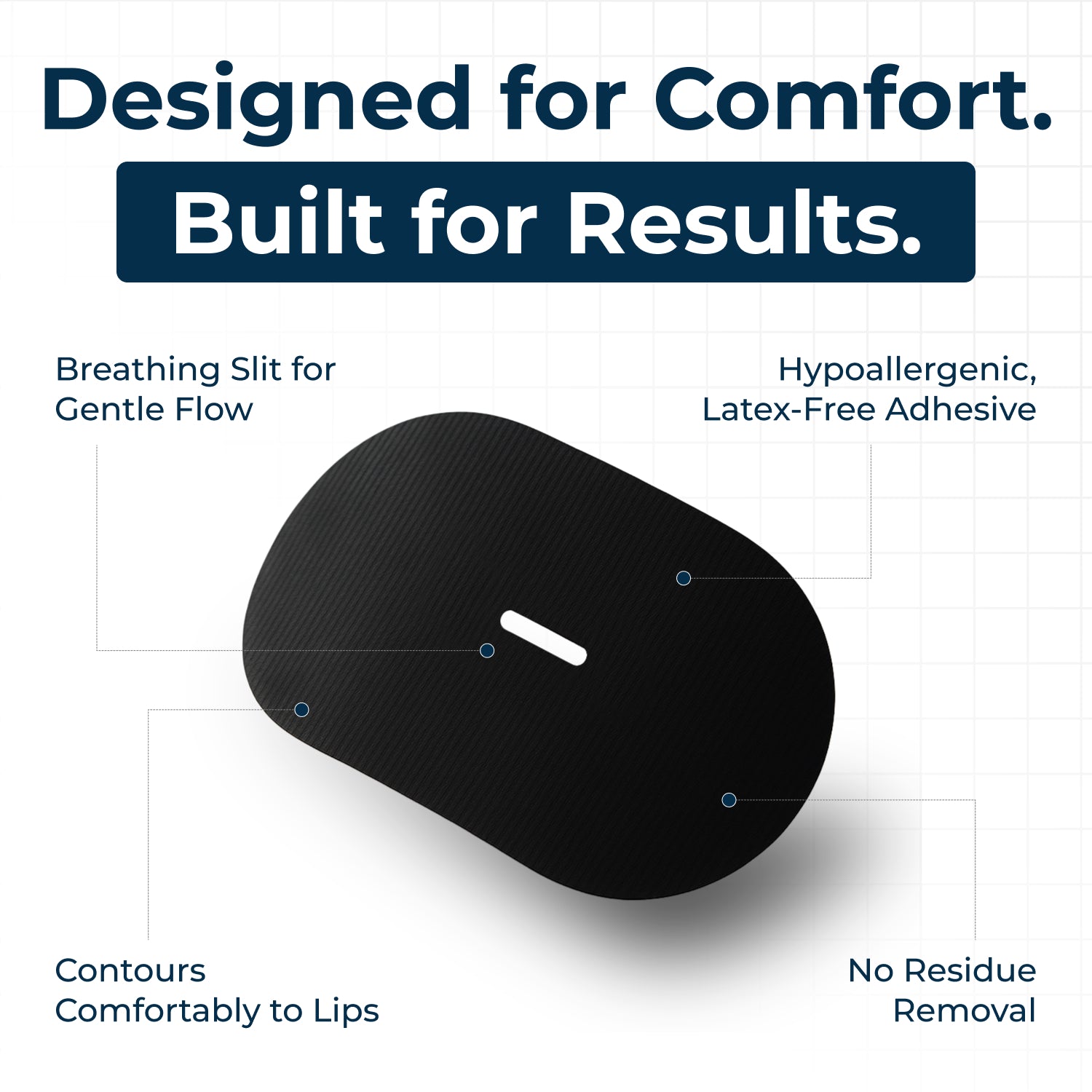
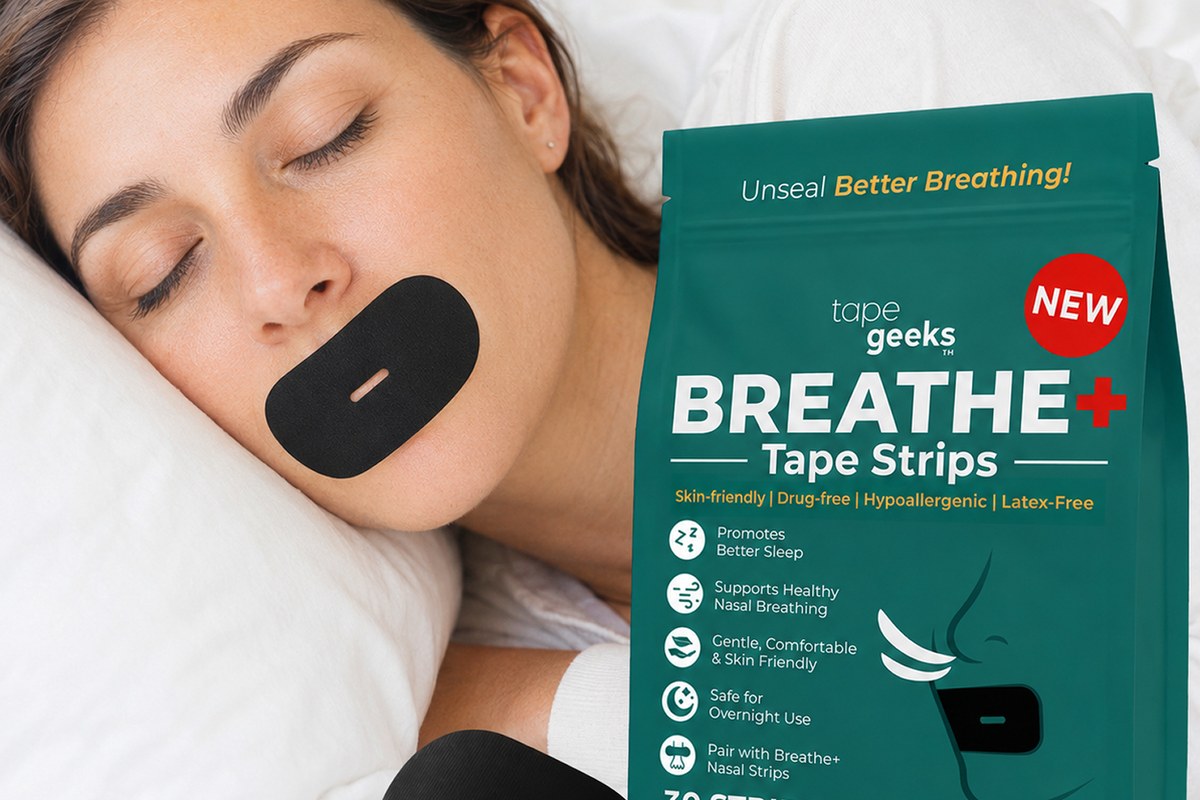
A vented strip has a small opening or mesh panel in the middle, giving you a backup airflow path if your nose blocks while you sleep. A solid strip seals the lips completely. For a first-time user, vented is the safer default, and it is the design we build TapeGeeks Breathe+ around. Solid strips create a firmer seal, which some experienced users prefer, but they leave you no margin if congestion arrives at 3am.
2. Adhesive and skin
You are putting this on your face every night, so look for medical-grade, hypoallergenic and latex-free on the label. Rayon and cotton backings tend to breathe better than plastic films. If you have reacted to bandages or kinesiology tape before, test a strip on your inner forearm for a night before it goes near your mouth.
3. Shape and coverage
Designs fall into three families. Full-coverage strips sit across the lips. X-shaped or butterfly strips anchor at the corners and flex when you talk. Lip-surround products such as MyoTape ring the mouth without covering the lips at all, encouraging closure rather than sealing it, which is a genuinely different mechanism and a gentler entry point.
4. Removal
The best mouth tape comes off in one motion without taking skin or stubble with it. If you have facial hair, this is the criterion that will decide whether you keep using it. Hostage Tape markets specifically to beards for this reason. Whatever you buy, peel slowly and downward, and dampen the edge with warm water if it grips.
Mouth tape brands compared by design
We are comparing mouth tape brands by design rather than by price, on purpose. When we checked current US pricing across these brands, pack counts and subscription terms were inconsistent enough that any per-strip figure we published would have been wrong within weeks. Design is the thing that actually determines whether a tape suits you, and it does not change.
Shopping in Canada? Our guide to the best mouth tape in Canada covers the brands you can actually buy here.
How we put this comparison together
We did not run a blinded lab test, and we are not going to pretend otherwise. This comparison is built from each manufacturer's own published product information as of August 2026, cross-checked against independent comparison guides, plus our own experience making and selling mouth tape. Where a brand did not clearly state a specification, we left the cell out rather than filling it with a guess. Two examples: Hostage Tape is not listed as vented because it markets breathable mesh rather than a central cutout, and Mintier's vent status is stated neither way because we could not confirm it. We are also a brand in this table, so weigh our pick accordingly and read the safety sections above first.
| Brand | Design | Best for |
|---|---|---|
| TapeGeeks Breathe+ | Central breathing vent, hypoallergenic, latex-free | First-timers who want a backup airway; families buying adult and kids products together |
| SomniFix | Central vent with mesh opening | Users who want a vent and a lip-shaped strip |
| Hostage Tape | Breathable mesh, no central cutout; beard-oriented | Heavy stubble and full beards |
| MyoTape | Surrounds the mouth, lips left uncovered | Nervous first-timers; anyone who dislikes a sealed feeling |
| Dream Recovery | Solid strip, bamboo silk backing | Experienced users wanting a firm seal |
| Mintier | Rayon fabric, latex-free, hypoallergenic | Users prioritising a fabric feel |
| 3M Nexcare / surgical tape | Cut-to-size roll, no vent | A budget compromise — you cut every strip yourself and there is no vent |
Design details reflect each brand's own published product information as of August 2026. Where a manufacturer did not clearly state a specification, we left it out rather than guessing. Always check the current packaging.
If you want the vented option
TapeGeeks Breathe+ is a hypoallergenic, latex-free mouth tape with a central breathing vent, so you keep a backup airway if your nose blocks overnight. It is the design we recommend for anyone taping for the first time.
How to try mouth tape safely for the first week
Practise awake
Wear the tape for 20 minutes in the evening while reading. If you feel any air hunger, stop there.
Run the nose test
Five minutes of nose-only breathing, sitting upright, before every single night you tape.
Start vented
Use a vented strip for the first two weeks so you always have a backup airway.
Track one thing
Morning dry mouth is the easiest signal. If it improves within a week, the tape is doing something.
Stop immediately and speak to a clinician if you wake gasping, get headaches, notice skin irritation that does not settle, or your partner reports pauses in your breathing.
What to try instead of mouth tape
If mouth tape is not right for you, several alternatives address the same problem from a different angle, and some of them treat causes rather than symptoms. Work down this list roughly in order.
Fix the nose
Saline rinses, treating allergies, and clearing congestion. If your nose does not work, nothing else on this list will.
Nasal strips or dilators
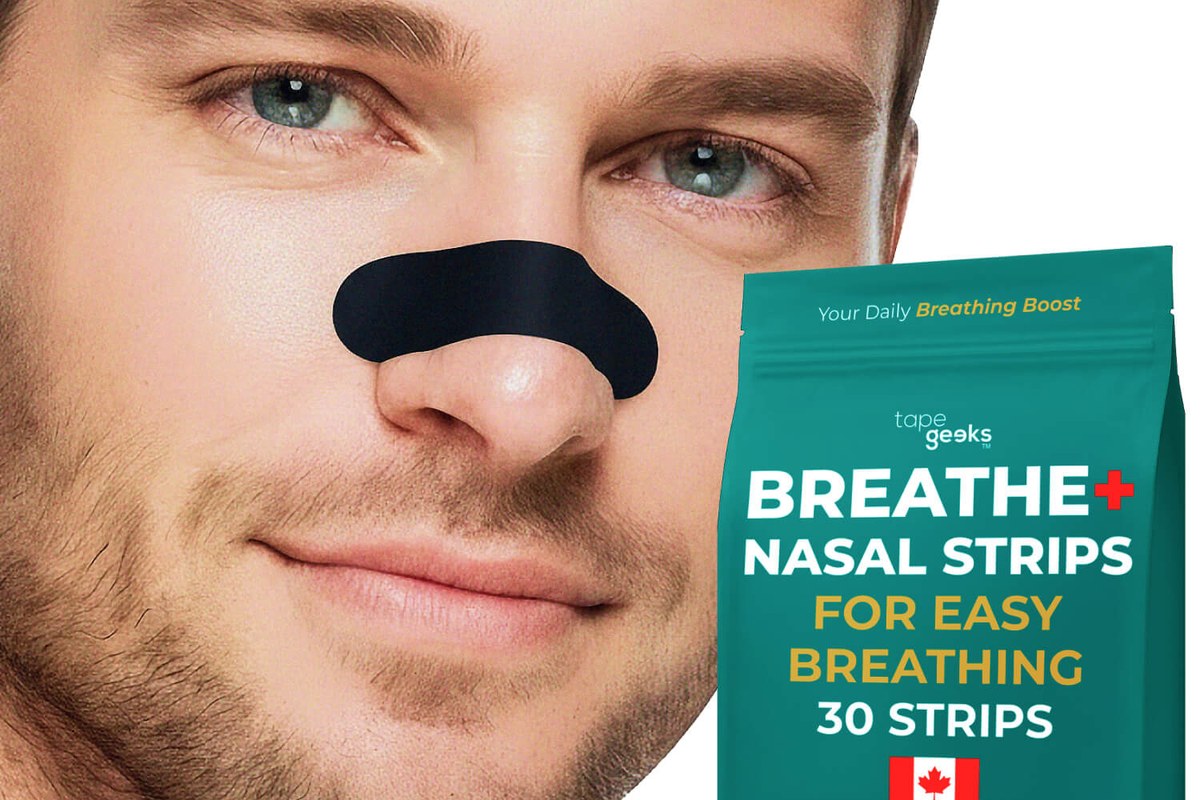
Mechanically widen the nasal valve from outside. No adhesive across the lips and no airway trade-off.
Side sleeping
Positional change alone reduces snoring for many people, and costs nothing.
See a clinician
Oral appliances, CPAP, or surgery where there is a structural cause or diagnosed apnea.
A nasal steroid spray or allergy management can change nasal airflow more than any tape will, and a sleep study is the only thing that will tell you whether you are dealing with apnea. If you want to compare the adhesive-free route first, read whether nasal strips actually work and our adult nasal strips buying guide.
Mouth tape vs nasal strips: which should you buy?
Mouth tape and nasal strips solve opposite halves of the same problem, which is why plenty of people end up using both. Nasal strips open the outside of the nose mechanically, widening the nasal valve so more air gets in. Mouth tape encourages your lips to stay closed so that air actually goes through the nose you just opened.
If your nose feels blocked, start with nasal strips alone. If your nose is clear but you still wake with a bone-dry mouth, mouth tape is the more direct fix. If both are true, using them together is reasonable, and it is the combination the TapeGeeks Breathe+ range is designed around. We walk through that stack in using mouth tape and nasal strips together, and compare the two head to head in nasal strips vs mouth tape.
Shop TapeGeeks Breathe+ Mouth Tape
Full disclosure: TapeGeeks makes mouth tape, so we have a stake in this. That is exactly why the safety section above is longer than the product table, and why we have been specific about who should not tape at all — including plenty of people who would otherwise be customers.
The bottom line
The best mouth tape for sleeping is a vented, medical-grade, hypoallergenic strip, and it is worth trying only if you are a healthy adult who can already breathe comfortably through your nose. In that group, the published data points to meaningfully less snoring and a less parched mouth in the morning. Outside it, the same practice carries a genuine risk that two 2025 reviews were explicit about.
We will be straight about the ceiling here. The entire positive evidence base is a handful of small studies. The two systematic reviews that went looking found only nine and ten qualifying studies respectively, together covering 213 patients, and both concluded there is not enough good research to be confident. Anyone selling you certainty about mouth tape, including anyone selling you tape, is going beyond what the science currently supports.