







Written by: Professor Geek (The Geek Educator)
Edited by: Greg Kowalczyk, CEO & Co-Founder, TapeGeeks Inc.
Do Nasal Strips Work? What the Science Says About Nasal Dilator Strips
Quick Answer
Yes, nasal strips work — they physically widen the nasal passages by lifting the sides of the nose outward, which measurably reduces nasal airflow resistance. Clinical studies show they improve airflow by 25–31% and reduce snoring in mild cases. They don't fix structural issues like a deviated septum, but for congestion, mouth breathing, and exercise performance, the evidence is solid.
Nasal strips get dismissed as a gimmick by people who've never used them seriously. That's a mistake. There's real peer-reviewed research behind how these work, and the results are more impressive than their simple design suggests.
This guide covers the science, what nasal strips actually do in your airways, when they work (and when they don't), and how to get the most out of them.
How Nasal Strips Work: The Mechanics
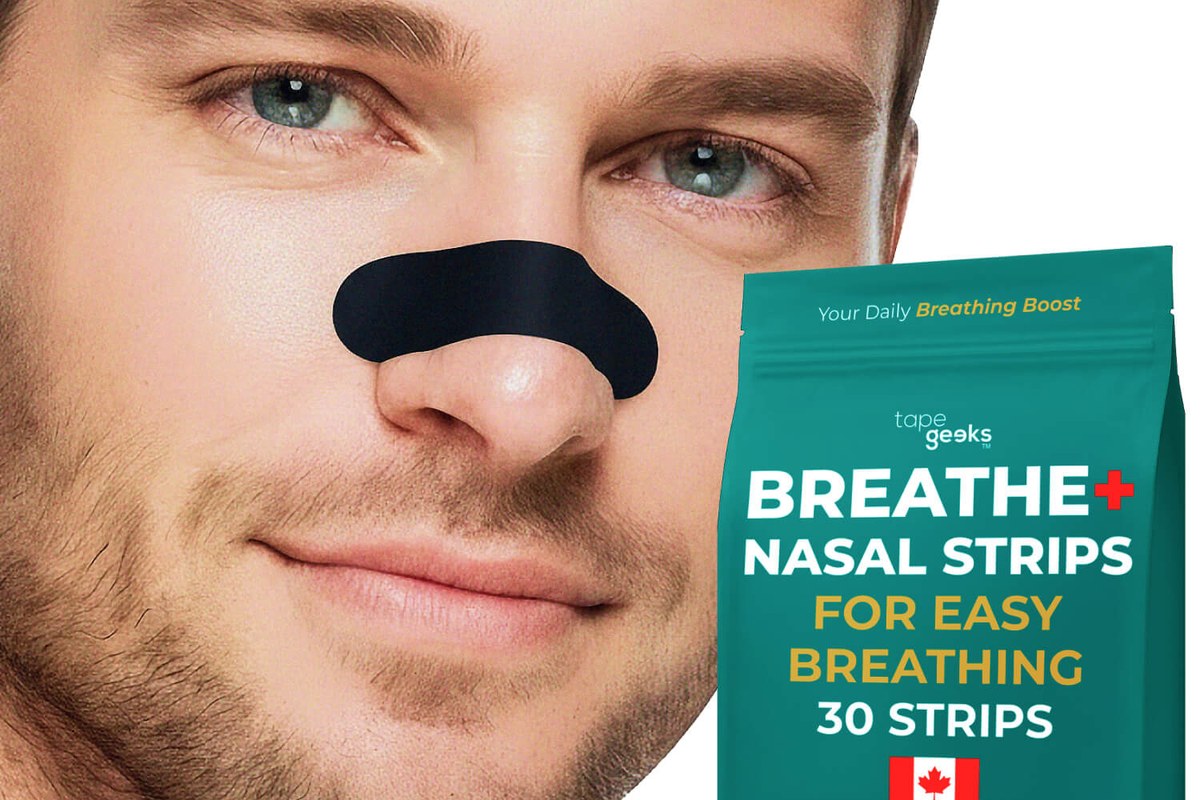
A nasal strip is a spring-loaded adhesive bandage with a stiffener embedded in it. When applied across the bridge of the nose, the stiffener tries to spring back to its flat shape — and in doing so, it lifts the lateral (side) walls of the nasal passages outward.
This is called external nasal dilation. It's the opposite of what happens when you have a cold — instead of the nasal walls collapsing inward under congestion, the strip holds them open.
The key zone it targets is the internal nasal valve — the narrowest part of the nasal airway, typically 1.2–2.5cm inside the nostrils. Even a small increase in the cross-sectional area here creates a significant reduction in airflow resistance (resistance drops with the fourth power of the radius, per Poiseuille's Law — double the diameter and resistance drops 16x).
💡 Pro Tip: The internal nasal valve contributes up to 50% of total upper airway resistance during nasal breathing. Opening it even slightly has an outsized effect on how easily air flows.
😴 Free Download: The Better Sleep Guide
Better Sleep Through Better Breathing — the Canadian family’s guide to deeper, drug-free sleep.
Get the Free Guide →What the Research Actually Shows
The clinical evidence on nasal strips is better than most people assume. Here are the key findings:
| Study Metric | Finding |
|---|---|
| Nasal airflow resistance | Reduced 25–31% with external nasal dilator strips (Roithmann et al., 1997) |
| Snoring frequency | Reduced significantly in simple snorers; less effect in obstructive sleep apnea (Pevernagie et al., 2000) |
| Perceived breathing effort | Significantly lower in exercising subjects using nasal strips vs control (Gehring et al., 2000) |
| Mouth breathing during sleep | Reduced in subjects with nasal valve compromise (Gosepath et al., 1999) |
| VO2 and athletic performance | No significant change in VO2 max, but perceived effort and nasal breathing volume improved |
The consistent finding: nasal strips improve airflow mechanics and reduce the effort required to breathe through your nose. They don't increase lung capacity or cure sleep apnea, but for the purpose of easier nasal breathing, they deliver.
When Nasal Strips Work Best
For Sleep and Snoring
This is the most common use case. Nasal strips help with snoring caused by nasal congestion or partial nasal obstruction. The mechanism: when you breathe through your nose more easily, you're less likely to fall into open-mouth breathing, which is what produces most snoring vibration.
Important caveat: nasal strips don't treat obstructive sleep apnea (OSA). OSA is caused by throat tissue collapse, not nasal restriction. If you've been diagnosed with OSA or suspect it, a nasal strip is not a treatment — see a sleep specialist.
For Exercise and Running
During exercise, nasal breathing becomes harder because you need more air volume faster. Nasal strips help athletes maintain nasal breathing longer before switching to mouth breathing, which matters because:
- Nasal breathing filters, humidifies, and warms air before it reaches the lungs
- Nose breathing produces nitric oxide, which improves oxygen uptake in the lungs
- Maintaining nasal breathing keeps jaw tension lower and supports better form
At maximum effort, most athletes will breathe through their mouths regardless. But at moderate intensity — 60–75% of max heart rate — nasal strips can extend the window of comfortable nasal breathing.
For Congestion and Seasonal Allergies
During a cold or allergy season, inflamed nasal passages make breathing feel labored. A nasal strip can't reduce inflammation (that requires a decongestant or antihistamine), but it physically props the nasal walls open against the swelling, giving you more usable airway despite the congestion.
For kids especially, where medications are often not ideal, nasal strips offer a drug-free option for nighttime breathing comfort. The TapeGeeks Breathe+ Kids range is specifically sized and designed for children's smaller nasal anatomy.
When Nasal Strips Don't Work
Nasal strips have limits. They won't help if:
- You have a severely deviated septum — this is a structural blockage that strips can't overcome
- Your snoring is caused by throat tissue — strips open the nose; they don't affect the throat
- You have obstructive sleep apnea — a different mechanism entirely; requires medical treatment
- Severe nasal polyps are present — these are tissue growths that physically block the airway
- You have complete nasal blockage — strips help with partial restriction; total blockage requires medical treatment
⚠️ Important: If you snore loudly and wake feeling unrefreshed even after 7–8 hours of sleep, talk to your doctor about a sleep study before relying on nasal strips. These symptoms suggest sleep apnea, not simple snoring.
How to Get the Most Out of Nasal Strips
Proper placement matters. A strip applied wrong barely touches the nasal valve area and gives weak results.
- Clean and dry the skin — no moisturizer, no sunscreen, no sweat. Adhesion drops dramatically on oily skin.
- Find the right position — center the strip across the widest part of your nose, roughly halfway between the tip and the bridge
- Press firmly from the center outward — 15–20 seconds of firm pressure activates the adhesive fully
- You should feel a gentle outward pull — if you don't feel any lift, the strip isn't positioned low enough
- For exercise use — apply 5 minutes before activity, not during warm-up when sweating begins
Nasal Strips vs Mouth Tape vs Nasal Dilators
These three products are often confused. They target the same goal — better nasal breathing — but work differently:
| Product | Mechanism | Best For | Invasiveness |
|---|---|---|---|
| Nasal strips (external) | Lifts nose sides outward | Congestion, exercise, mild snoring | Non-invasive |
| Internal nasal dilators | Inserted into nostrils to prop open | Higher-resistance noses, sports | Slightly invasive |
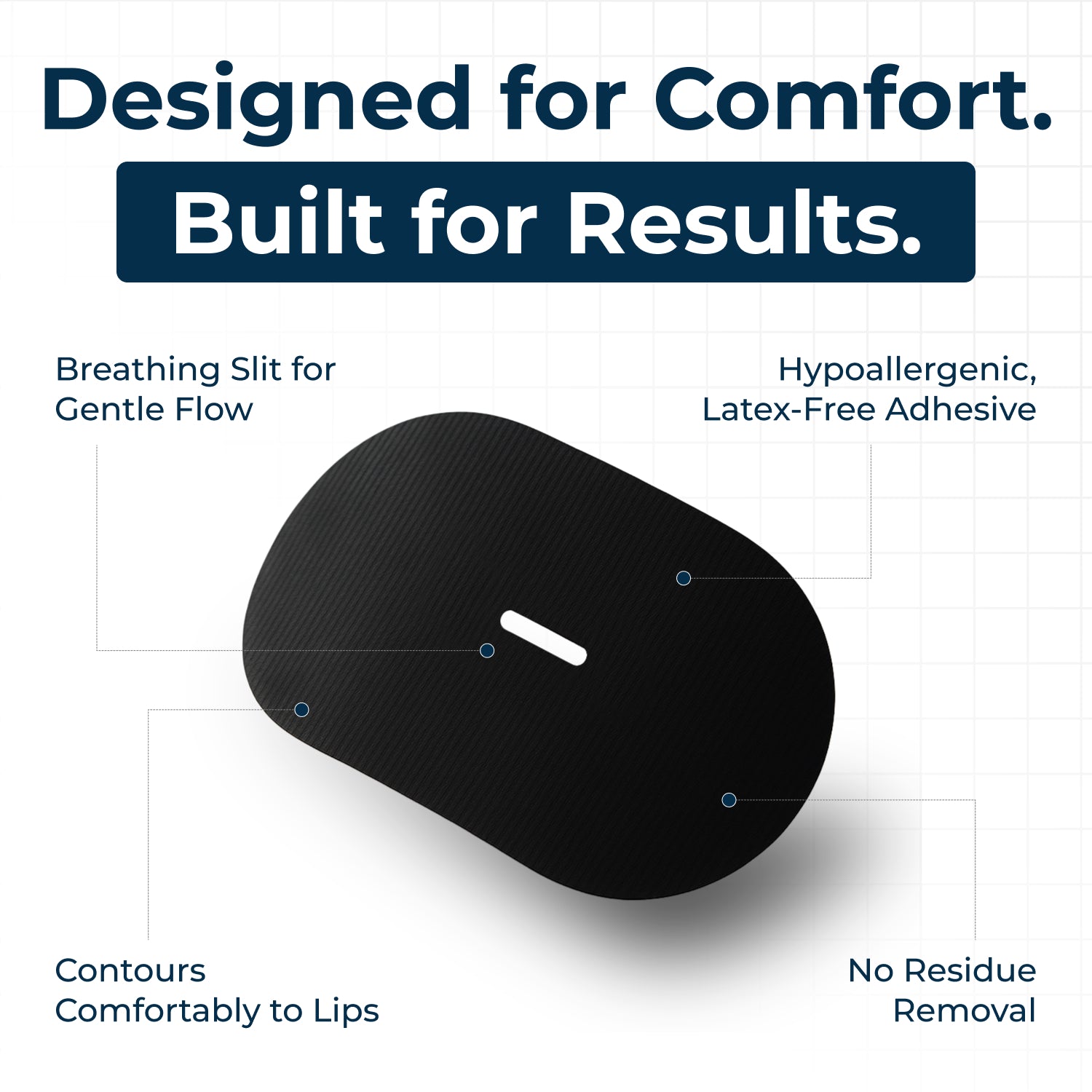
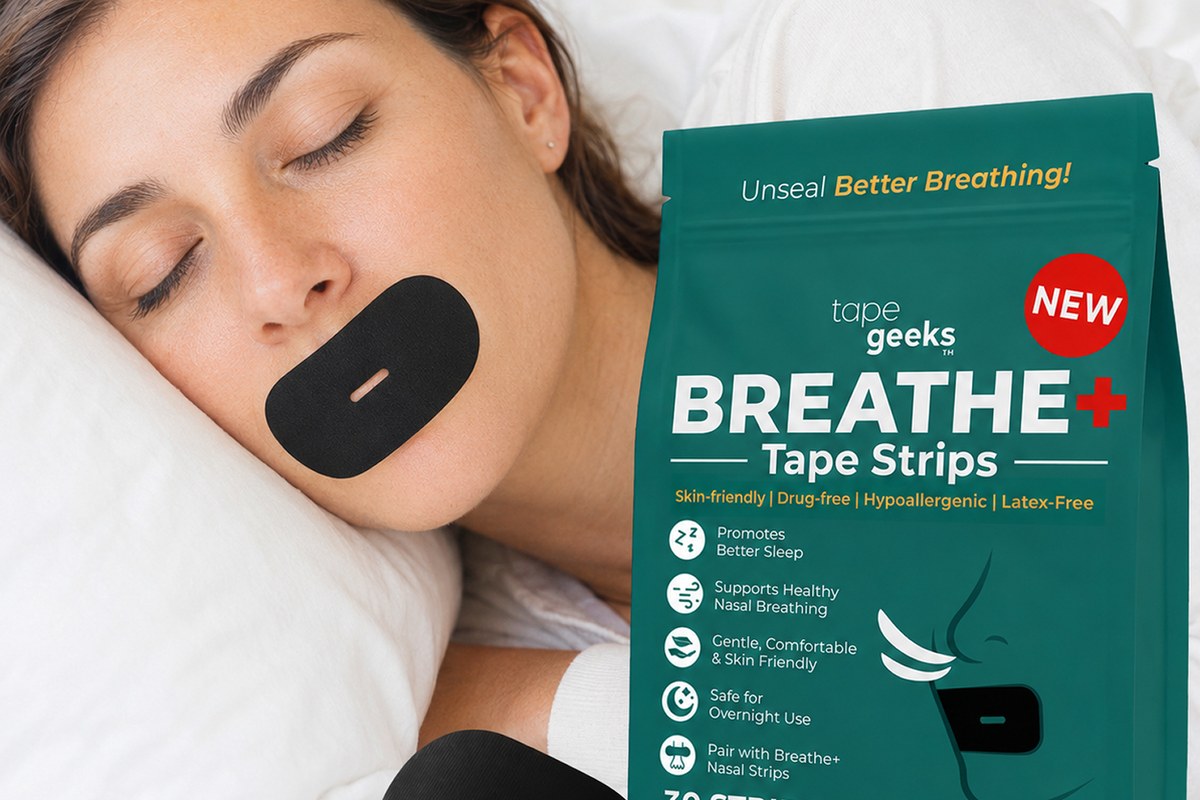
| Mouth tape | Keeps lips together during sleep | Habitual mouth breathers, dry mouth | Non-invasive |
Many sleep-focused athletes use both nasal strips and mouth tape together — strips maximize nasal airflow, mouth tape ensures the route stays nasal throughout the night.
Which Breathe+ product should you choose?
If nasal strips help but you still wake up with dry mouth, think of the Breathe+ lineup as a simple decision path rather than one product for everyone:
- Adults with blocked or narrow nasal airflow: start with Breathe+ Adult Nasal Strips to gently open the nose from the outside.
- Healthy adults who mouth-breathe at night: use Breathe+ Mouth Tape when you can comfortably breathe through your nose and want to keep sleep breathing nasal.
- Families with kids ages 5+: choose Breathe+ Kids Nasal Strips, sized for smaller noses and bedtime congestion support.
You can also compare all three options in the Breathe+ Sleep Collection.
FAQ: Do Nasal Strips Work?
Do nasal strips work for snoring?
Do nasal strips work for a deviated septum?
Can I use nasal strips every night?
Do nasal strips help with sleep apnea?
Are nasal strips safe for children?
Do nasal strips improve athletic performance?
Ready for Better Sleep, Tonight?
Download the free Better Sleep Guide — practical, drug-free strategies for better breathing and deeper sleep, built for Canadian families.
Download the Free Guide →Need the buy side next? Use our best adult nasal strips for snoring guide to choose strip fit, adhesive quality, and the right Breathe+ product.