



Mouth Tape for Sleep: Does It Actually Work?
The honest, science-backed Canadian guide to mouth taping. We looked at the research, talked to the experts, and tested it ourselves. Here's what we found.

Written by: Professor Geek (The Geek Educator)
Edited by: Greg Kowalczyk, CEO & Co-Founder, TapeGeeks Inc.

Quick Answer: Mouth taping can help habitual mouth breathers and mild snorers sleep better, though the evidence is promising rather than conclusive. Use a medical-grade, hypoallergenic, latex-free tape with a breathing vent — never household tape. In Canada, TapeGeeks Breathe+ works out to about $0.53 per strip, the lowest per-strip cost among the major Canadian brands. Do not tape if you have untreated sleep apnea or blocked nasal passages.
What's Inside This Guide
- Why Canadians Are Taping Their Mouths Shut at Night
- What Is Mouth Taping? The Science of Nasal Breathing
- Does Mouth Taping Actually Work? What the Research Says
- Is Mouth Taping Safe? Risks, Warnings & Who Should Avoid It
- Mouth Tape vs Nasal Strips: Which Is Right for You?
- How to Choose the Best Mouth Tape: 6 Things to Look For
- Best Mouth Tape Brands Available in Canada (2026)
- How to Use Mouth Tape: Step-by-Step Beginner's Guide
- Where to Buy Mouth Tape in Canada
- Frequently Asked Questions (15 Q&As)
Why Canadians Are Taping Their Mouths Shut at Night (And Why It Might Actually Work)
All right, let's address it up front: taping your mouth shut to sleep better sounds a little... out there. We get it. When we first heard about it, our reaction was the same as yours. "People are putting tape over their lips? On purpose? At night?"
But here's the thing. Mouth taping didn't stay in the biohacker corners of TikTok. It jumped to mainstream news. CBC News ran a segment on it. Global News covered it. Dr. Atul Khullar, a sleep medicine physician from the University of Alberta's sleep clinic in Edmonton, was interviewed by CBC about the growing trend and noted that while evidence is still emerging, there's a physiological rationale worth paying attention to.
The basic idea is straightforward: when you sleep with your mouth closed, you breathe through your nose. And nasal breathing is, by most measures, significantly better for you than mouth breathing. Your nose filters particles, warms the air, adds humidity, and produces nitric oxide — a molecule that genuinely improves oxygen absorption. Mouth breathing does none of that. Instead, it dries out your throat, worsens snoring, and can contribute to poor sleep quality.
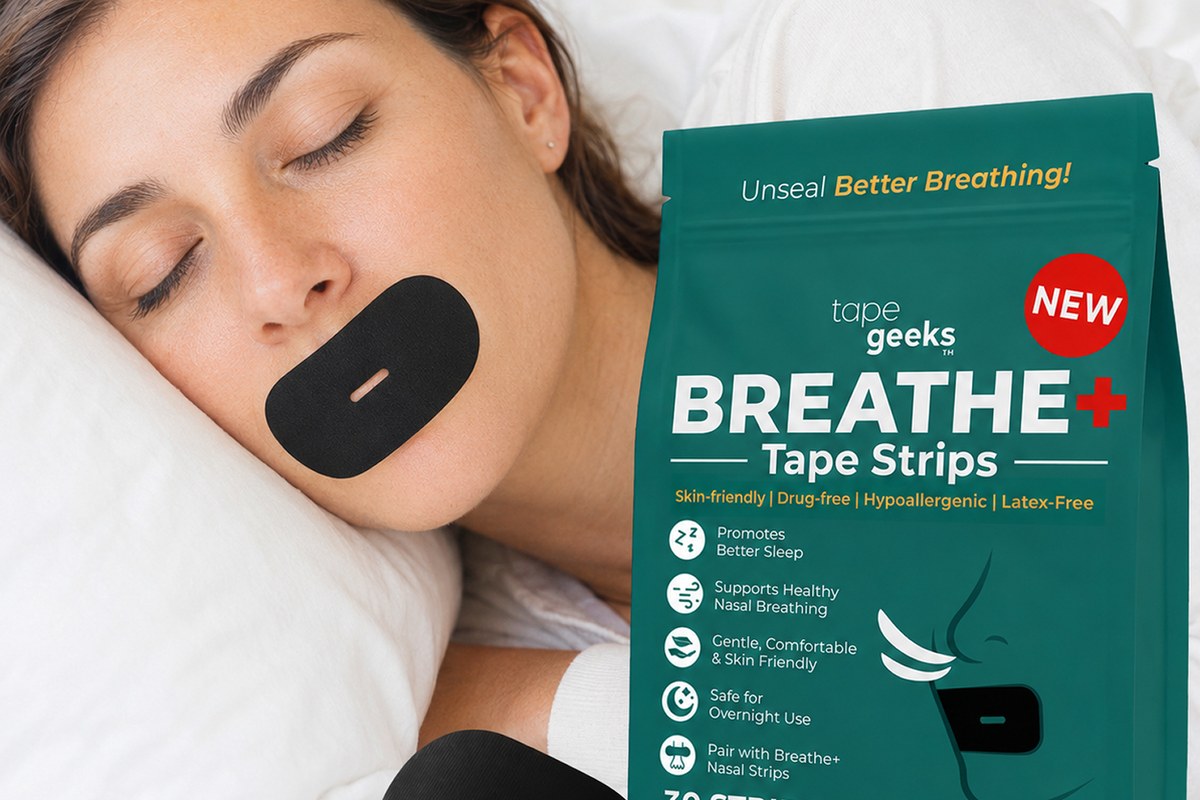
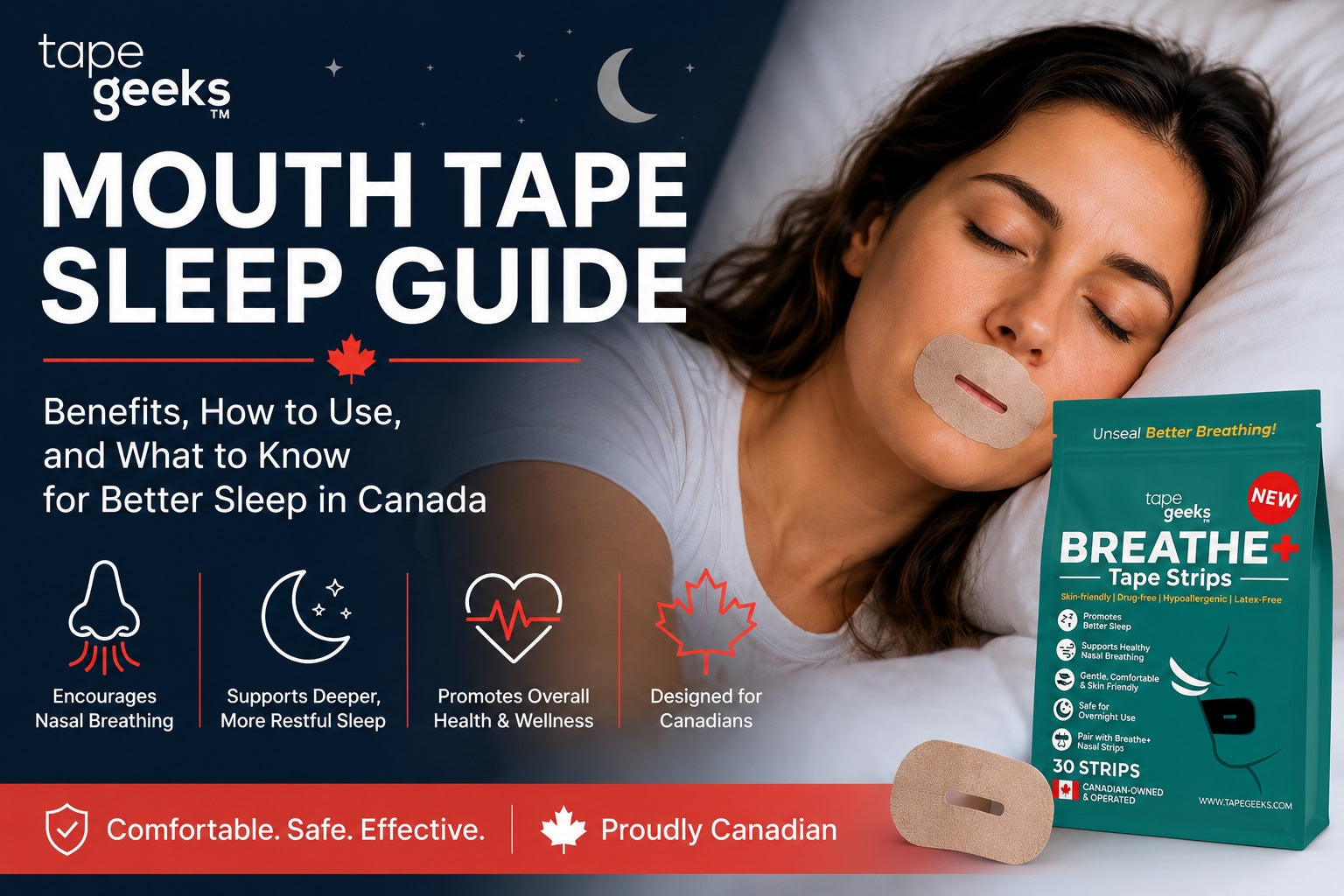
Mouth tape is simply a small, medical-grade adhesive strip placed over your lips to gently encourage your mouth to stay closed during sleep. That's it. It's not a medical device. It's not a treatment for sleep apnea. It's a simple nudge toward nasal breathing.
So where does that leave you, the curious but cautious Canadian? That's exactly what this guide is for. We're going to walk you through the actual research — the good, the limited, and the honest — the safety concerns you need to know about, and, if you decide to try it, how to choose the right product.
A bit about us: TapeGeeks is a Canadian breathing wellness company. We sell both mouth tape and nasal strips through our Breathe+ collection because we believe in a complete breathing approach. We'll recommend our products where it makes sense, but we'll also tell you about other options honestly. You'll get a better guide that way, and we'd rather earn your trust than your impulse purchase.
Let's dig into the science.
What Is Mouth Taping? The Science of Nasal Breathing During Sleep
Mouth taping is exactly what it sounds like: placing a small strip of purpose-made adhesive tape over your lips before bed. The tape keeps your mouth gently closed, so your body defaults to breathing through your nose while you sleep.
To understand why anyone would do this, you need to understand why nasal breathing matters — and why mouth breathing at night is more of a problem than most people realise.
Your Nose Is an Air Filtration System
Your nasal passages are not just holes in your face. They're a sophisticated air-processing system. When you breathe through your nose, the air goes through several stages before reaching your lungs:
- Filtration: Tiny hairs and mucous membranes trap dust, allergens, bacteria, and airborne particles. Your nose is your first line of defence against inhaling things you don't want in your lungs.
- Warming and humidifying: Nasal passages warm cold air (especially relevant during Canadian winters) and add moisture. This means the air reaching your lungs is at the right temperature and humidity, reducing irritation.
- Nitric oxide production: This is the big one. Your paranasal sinuses produce nitric oxide (NO), a vasodilator and antimicrobial molecule. When you breathe through your nose, you carry that nitric oxide into your lungs, where it improves oxygen absorption and helps fight pathogens.
Your paranasal sinuses produce nitric oxide, a vasodilator that research (Lundberg et al., Acta Physiologica Scandinavica, 1996) shows travels with nasally inhaled air into the lungs and modulates pulmonary function. Mouth breathing bypasses this entirely — every breath through your mouth skips your body's built-in air-conditioning system.
The Problem with Mouth Breathing at Night
When you breathe through your mouth during sleep, you bypass all of those nasal benefits. The results are noticeable:
- Dry mouth and sore throat: You wake up parched, with that sandpaper throat feeling.
- Increased snoring: Mouth breathing allows the soft tissues of the throat to vibrate more easily, making snoring louder and more frequent.
- Poor sleep quality: Studies associate mouth breathing with lighter sleep stages and more frequent awakenings.
- Bad breath: Reduced saliva flow overnight means bacteria thrive, causing morning breath that could clear a room.
- Dental issues: Chronic mouth breathing can contribute to dry mouth, which is associated with increased cavity risk over time.
How Mouth Tape Fits In
James Nestor's 2020 book Breath: The New Science of a Lost Art brought nasal breathing into mainstream conversation. Nestor participated in a Stanford study where his nose was blocked for ten days (forcing mouth breathing), then unblocked for ten days. The difference in his sleep quality, blood pressure, and snoring was dramatic — and documented.
Mouth tape is the practical tool that emerged from this conversation. It doesn't force your jaw shut. It doesn't seal your airway. It just gently holds your lips together so your body naturally defaults to nasal breathing. Think of it as a gentle reminder, not a restraint.
The question is: does the research back up what the early adopters are claiming? Let's look at what scientists have actually found.
Does Mouth Taping Actually Work? What the Research Says
The research on mouth taping shows real but modest benefits for mild snorers and habitual mouth breathers, and no support for anything beyond that. If we're going to suggest you tape your mouth shut at night, we owe you an honest look at the evidence — because the research is promising but not conclusive.
Here's what the current science says:
The 2022 Mouth-Taping Study (Lee et al., Healthcare)
A study published in the Healthcare (available via PubMed Central, PMC) examined the impact of mouth taping on patients with mild obstructive sleep apnea who were habitual mouth breathers. Researchers used porous oral patches (essentially mouth tape) during polysomnography — an overnight sleep study.
The results: mouth taping reduced snoring severity and lowered the apnea-hypopnea index (AHI) in participants with mild OSA. The researchers noted a shift from mouth breathing to nasal breathing, with corresponding improvements in several sleep metrics. Importantly, the study focused specifically on mild cases and did not suggest mouth taping for moderate or severe sleep apnea.
The 2025 PLOS ONE Systematic Review
A systematic review published in PLOS ONE in 2025 compiled and analysed multiple studies on mouth taping for sleep. The review examined 10 studies covering 213 patients and rated their quality poor. Only two showed a significant reduction in AHI. The authors concluded the data "do not lend strong support to the idea of utilizing mouth taping or other occlusive devices for the improvement of OSA," and that the evidence is "minimal in most patient population groups outside of mild OSA, and not clinically significant." Four of the ten studies flagged a risk of asphyxiation in people whose mouth breathing compensates for a blocked nose.
Translation: the studies that exist show positive signals, but there aren't enough of them yet, and sample sizes tend to be small. This is honest, responsible science — they're saying "it looks good, but we need more data."
The 2024 JAMA Otolaryngology Airflow Study
A 2024 study by Yang and colleagues in JAMA Otolaryngology — Head & Neck Surgery measured inspiratory airflow — not snoring — in 54 patients with sleep apnea, using manual chin pressure rather than tape. Closing the mouth raised airflow by 27.8 percentage points on average, but that average hides the finding that matters: in people who breathe mostly through their mouth, and in those with soft-palate obstruction, airflow got worse. JAMA published its commentary on this study under the title “Study Cautions Against Mouth Taping for Patients With Sleep Apnea.”
The practical read: if you already breathe through your nose comfortably, closing your mouth may help. If your nose is blocked and your mouth is doing the work, taping it shut may reduce your airflow rather than improve it.
Positions from Major Health Organisations
The Sleep Foundation acknowledges the potential benefits of mouth taping but emphasises that it is not a treatment for sleep apnea. Their position is cautiously positive: worth trying for mild snorers, not a replacement for medical treatment.
The Cleveland Clinic similarly notes potential benefits for mild snoring and habitual mouth breathers, while warning that mouth taping should not replace CPAP therapy or other medical treatments for sleep apnea. They recommend consulting a doctor before trying it.
Research Summary: What We Know (and Don't Know) About Mouth Taping
What the Research SUPPORTS
- Reduced snoring in mild cases (two small studies)
- Improved subjective sleep quality
- Increased nasal breathing during sleep
- Reduced dry mouth and morning sore throat
- Potential benefits for mild OSA (small studies)
What the Research DOES NOT Support
- Treating moderate or severe sleep apnea
- Replacing CPAP therapy
- Significant jawline changes in adults
- Curing insomnia or other sleep disorders
- Benefits for everyone regardless of condition
The Honest Verdict: Promising for mild snorers and habitual mouth breathers. Not a cure-all. More large-scale research is needed. If it interests you and you're a healthy adult with clear nasal passages, it's a low-risk experiment worth trying.
Is Mouth Taping Safe? Risks, Warnings & Who Should Avoid It
Mouth taping is generally low-risk for healthy adults with clear nasal passages, and clearly inappropriate for several groups — including anyone with moderate-to-severe sleep apnea or blocked nasal breathing. This is health-related content, and we take that responsibility seriously. Read this section carefully before you try it.
Do NOT use mouth tape if you have: moderate-to-severe obstructive sleep apnea, severe nasal congestion, respiratory conditions (asthma, COPD), or GERD/acid reflux. Always consult your doctor before trying mouth taping. This product does not treat, cure, or prevent any medical condition.
Generally Safe For
- Healthy adults who breathe through their mouth during sleep out of habit (not medical necessity)
- Mild snorers without sleep apnea
- People with clear nasal passages who want to train themselves into nasal breathing
- Adults who wake up with dry mouth, sore throat, or bad breath despite good hydration
Who Should NOT Use Mouth Tape
This is not a small list, and every item on it matters:
- Moderate to severe obstructive sleep apnea: If you've been diagnosed with OSA and use a CPAP machine, mouth tape is not a replacement. Sleep apnea involves physical airway obstruction that tape cannot address. Using mouth tape instead of your CPAP could be dangerous.
- Severe nasal congestion or deviated septum: If you can't breathe comfortably through your nose while awake, you absolutely should not tape your mouth shut while asleep. Address the nasal obstruction first — nasal strips, saline spray, or an ENT consultation.
- Gastroesophageal reflux disease (GERD): People with acid reflux may need to breathe or clear their throat during sleep. Mouth tape could interfere with the body's protective response to reflux.
- Asthma or COPD: Any condition that affects breathing capacity is a contraindication. Your body needs the option to breathe through your mouth if your airways become restricted.
- Children under 12: Not recommended without direct medical supervision. Children's airways are smaller and their ability to remove tape independently is limited. For children's breathing issues, Breathe+ Kids Nasal Strips (ages 5+) are a safer option.
- Anyone experiencing anxiety about restricted breathing: If the idea of taping your mouth shut causes panic or claustrophobia, do not force it. Anxiety about breathing can disrupt sleep more than mouth breathing does.
- Anyone who has consumed excessive alcohol: Alcohol impairs your arousal response — your ability to wake up if something is wrong. Do not use mouth tape after heavy drinking.
How to Start Safely
If you're in the "generally safe" category and want to try mouth taping, here's the cautious approach:
- Try during a daytime nap first, not overnight. Sit on the couch, apply the tape, breathe normally for 30–60 minutes. This lets you get comfortable with the sensation while fully awake.
- Use purpose-made mouth tape only. Never use duct tape, packing tape, electrical tape, or any household adhesive. Purpose-made mouth tape uses medical-grade, hypoallergenic adhesive designed for skin contact.
- Ensure your nasal passages are clear before applying tape. Blow your nose. If you're congested, use nasal strips or saline spray first. If you still can't breathe freely through your nose, skip the mouth tape tonight.
- Keep water by your bedside. You can easily remove the tape if you need a drink during the night.
- If you feel anxious, remove it immediately. There's no "push through it" with breathing. If it doesn't feel right, take it off. You can try again another time, or it might simply not be for you — and that's perfectly fine.
Red Flag: If Mouth Taping Helps Dramatically
If mouth taping produces a dramatic improvement in your sleep — you go from exhausted every morning to feeling like a new person — that's actually a red flag worth investigating. It might mean you have undiagnosed sleep-disordered breathing or mild sleep apnea.
A dramatic improvement from a simple intervention suggests the underlying problem may be significant. See a sleep specialist. A proper sleep study can identify conditions that mouth tape cannot treat, and you may benefit from more targeted medical intervention.
Mouth Tape vs Nasal Strips: Which Is Right for You? (Hint: Maybe Both)
Mouth tape and nasal strips solve different problems: nasal strips open a congested nose, while mouth tape keeps a wandering mouth closed — and they work remarkably well together. The right choice depends on what's actually happening when you sleep.
Here's the honest comparison:
| Feature | Mouth Tape | Nasal Strips |
|---|---|---|
| How it works | Keeps mouth closed → encourages nasal breathing | Opens nasal passages → makes nasal breathing easier |
| Best for | Habitual mouth breathers, snorers, dry mouth | Nasal congestion, deviated septum, athletes |
| Comfort level | Takes 2–3 nights to adjust | Immediately comfortable |
| Safety concerns | Higher — check contraindications above | Very low risk |
| Works for kids? | Not recommended under 12 | Yes — Breathe+ Kids Nasal Strips, ages 5+ |
| Can use together? | YES — maximum benefit | YES — maximum benefit |
The Combination Approach: What No Other Brand Tells You
Here's something worth knowing: mouth tape and nasal strips work better together than either one alone.
Think about it logically. Nasal strips physically open your nasal passages, making it easier to pull air through your nose. Mouth tape ensures you actually breathe through those opened passages instead of defaulting to your mouth. One opens the road; the other keeps you on it.
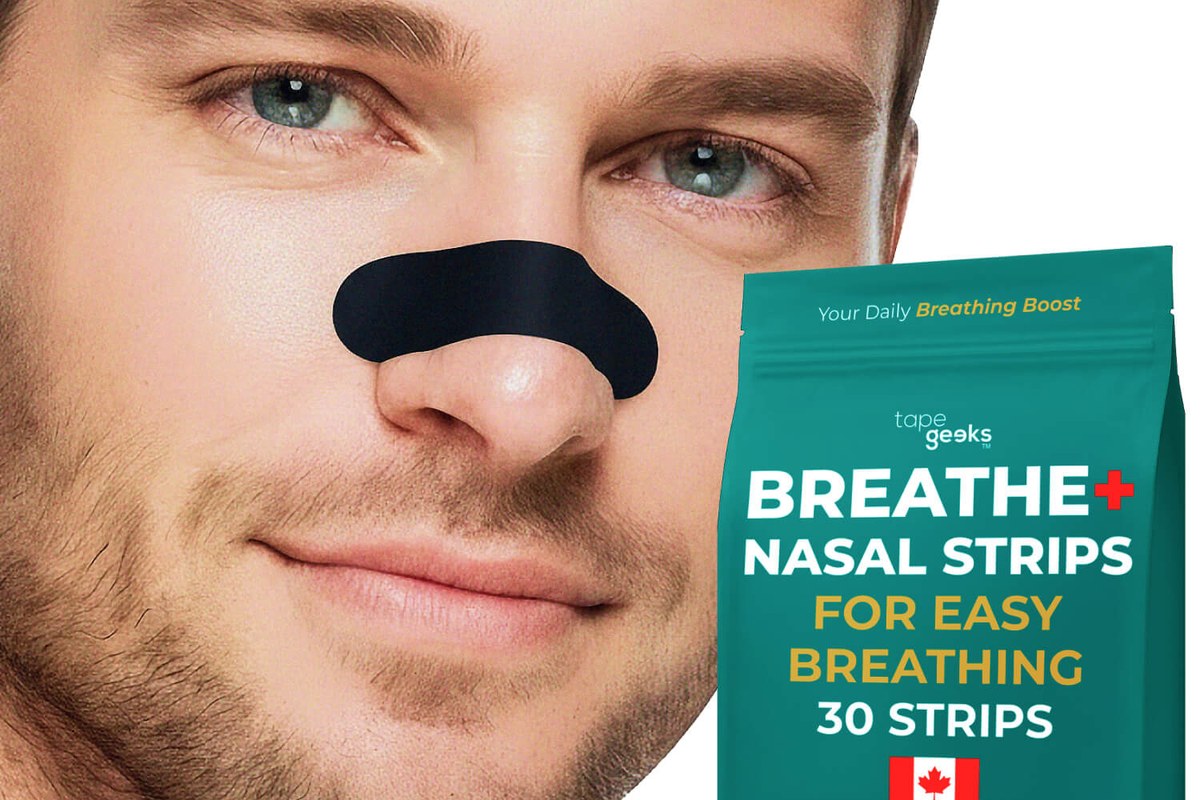
This is TapeGeeks' strength in the Canadian market. Our Breathe+ collection was designed as a complete breathing system: mouth tape with a built-in breathing vent, nasal strips for adults, and nasal strips for kids (ages 5+). While some competitors now also offer nasal strips, TapeGeeks is the only Canadian brand with a kids-specific option and a built-in breathing vent — all at the lowest per-strip cost on the market.
We treat breathing as a system, not a single-product solution — and we do it at $0.53 per strip — less than half of what most competitors charge.
Quick Decision Guide: What Should You Try First?
How to Choose the Best Mouth Tape: 6 Things to Look For
Not all mouth tape is created equal, and the details matter more than you'd think. Here are the six factors that separate a good mouth tape from one you'll regret buying.
Adhesive Type
This is non-negotiable: the adhesive must be medical-grade, hypoallergenic, and latex-free. You're putting this on your face for 6–8 hours. Cheap adhesive means skin irritation, residue in the morning, or the tape falling off at 2 AM. Look for skin-safe acrylic adhesive specifically. And never, under any circumstances, use regular tape, duct tape, or packing tape. Purpose-made or nothing.
Coverage Style
Mouth tapes come in several designs: full lip (covers the entire mouth), X-shape (cross pattern over the lips), H-shape (horizontal strip), and strip (thin strip across the middle). Full coverage provides the best seal but can feel restrictive for beginners. X or H shapes allow some emergency mouth breathing around the tape. If you're nervous about starting, an X-shape design is a good compromise.
Breathability Features
Some tapes include a mesh vent or breathing hole as a safety feature. SomniFix, for example, has a mesh centre that allows small amounts of air through even when your mouth is taped. This is genuinely useful for beginners who feel anxious about their mouth being sealed. It's not necessary for experienced users, but it's a smart feature for your first week.
Skin Sensitivity
If you have sensitive skin, this matters enormously. Look for: latex-free adhesive, hypoallergenic certification, gentle removal without pulling or tearing skin, and no sticky residue in the morning. TapeGeeks specialises in formulations for sensitive skin — it's a core part of our product philosophy across all Breathe+ products. But regardless of brand, do a patch test on your wrist before applying any mouth tape to your face.
Size & Shape
Most mouth tapes are one-size-fits-all, but "fits all" is relative. Consider your lip size and whether you have facial hair. Some brands offer beard-friendly versions with stronger adhesive designed to stick to skin around facial hair. If you have a full beard, look for X-shape or H-shape designs that attach to clean skin above and below your lips rather than on top of facial hair.
Price Per Strip
This is the metric most people overlook. Mouth tape ranges from about $0.53 to $1.17 per strip in Canada. Over a month, that's the difference between $16 and $35 for the same function. Always calculate cost per night, not box price. The cheapest option (TapeGeeks at $15.99 for 30 strips) costs less than half of what some competitors charge for the same quantity. We'll break down the exact costs in the brand comparison below.
When you're just starting out, buy a small pack first (20–30 strips). Don't invest in a bulk supply until you know mouth taping works for you and you've found a brand you like. It takes most people 3–5 nights to know if they want to continue.
Best Mouth Tape Brands Available in Canada (2026 Comparison)
We tested and researched the major mouth tape brands available to Canadians. Here's the honest comparison. Yes, we're one of the brands — and we've given ourselves a fair, not inflated, assessment.
| Feature | TapeGeeks Breathe+ | Tapeher | Bouche | Mintier | SomniFix |
|---|---|---|---|---|---|
| Based in | Oakville, Ontario | Toronto | Toronto | Toronto | USA (ships to CA) |
| Price (CAD) | $15.99 / 30 strips | $29.99 / 30 strips | $35.00 / 30 strips | $35.00 / 30 strips | ~$30 / 28 strips |
| Cost / Strip | ~$0.53 | ~$1.00 | ~$1.17 | ~$1.17 | ~$1.07 |
| Adhesive | Hypoallergenic, latex-free | Medical-grade | Medical-grade | Natural adhesive | Medical-grade |
| Coverage | Full lip + comfort slot | Strip design | Full lip | Strip design | Full lip + vent |
| Breathing Vent | Yes | No | No | No | Yes (mesh) |
| Also Sells Nasal Strips | YES | Yes | Yes | No | No |
| Free Shipping | Free, no minimum (Canada) · $40+ (US) | $40+ | Varies | Via Well.ca | $50+ (US) |
| Standout Feature | Full coverage + comfort slot + complete breathing system | Women-focused branding | Toronto-made, premium | Mint flavour | Mesh breathing vent |
Now let's look at each brand individually:
TapeGeeks Breathe+
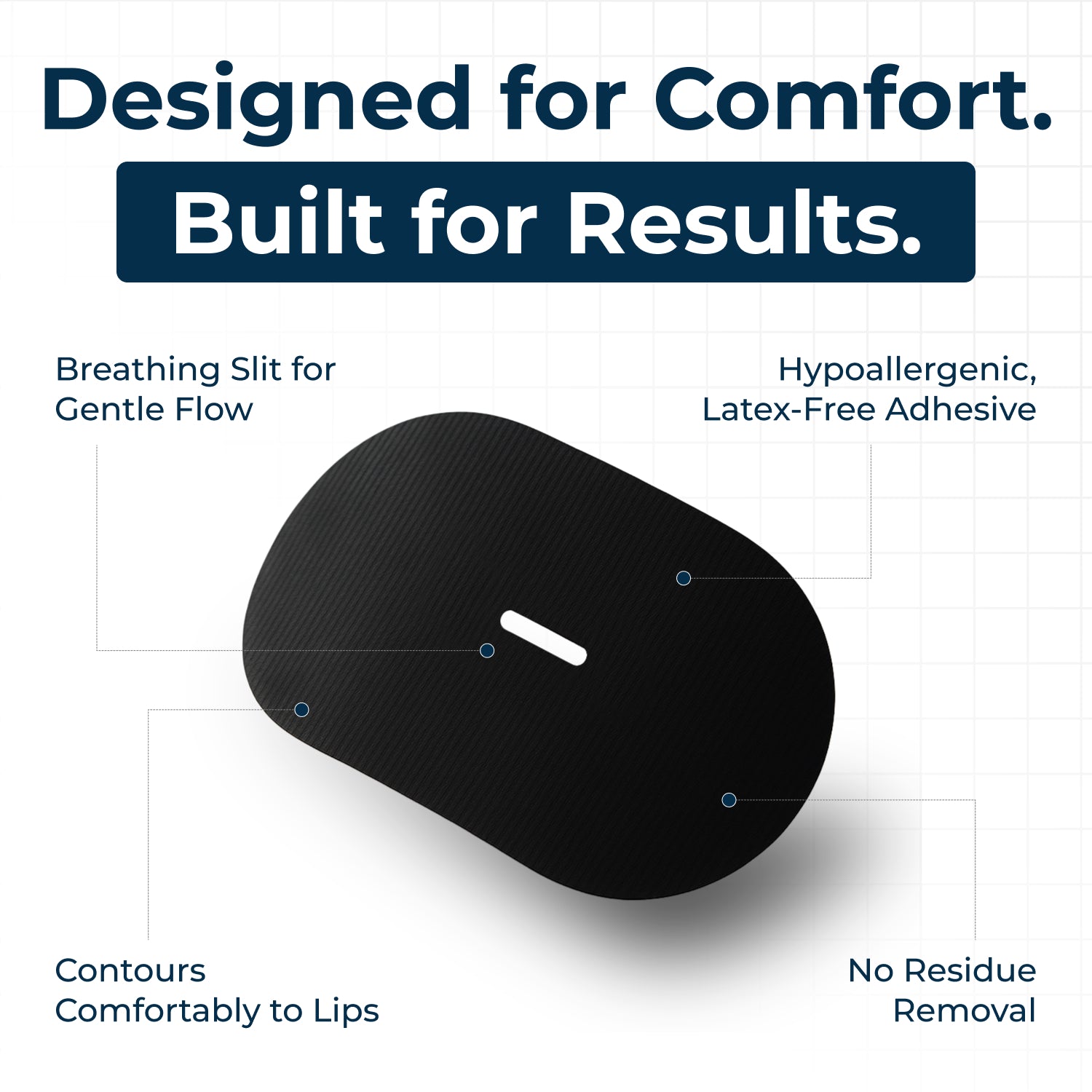
Full disclosure: this is our product, and we're naturally biased. But here's the objective case. TapeGeeks Breathe+ mouth tape is part of a complete breathing ecosystem that includes mouth tape, adult nasal strips, and kids nasal strips (ages 5+). No other Canadian brand offers all three. Our tape provides full lip coverage with a built-in comfort slot — a small opening that allows you to take a sip of water through a straw, take an extra breath if needed, or simply feel less restricted if you're not ready for a full seal. Our adhesive is hypoallergenic and latex-free, designed specifically for sensitive skin. At roughly $0.53 per strip, we're the most affordable option on this list by a wide margin — nearly half the price of most competitors. Free shipping across Canada with no minimum (US: free over $40).
The comfort slot sets us apart from basic strip designs: you get the benefits of full lip coverage (better seal, less mouth breathing) with the reassurance that you're never fully sealed shut. Combined with the integrated approach of mouth tape plus nasal strips working together, we offer the most complete breathing system on the market.
Best for: Families, sensitive skin, and anyone who wants the complete breathing systemTapeher
Toronto-based Tapeher has built a strong brand around women's wellness and clean aesthetics. Their Instagram is polished, their packaging is attractive, and they've cultivated a genuine community around sleep and self-care. The product itself is solid — medical-grade adhesive, clean strip design, reliable hold. At $1.00 per strip ($29.99 for 30), it's nearly double the cost of TapeGeeks. They also sell nasal strips, expanding their product line beyond mouth tape. If branding and community matter to you and the higher price doesn't bother you, Tapeher is a quality choice.
Best for: Women who value aesthetics and communityBouche
Bouche positions itself as a premium, Toronto-made mouth tape with full lip coverage. They also offer nasal strips, expanding their product range. If you prefer a design that covers your entire lip area (rather than a narrow strip), Bouche is one of the few Canadian options offering that. Full coverage provides a more complete seal, which some users find more effective for snoring. The trade-off is that full lip coverage without a comfort slot can feel restrictive for beginners, and retail availability is more limited than some competitors. At $1.17 per strip ($35.00 for 30), Bouche is one of the most expensive options available.
Best for: Those who prefer full-lip coverage and premium feelMintier
Mintier's differentiator is right in the name: mint-flavoured mouth tape. It's a clever touch that makes the experience slightly more pleasant, especially for people who are sensitive to the idea of having tape on their lips all night. Available through Well.ca and Amazon.ca, making it easy to find. The natural adhesive formula is a nice touch. At $1.17 per strip ($35.00 for 30), it's one of the pricier options despite the basic strip design. The mint flavour won't affect your sleep quality, but it does make the product feel like a wellness experience rather than a medical one. No nasal strips or complementary products.
Best for: Those who want a pleasant sensory experienceSomniFix
SomniFix is the US-based veteran of the mouth tape space, known for their mesh breathing vent in the centre of the tape. This vent allows limited airflow even when the tape is applied, which provides peace of mind for beginners. Note that TapeGeeks Breathe+ also offers full lip coverage with a comfort slot at less than half the price. Available at Sport Chek locations in Canada. The downside is cost: at approximately $1.07 per strip (~$30 CAD for 28 strips, converted from USD), SomniFix is the most expensive option on this list. Over a month, that's ~$30 vs $15.99 for TapeGeeks Breathe+.
Best for: Anxious beginners who want the safety of a breathing ventPrices are approximate CAD values as of early 2026 and may vary. We researched each brand's website, major Canadian retailers, and verified product claims where possible. We intentionally included honest assessments of every brand, including our own. We'd rather you pick the right product for your situation than buy ours when another brand fits better.
How to Use Mouth Tape for Sleep: Step-by-Step Beginner's Guide
The safest way to start mouth taping is a gradual one-week plan: practice awake first, then during a nap, then overnight. Coach Geek here — if you've read through the science and safety sections and you're ready to give this a shot, here's exactly how to do it right.
Pick a relaxed time — watching TV, reading, or listening to a podcast. Apply the mouth tape gently over your lips.
Breathe normally through your nose for 30–60 minutes. Pay attention to how it feels. Most people find it odd for the first five minutes, then forget about it.
If you feel anxious or uncomfortable at any point, remove it immediately. No pressure, no guilt. Some people take a few tries to get comfortable. That's completely normal.
Goal for Day 1–2: Get comfortable with the physical sensation of tape on your lips while you're fully awake and in control.
Apply the tape before an afternoon nap or rest period. Keep it to 30–60 minutes.
When you wake up, notice: Did the tape stay on? Did you sleep comfortably? Any irritation on your skin?
Goal for Day 3–4: Confirm that you can fall asleep comfortably with the tape on, even for a short period.
Ensure your nasal passages are clear before bed. If you're congested, use Breathe+ Nasal Strips to open your airways first.
Clean and dry your lips. If you've applied lip balm, wipe the excess off your outer lip area where the tape will adhere. A thin layer on the inner lip area is fine and can help with morning removal.
Apply the tape gently over your lips. Don't press hard — a light, even application is enough. The adhesive will warm to your body temperature and strengthen over the first 15–20 minutes.
Keep a glass of water and a tissue by your bedside. If you need to drink or blow your nose during the night, the tape peels off easily.
Go to sleep as you normally would. Don't overthink it.
In the morning, remove the tape gently. Dampen a cloth with warm water and press it against the tape edges for a few seconds to loosen the adhesive, then peel slowly.
- Pair with nasal strips for maximum effect. Breathe+ Nasal Strips open the airways; mouth tape ensures you use them. The combo is the full breathing system.
- Use a humidifier during Canadian winters. Dry winter air leads to nasal congestion, which makes mouth taping less comfortable. A bedroom humidifier is your best friend from November to March.
- Skip mouth tape when you're sick. If you have a cold, sinus infection, or congestion, switch to nasal strips only until you recover. Don't tape your mouth shut when your nose is blocked.
- Lip balm trick: Apply a small amount of lip balm to the skin around your lips before taping. It makes morning removal easier and reduces any chance of irritation.
- Tape falling off is normal for beginners. If you find the tape on your pillow in the morning for the first few nights, that's common. The adhesive strengthens with body heat and your body adapts to keeping its mouth closed. Give it a full week before deciding it doesn't work.
- Track your results. Ask your partner if your snoring has changed. Notice your own morning throat dryness. Rate your sleep quality from 1–10 each morning for a week. Data helps you decide if this is working for you.
Where to Buy Mouth Tape in Canada (Online & In-Store)
Mouth tape is sold in Canada through brand websites, Amazon.ca, Well.ca, Walmart, Sport Chek, and a growing number of Shoppers Drug Mart locations. The market has grown significantly since 2024, and you now have several options depending on how you prefer to shop.
Online Direct-to-Consumer
TapeGeeks.com — Breathe+ collection including mouth tape, adult nasal strips, and kids nasal strips. Free shipping across Canada with no minimum (US: free over $40). Also available: Tapeher.com (women-focused), Bouche.me (premium full-lip design). Buying direct means best prices and full product range from each brand.
Major Retailers
Walmart Canada carries a limited selection of mouth tape brands in-store and online. Sport Chek stocks SomniFix in select locations. Selection is growing but still limited compared to online options. Check stock online before making a trip.
Health & Wellness Retailers
Well.ca carries Mintier and other wellness-focused brands. Select Shoppers Drug Mart locations are beginning to stock mouth tape, though availability varies by store. These are good options if you want to pick up mouth tape alongside other health products.
Amazon.ca
Wide selection from multiple brands, including both Canadian and US options. Buyer beware: verify seller authenticity and check reviews carefully. Compare prices against brand websites — Amazon prices aren't always the lowest. Watch for counterfeit or unbranded products claiming to be "medical-grade."
TapeGeeks Breathe+ mouth tape offers the lowest per-strip cost (~$0.53) among the major Canadian brands, and free shipping across Canada with no minimum (US: free over $40). If you want to try the complete breathing system — mouth tape plus nasal strips together — you can get both in one order from a single Canadian company. See the complete Breathe+ system here.
Frequently Asked Questions About Mouth Taping
Is mouth taping safe?
Mouth taping is generally safe for healthy adults with clear nasal passages. It is not safe for those with moderate-to-severe obstructive sleep apnea, severe nasal congestion, GERD, asthma, COPD, or other respiratory conditions. Always use purpose-made mouth tape with medical-grade, hypoallergenic adhesive — never household tape. If you have any doubts about whether mouth taping is appropriate for you, consult your doctor or a sleep specialist before trying it.
Does mouth taping help with snoring?
Two small studies suggest it can help mild snoring in people who breathe through their mouth at night. A 2022 study in Healthcare found snoring index roughly halved in adults with mild sleep apnea, with 65% of participants responding. However, mouth taping is not effective for snoring caused by obstructive sleep apnea. If your snoring is severe, or you gasp or choke during sleep, see a sleep specialist rather than relying on mouth tape.
Can you breathe through mouth tape?
You cannot breathe through fully sealed mouth tape — the point is to redirect your breathing through your nose. Some brands, including TapeGeeks Breathe+ and SomniFix, include a breathing vent that allows a small amount of airflow through the mouth as a safety feature. If you cannot breathe comfortably through your nose, do NOT use mouth tape of any kind. Address nasal congestion first with nasal strips, saline rinse, or medical consultation.
Is mouth tape safe for kids?
Mouth tape is not recommended for children under 12 without direct medical guidance. Children have smaller airways and may not be able to remove the tape independently if they need to. For children's breathing and congestion issues, TapeGeeks Breathe+ Kids Nasal Strips are designed for ages 5 and up — they're drug-free, gentle on skin, and work by opening nasal passages externally without covering the mouth.
What's the difference between mouth tape and regular tape?
Purpose-made mouth tape uses medical-grade, hypoallergenic adhesive specifically designed for prolonged contact with facial skin. It removes cleanly, doesn't irritate, and is tested for overnight wear. Regular tape — duct tape, packing tape, masking tape, electrical tape — uses industrial adhesives that can cause skin irritation, allergic reactions, and painful removal. The price difference is small; the safety difference is enormous. Always use a product specifically designed for this purpose.
How long should you wear mouth tape at night?
Mouth tape is designed for a full night of sleep, typically 6 to 8 hours. Quality mouth tape maintains its adhesion throughout the night without losing grip or becoming uncomfortable. Each strip is for single use only — remove it in the morning by dampening the edges with warm water and peeling gently. If the tape falls off partway through the night, that's common for beginners and doesn't indicate a problem with the product.
Does mouth taping help with sleep apnea?
Mouth taping is NOT a treatment for moderate-to-severe obstructive sleep apnea. A 2022 study in the journal Healthcare showed some benefit for patients with mild OSA, including reduced snoring and lower AHI scores. However, researchers were clear that this does not replace CPAP therapy or other established medical treatments. If you have diagnosed sleep apnea, work with your sleep specialist. Do not substitute mouth tape for your prescribed treatment.
Can mouth taping improve your jawline?
This claim circulates on social media, and the honest answer is: evidence is limited for adults. There is research suggesting that chronic mouth breathing during childhood can affect facial development, and that nasal breathing supports better jaw posture. But for adults, expecting visible jawline changes from mouth taping is unrealistic. The real, documented benefits are about sleep quality, reduced snoring, and less dry mouth — not cosmetic transformation.
Should I use mouth tape or nasal strips?
It depends on your specific issue. If your nose feels stuffy or congested, start with nasal strips — they physically open your nasal passages. If your mouth falls open during sleep even though your nose is clear, try mouth tape. If you have both problems, using them together provides the maximum benefit: nasal strips open the airway, mouth tape keeps you breathing through it. TapeGeeks Breathe+ is the only Canadian brand that offers both, so you can try the complete system.
Can you use mouth tape with a CPAP machine?
This combination is generally not recommended without consulting your sleep specialist first. Some CPAP users find that mouth tape prevents air leaks through the mouth (especially with nasal mask styles), but this changes how the CPAP pressure interacts with your airway. Your sleep doctor can advise whether adding mouth tape is appropriate for your specific CPAP setup, mask type, and pressure settings. Never experiment with your sleep apnea treatment without medical guidance.
What if I can't breathe through my nose at night?
If you cannot breathe comfortably through your nose, do NOT use mouth tape. Period. Instead, address the nasal obstruction: try nasal strips (Breathe+ Nasal Strips can help open the passages), use a saline spray or neti pot before bed, run a humidifier in your bedroom (especially important during dry Canadian winters), and raise your head slightly. If nasal congestion is chronic, see an ENT specialist — you may have a deviated septum, nasal polyps, or allergies that need proper treatment.
How long does it take for mouth taping to work?
Most people notice some improvement in sleep quality within 3 to 7 nights. Reduced snoring is often reported from the first night by partners. Reduced dry mouth and morning sore throat typically improve within 2–3 nights. Your body needs about 2 to 3 weeks to fully adapt to nasal breathing during sleep, so give it an honest two-week trial. Zero improvement after two full weeks means it may not be the right solution for you.
Is mouth tape covered by health insurance in Canada?
Standard provincial health plans (OHIP, MSP, etc.) are unlikely to cover mouth tape. However, if you have an employer-sponsored Health Spending Account (HSA) or a health and wellness spending account, mouth tape may qualify as a wellness product. Your chances of reimbursement improve if the product was recommended by a physician or sleep specialist. Keep your purchase receipt and any written recommendation from your healthcare provider. Contact your benefits administrator to confirm eligibility before assuming coverage.
Can mouth taping cause skin irritation?
Skin irritation from purpose-made mouth tape is rare but possible, especially if you have very sensitive skin or an adhesive allergy. To minimise risk: choose hypoallergenic, latex-free products (TapeGeeks Breathe+ is formulated for sensitive skin), do a wrist patch test first, apply lip balm to the surrounding skin, and peel gently with warm water in the morning. Persistent redness, itching, or a rash means stop and try a different brand.
What's the best mouth tape for beards?
Facial hair makes mouth taping trickier because adhesive doesn't stick well to hair. Look for tape designs that attach to skin around the facial hair rather than directly on it. X-shape and H-shape designs tend to work better than full-lip coverage for bearded users. Some brands, like Hostage Tape, specifically market their products as beard-friendly with extra-strength adhesive. Positioning the tape just above and below the beard line, where clean skin is exposed, usually works best.
Ready to Try Mouth Tape? Start Your Better Sleep Journey Tonight
Here's what we've covered: the evidence for mouth taping is promising, especially for mild snorers and habitual mouth breathers. The safety profile is reasonable for healthy adults with clear nasal passages. And the combination of mouth tape plus nasal strips gives you the most complete approach to better breathing at night.
The best part? It's a low-cost, low-risk experiment. A single pack of mouth tape costs less than a good cup of coffee per night. If it works, you've potentially improved every night of sleep going forward. If it doesn't, you're out less than twenty dollars.
As always, if you have any medical conditions or concerns, talk to your doctor before starting.
Get the complete breathing system — mouth tape + nasal strips together in one order.
The Canadian's Guide to Better Sleep Through Better Breathing
Everything from this article — plus bonus content — in a printable guide you can keep by your bedside.
- The science of nasal breathing (simplified)
- 5 evidence-backed techniques for deeper sleep
- Complete mouth taping safety checklist
- Brand comparison chart (printable)
- Your 7-day beginner plan