



A practical Night 1–7 plan for beginners in the U.S. and Canada: safety first, honest limits, and balanced Breathe+ routing across adult strips, kids strips, and mouth tape.

Written by: Professor Geek (The Geek Educator)
Edited by: Greg Kowalczyk, CEO & Co-Founder, TapeGeeks Inc.
 in
in
What's Inside This Guide
- Who this first-week plan is for (and who should wait)
- The 3-minute nose test (non-negotiable)
- Night 1–7: the Breathe+ beginner ramp
- When to add nasal strips (adult or kids)
- Common first-week mistakes
- FAQ
Quick answer: Start mouth taping only after you can breathe comfortably through your nose. Use purpose-made tape with a vent/slit (not household tape). Ramp over a week. If your nose is the bottleneck, open it first with adult nasal strips — and read the deep-dive safety science in our Mouth Tape for Sleep in Canada (2026) complete guide.
Who this first-week plan is for
This guide is for healthy adults who mouth-breathe at night, wake with a dry mouth, or want a structured on-ramp — not a full research deep-dive. For evidence, brand comparisons, and a longer safety walkthrough, see our Canada 2026 complete guide and the best mouth tape for sleeping buyer’s guide.
Pause and talk to a clinician first if you have known or suspected moderate-to-severe sleep apnea, serious nasal obstruction, uncontrolled asthma/COPD, or you have been told not to restrict oral breathing. Consumer explainers from Cleveland Clinic and the Sleep Foundation make the same high-level point: mouth taping is not universal, and apnea care is not DIY tape.
The 3-minute nose test (non-negotiable)
- Sit upright. Close your mouth.
- Breathe only through your nose for a full 3 minutes.
- If you struggle, panic, or feel blocked — do not tape yet.
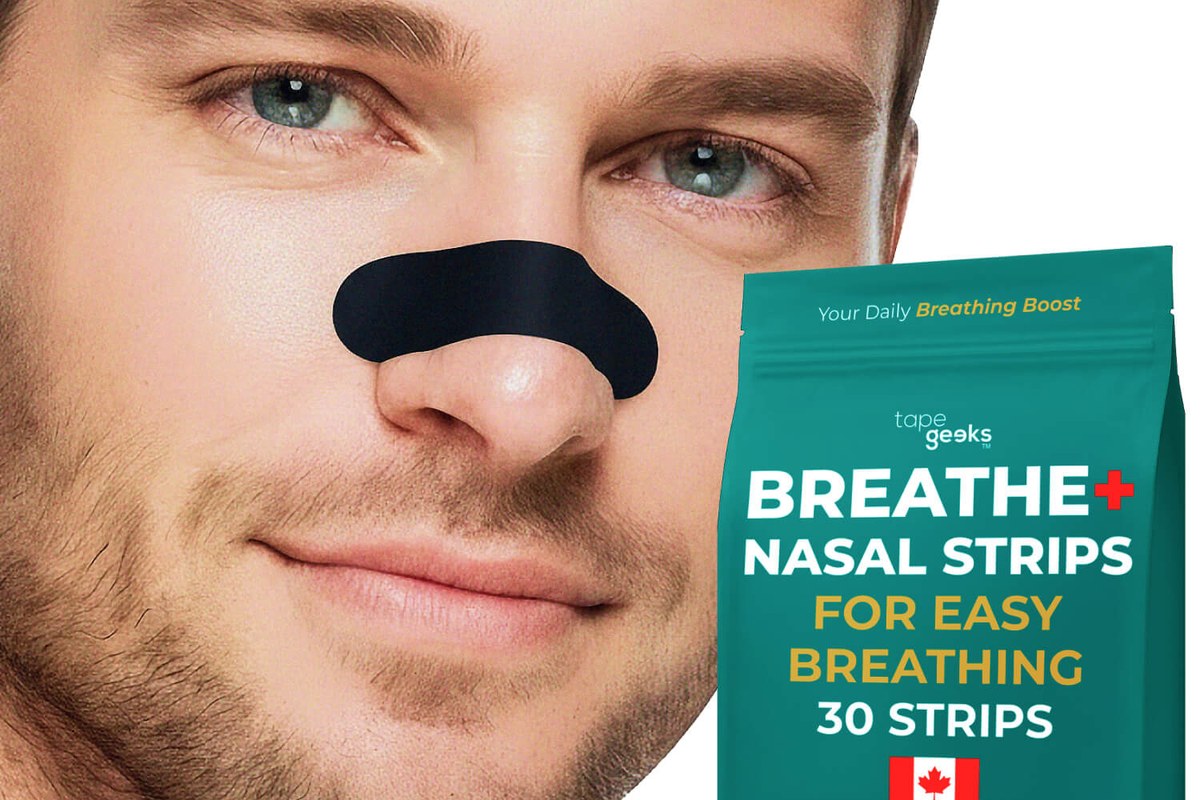
Fail the test? Start with mechanical nasal opening: Breathe+ Adult Nasal Strips. For ages 5+, use Kids Nasal Strips — not mouth tape. Pair with the stack explainer: mouth tape + nasal strips together.
Night 1–7: the Breathe+ beginner ramp
| Night | Plan | Pass criteria |
|---|---|---|
| 1 | Nose test. Optional strip. Wear tape 20–30 minutes while awake reading. | Calm nasal breathing; no skin fire drill |
| 2–3 | Tape for the first sleep cycle or until natural wake. Keep slit/vent unobstructed. | You can remove calmly; mouth less dry |
| 4–5 | Full night if Nights 2–3 were easy. Add adult strip if congestion returns. | Asleep with nose leading; no panic arousals |
| 6–7 | Full night + note snoring feedback from partner/app if you use one. | Habit feels boring (that is success) |
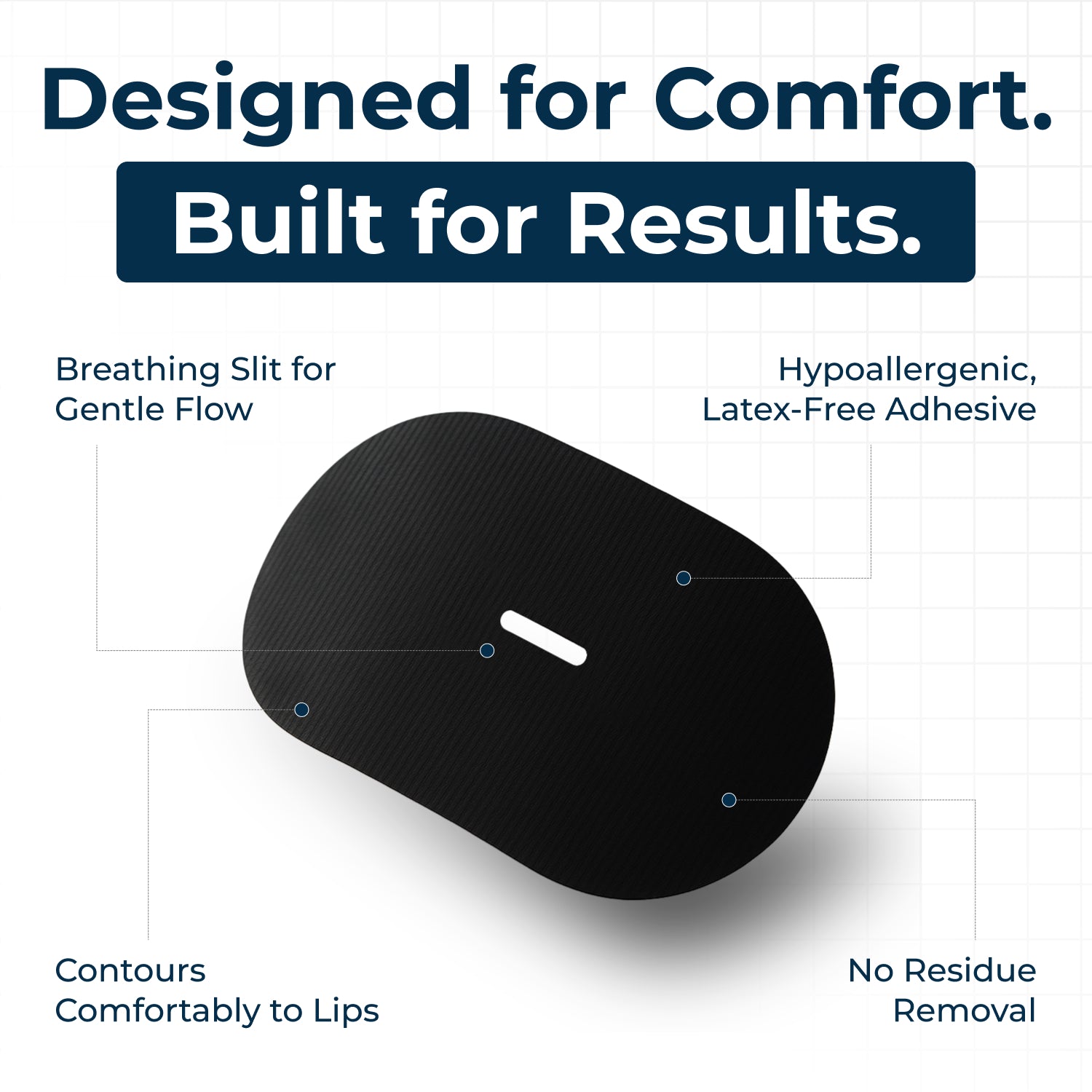
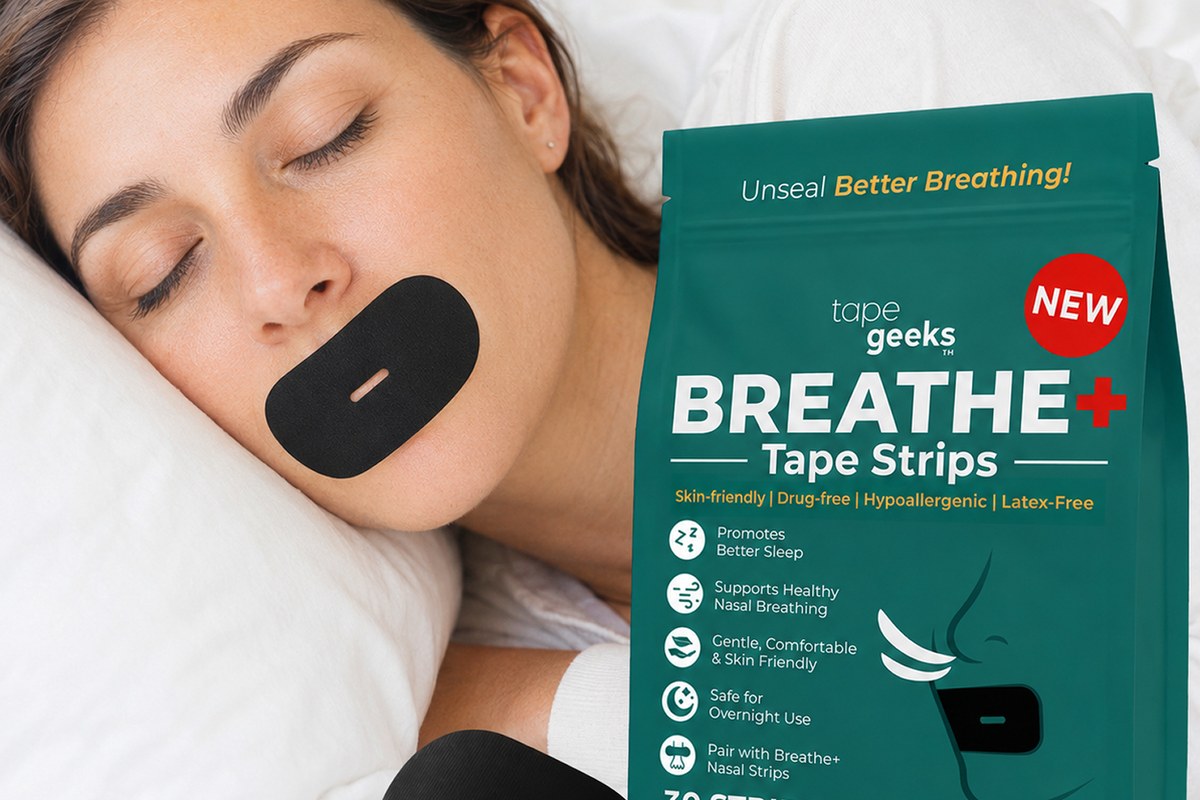
Breathe+ Mouth Tape uses a center breathing slit on purpose — partial congestion and anxiety are real first-week issues; a fully sealed strip is the wrong beginner tool.
When nasal strips belong in week one
Mouth tape does not invent an airway. Congestion from colds, fall allergens, or nighttime swelling is a strip first problem. Use the same decision logic as our nasal strips vs mouth tape guide:
- Nose blocked → adult or kids strips
- Nose clear, mouth falls open → mouth tape
- Both → stack (strip then tape)
Breathe+ product chooser (keep the lineup even)
- Adult Nasal Strips — stuffy nose, mild snoring from congestion, daytime airflow
- Kids Nasal Strips — ages 5+, drug-free congestion support (no mouth tape for kids without clinician guidance)
- Breathe+ Mouth Tape — only after a clear nose test; center breathing slit for partial congestion / panic safety
- Sleep Collection — full family lineup in one place
Common first-week mistakes
- Skipping the nose test
- Using packaging tape / kinesiology tape hacks instead of purpose-made mouth tape
- Taping kids because “it worked for me”
- Expecting apnea treatment from a strip of tape
- Ignoring skin prep (oils, heavy balms at lights-out)
For the full evidence-and-safety deep dive, see: Mouth Tape for Sleep in Canada (2026).
Ready for Night 1?
Start with the nose test. Then use Breathe+ with honest safety limits — full lineup for U.S. and Canadian customers.
Get Mouth Tape Browse Sleep Collection
Frequently Asked Questions
Is mouth taping safe for beginners?
For healthy adults with clear nasal breathing, purpose-made mouth tape is generally considered low risk when you follow a nose test first. It is not appropriate if you cannot breathe comfortably through your nose, or if you have moderate-to-severe sleep apnea, uncontrolled asthma/COPD, or other serious breathing issues — get clinical advice first. See also Cleveland Clinic and Sleep Foundation consumer guidance on mouth taping.
Can you breathe through Breathe+ Mouth Tape?
Breathe+ Mouth Tape is designed with a center breathing slit so you are not fully sealed. That helps if you briefly need oral airflow. You still must pass a nose-breathing test before overnight use.
Should I use nasal strips or mouth tape first?
If your nose is blocked, start with adult nasal strips (or kids strips for ages 5+). Mouth tape comes second — only after you can breathe through your nose for several minutes at rest. Many people eventually stack both.
How long does the first week take to feel normal?
Most beginners need several nights. Plan on a gradual Night 1–7 ramp: short supervised trials early, then full nights if comfortable. If panic, skin issues, or nasal blockage show up, stop and reset with strips or clinician advice.
Is mouth tape safe for kids?
Do not mouth-tape children without direct clinician guidance. For stuffy noses in kids 5+, Breathe+ Kids Nasal Strips are the TapeGeeks-first option.
Does this replace your complete mouth-tape guide?
No. This is the short first-week plan. Our complete mouth-tape guide covers science, safety depth, brand comparisons, and buying options. Use both together.
What if the tape will not stay on?
Clean and fully dry the lip area. Skip oils and heavy balm at application (a tiny amount can help removal in the morning). Press firmly. Facial hair may need adjusted placement.
Can mouth tape treat sleep apnea?
No. Mouth taping is not a substitute for diagnosed sleep apnea care or CPAP. See a sleep specialist for apnea symptoms (witnessed apneas, severe daytime sleepiness, choking arousals).
The Canadian's Guide to Better Sleep Through Better Breathing
Safety checklist, beginner plan, and the full Breathe+ routing map — printable bedside companion.