





 | Written by: Professor Geek (The Geek Educator) |
 | Edited by: Greg Kowalczyk, CEO & Co-Founder, TapeGeeks Inc. in |
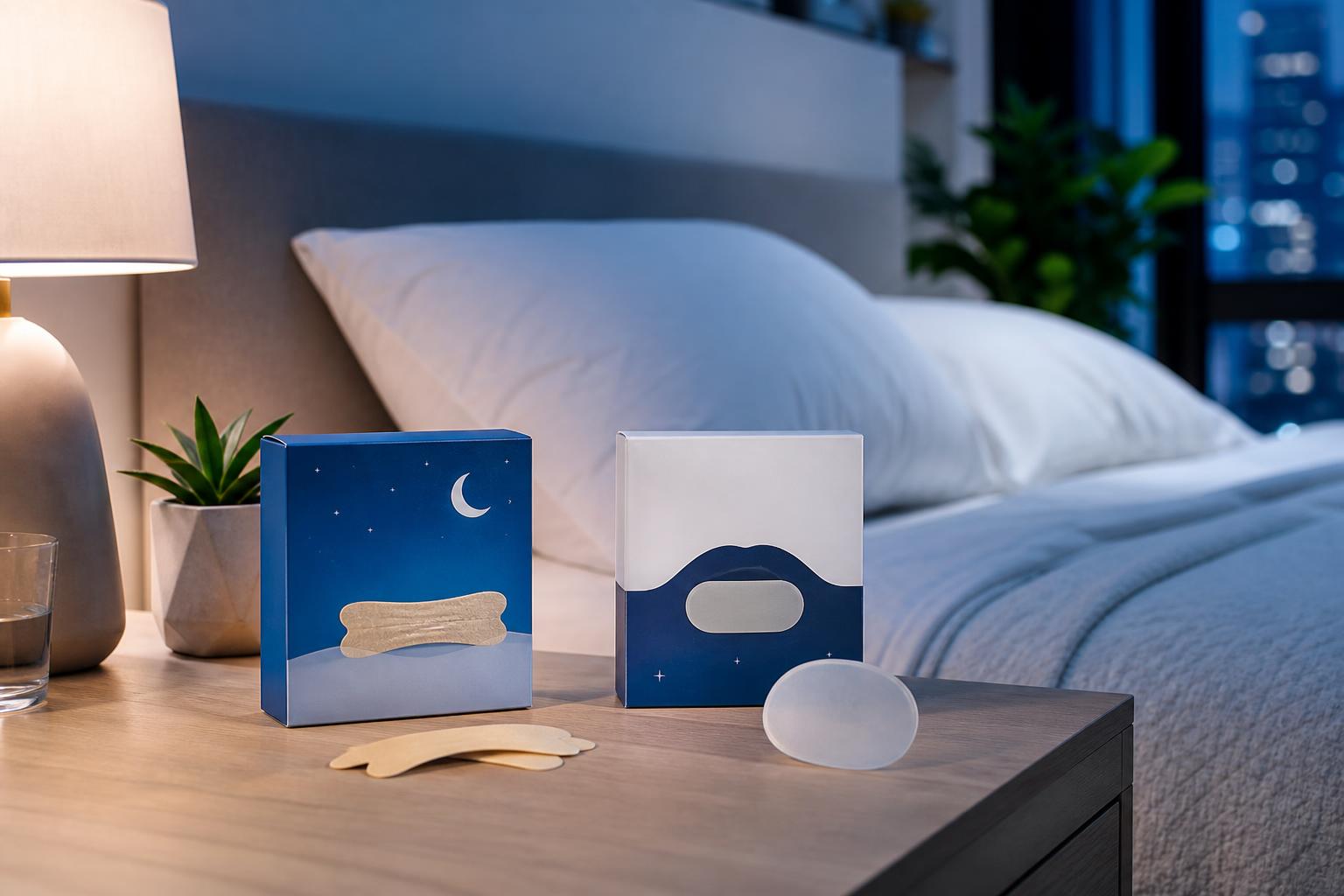
Nasal strips are the better first choice if your problem is blocked or narrow nasal airflow. Mouth tape is the better choice if you can breathe through your nose, but you keep waking with a dry mouth. The smart answer is not “one is better.” It is matching the tool to the bottleneck. This TapeGeeks nasal strips vs mouth tape for sleep guide is written for adults, parents, snorers, mouth breathers, runners, and anyone trying to recover after hard training. Nasal strips open the outside of the nose mechanically. Mouth tape reminds the lips to stay closed so the nose does the work. Simple mechanics. Different jobs. If you snore loudly, gasp, wake with headaches, or feel sleepy after a full night in bed, do not try to tape your way through it; ask a clinician about sleep-disordered breathing first. Honestly, most people should test nasal airflow before they ever test mouth tape. Nose first. Then lips.
Quick Answer: nasal strips vs mouth tape for sleep
Choose nasal strips when your nose feels narrow, congested, or collapses during inhale. Choose mouth tape when nasal breathing is comfortable but your lips fall open during sleep. The TapeGeeks nasal strips vs mouth tape for sleep rule is simple: open the nose first, then train the mouth.
Short answer: nasal strips and mouth tape are not competitors — they fix the two halves of the same problem. A strip opens the nose; tape keeps you using it. Which you need depends on which half is broken:
- Stuffy nose, but your mouth stays shut at night → nasal strips alone.
- Clear nose, but your jaw falls open and you wake up dry → mouth tape alone.
- Both — congestion and mouth breathing → both, strip first, tape second. This is the most common case in adults.
- Loud irregular snoring with pauses in breathing → neither yet. Get screened for sleep apnea first.
Order matters: put the strip on, confirm you can breathe comfortably through your nose for three minutes, then tape. Never tape your mouth without passing that test.
Nasal Strips vs Mouth Tape Comparison Table
Here is the plain TapeGeeks comparison. No scoring system. No fake winner. Just the right tool for the job.
| Category | Nasal Strips | Mouth Tape |
|---|---|---|
| Primary job | Open the outside of the nose and reduce front-of-nose resistance. | Cue the lips to stay closed when nasal breathing is already comfortable. |
| Best first test for | Stuffiness, narrow nostrils, nasal valve collapse, one-sided airflow. | Dry mouth, drooling, cracked lips, mouth falling open at night. |
| Safety profile | Usually simpler because the mouth remains free. | Needs a nasal breathing check and a careful awake test. |
| Kids | A gentler first conversation for nasal airflow support. | Do not use on young children unless a qualified clinician says it is appropriate. |
| Snoring | May help when nasal resistance is part of the snoring pattern. | May help selected adults with clear nasal breathing and mouth-related snoring. |
How Nasal Strips and Mouth Tape Work
Nasal strips and mouth tape work on different parts of the breathing system. Nasal strips widen the nasal valve area. Mouth tape changes lip position to encourage nasal breathing.
Nasal strips are mechanical, not magical
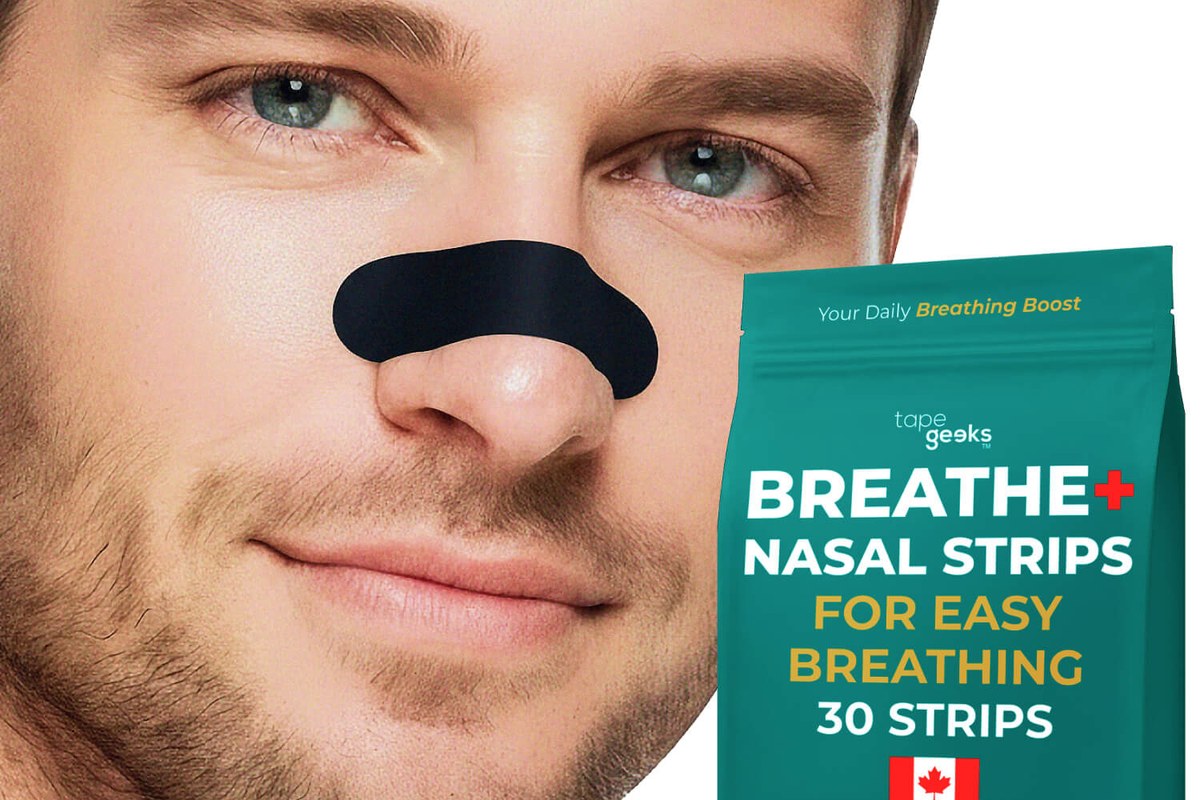
A nasal strip is an external spring. The adhesive anchors on the sides of the nose, and the flexible band tries to return to its original shape, pulling the nostrils slightly outward. That small lift can matter most at the nasal valve, the narrow front section of the airway where some adults feel collapse on inhale. Not magic. Physics.
That is why Breathe+ Adult Nasal Strips are the first product I’d test for a person who says, “I can breathe through one side only,” “my nose pinches when I inhale,” or “I snore more when I’m stuffed up.” This does not fix allergies, a deviated septum, large tonsils, or sleep apnea. It may simply reduce resistance at the front of the nose for the night.
According to a 1995 study published in Nature Medicine, the human nose releases nitric oxide into inhaled air, which is one reason nasal breathing gets so much attention in sleep and performance circles. That does not mean every claim on social media is true. It means the nose is built to filter, warm, humidify, and regulate airflow in ways the mouth does not.
Mouth tape works only after the nose passes the test
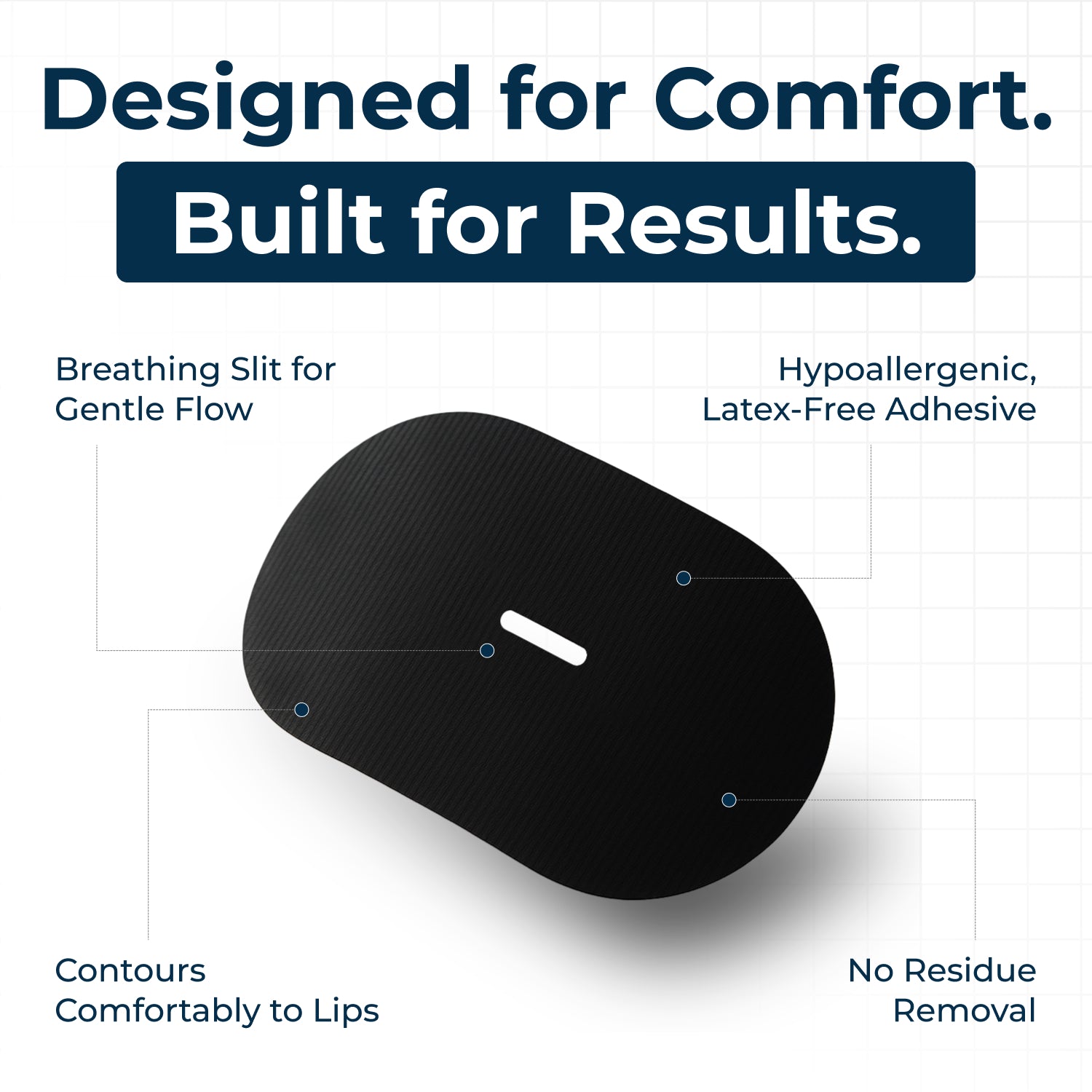
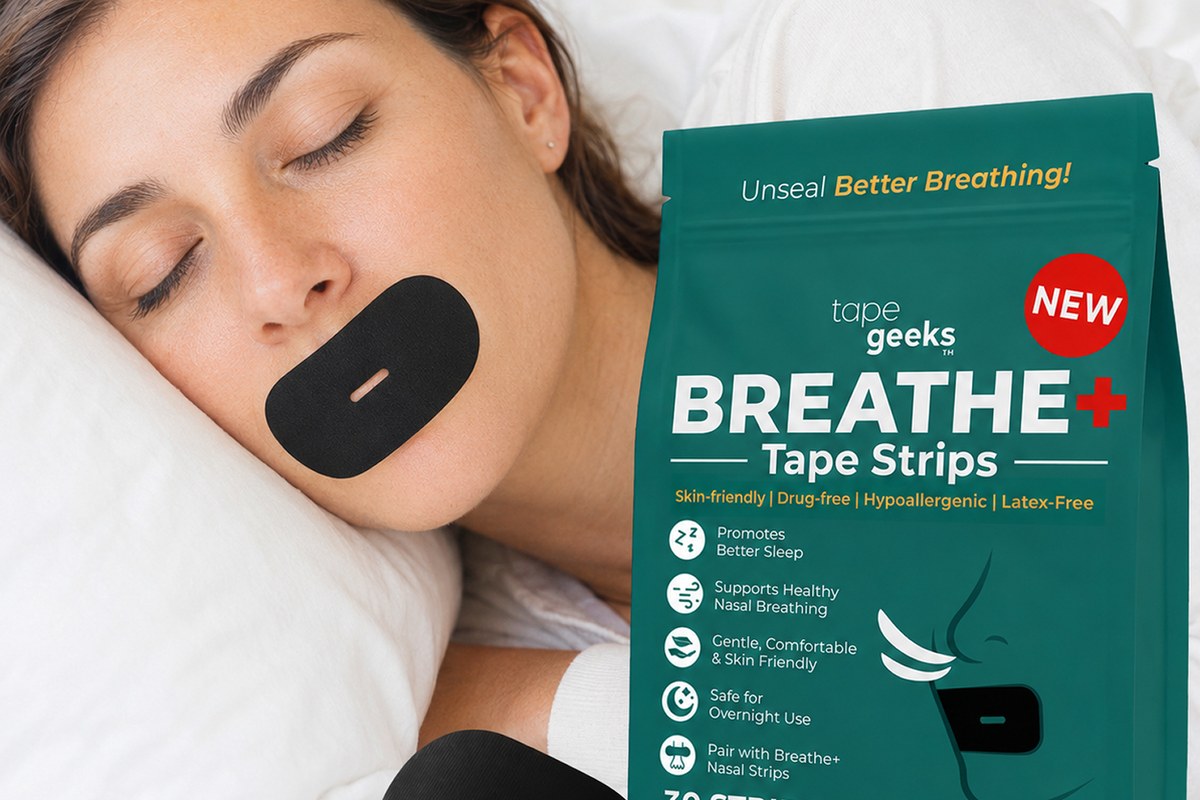
Mouth tape does not open the nose. Read that again. It only works if the nose is already open enough for comfortable breathing. Breathe+ Mouth Tape is designed to reduce unconscious mouth opening during sleep, especially for adults who wake with dry lips, dry mouth, or that stale “slept with my mouth open” feeling.
Most people get this wrong: the standard advice to “just tape your mouth” is backwards for anyone with nasal restriction. If airflow is poor, mouth tape turns a breathing habit into a stressor. But if nasal airflow is good and your mouth drops open out of habit, mouth tape can be a useful nudge.
According to a 2022 study published in Healthcare, mouth taping in mouth-breathing adults with mild obstructive sleep apnea was associated with lower snoring index and apnea-hypopnea index in that small preliminary sample. Small sample. Specific group. Not a free pass for everyone.
The TapeGeeks rule: airflow before habit
The TapeGeeks nasal strips vs mouth tape for sleep rule is this: fix the airway path before you cue the lips. If you cannot breathe calmly through your nose while awake for three minutes, skip mouth tape for that night. If you can breathe through your nose easily but wake with dry mouth, mouth tape is the more targeted choice.
Shop the Breathe+ Collection →😴 Free Download: The Better Sleep Guide
Better Sleep Through Better Breathing — the Canadian family’s guide to deeper, drug-free sleep.
Get the Free Guide →Which One Should You Choose by Symptom?
The best choice between nasal strips and mouth tape depends on the symptom you notice before sleep, during sleep, and when you wake up. Start with what you can actually feel.
Which Breathe+ product should you choose?
Use the bottleneck test. If the nose feels blocked, open the nose first. If the nose is clear but the mouth falls open, use mouth tape carefully. For children, start with the kid-sized nasal strip path and skip mouth tape unless a qualified clinician has told you it is appropriate.
- Healthy adults with dry mouth or mouth breathing: choose TapeGeeks Breathe+ Mouth Tape after you pass an awake nasal-breathing test.
- Adults with narrow or stuffy nasal airflow: choose TapeGeeks Breathe+ Adult Nasal Strips before you consider covering the mouth.
- Families and kids ages 5+: choose TapeGeeks Breathe+ Kids Nasal Strips as the gentler first step for nighttime nasal airflow support.
Blocked nose? Start with a strip
Pick nasal strips if your main complaint is nasal restriction: stuffiness, narrow nostrils, one-sided airflow, or a pinched feeling when you inhale. This is common in dry winter bedrooms, spring allergy season, and after late training sessions when the body is a little inflamed and sleep already feels lighter. Start there.
Parents should pay attention here too. A child who sleeps with lips open, wakes cranky, snores, or sounds congested may not be a “bad sleeper.” They may be struggling with airflow. Breathe+ Kids Nasal Strips are designed for smaller noses and gentler overnight wear, but they are not a substitute for a pediatric evaluation when snoring is loud, regular, or paired with daytime sleepiness.
According to Mayo Clinic, snoring can be linked with mouth anatomy, nasal problems, sleep position, alcohol intake, and obstructive sleep apnea. That list matters because a strip on the nose may help one cause and do very little for another.
When the lips fall open, test mouth tape carefully
Choose mouth tape if you pass the awake nasal breathing check and the problem looks like habit: dry mouth, drooling, cracked lips, bad morning taste, or a partner saying your mouth hangs open even when your nose sounds clear. But test it early in the evening before bed. Not at midnight. Sit upright, apply it, breathe through your nose for 10 minutes, and remove it if it creates stress.
This does not work for everyone. If you panic when your lips are covered, skip this entirely. If you have nausea, heavy alcohol use that night, a respiratory infection, or blocked nasal airflow, skip it. Or use a nasal strip instead and keep the mouth free.
Snoring is not a forever guessing game
Snoring is the tricky middle. Nasal strips may reduce snoring when nasal resistance is part of the problem. Mouth tape may reduce mouth-related snoring in carefully selected adults who can breathe well through the nose. But loud, choking, gasping, or stop-start breathing is different. That is sleep-study territory, not tape-experiment territory.
The truth is, a $15 strip or tape roll should not be asked to answer a medical question. Use it as a breathing aid, not a diagnosis. The TapeGeeks nasal strips vs mouth tape for sleep decision tree is practical: blocked nose means strip, open nose plus mouth leak means tape, scary breathing signs mean get checked.
Safety Notes for Adults, Parents, and Snorers
Mouth tape is more sensitive from a safety standpoint than nasal strips because it covers the escape route for breathing through the mouth. That deserves plain language, not hype.
For the research behind these rules, see is mouth taping safe? What the studies found.
Adults: use the three-minute nasal test
Before using mouth tape, sit upright and close your lips without tape. Breathe only through your nose for three minutes. You should feel calm, not hungry for air. Then walk around the room and do the same. If that feels easy, test the tape for 10 minutes while awake. If it still feels easy, a short overnight trial is reasonable for many healthy adults.
But if you wake up fighting the tape, remove it. If your partner notices gasping, stop. If you have suspected or known sleep apnea and are not using the medical device your clinician recommended, do not use mouth tape as a workaround. That is not conservative. That is risky.
For kids, start with the nose conversation
For kids, I am much more comfortable starting with a gentle nasal strip than mouth tape. Children may not explain air hunger clearly at night, and parents may not see every breathing pattern once the lights are off. Breathe+ Kids Nasal Strips can be a low-friction way to support nasal airflow, especially during seasonal congestion, travel, or dry bedrooms.
Do not use mouth tape on young children unless a qualified clinician has told you it is appropriate for that child. Full stop. Regular snoring in a child deserves attention because enlarged tonsils, adenoids, allergies, and airway anatomy can all play a role. A strip may help the nose feel more open, but it should not hide a pattern that needs a proper look.
Skin safety matters too
Both nasal strips and mouth tape rely on adhesive, so skin prep matters. Wash the area. Dry it fully. Avoid heavy lotion right before application. Remove slowly in the morning, especially if you have sensitive skin, facial hair, eczema-prone areas, or a sunburned nose after a long ride or run.
And do not stack products just because you can. A nasal strip plus mouth tape can make sense for adults who have mild nasal narrowing and mouth leak, but the first night should not be a full experiment with every product in the drawer. Test one variable at a time. Clean data beats wishful thinking.
How to Apply Breathe+ Nasal Strips and Mouth Tape
Correct placement matters more than brand hype because poor placement can reduce lift, irritate skin, or make mouth tape feel more restrictive than intended.
How to apply Breathe+ Adult Nasal Strips
- Wash your nose with mild soap and water, then dry it fully.
- Find the soft area just above the nostril flare, not the hard bridge near the eyes.
- Center the strip across the nose so the tabs land evenly on both sides.
- Press the middle first, then press each side for 10 seconds.
- Breathe in through the nose; you should feel a subtle opening, not pain or pulling.
- In the morning, remove slowly while supporting the skin with your other hand.
Placement too high is the common mistake. The strip should not sit where sunglasses rest. It should sit lower, over the area that moves when you flare your nostrils. Tiny adjustment. Big difference.
How to apply Breathe+ Mouth Tape
- Confirm you can breathe through your nose comfortably while awake for three minutes.
- Clean and dry the lip area; skip lip balm until morning.
- Apply the tape according to the product shape, keeping it gentle and centered.
- Test it for 10 minutes while reading or lying down before lights out.
- Remove it immediately if you feel air hunger, panic, nausea, or nasal blockage.
- Remove slowly in the morning and rinse skin if adhesive residue remains.
I prefer the first mouth tape test on a low-stress night, not before a race, presentation, flight, or early kid-hockey wakeup. Your sleep routine should not become a lab experiment when the alarm is already set for 5:10 a.m.
When both products make sense
Combining a nasal strip and mouth tape can make sense when you have mild nasal narrowing and a clear mouth-opening habit. Apply the nasal strip first, confirm airflow, then apply the mouth tape. If either product causes discomfort, stop and test separately on another night.
This TapeGeeks nasal strips vs mouth tape for sleep method gives you a clean sequence: open, test, cue. Open the nose with a strip. Test nasal breathing while awake. Cue lip closure only if the test feels calm. No hype. Just order of operations.
Try Breathe+ Mouth Tape →Sleep, Nasal Breathing, and Athletic Recovery
Better nighttime breathing matters for athletes because recovery depends on sleep quality, not just total time in bed. Eight hours of chopped-up sleep does not feel like eight hours. Any runner in a build week knows that.
Recovery is where training pays you back
Training stress is only half the story. Adaptation happens when you recover, and sleep is a large part of that recovery window. According to a 2011 study published in Sleep, Stanford basketball players who extended sleep showed improvements in sprint time, shooting accuracy, reaction time, and mood. That was not a nasal strip study. It was a reminder that better sleep can show up in performance.
At mile 18 of a 22-miler, during week 8 of a marathon block, sharp medial knee pain mid-stride can tempt a runner to blame shoes, hills, or one bad workout, while ignoring the four nights of broken sleep that made form sloppy before the pain showed up. Sleep does not replace strength work or load management. But poor sleep makes every small training error louder.
We see this pattern every spring with first-time half-marathoners: mileage rises, bedtime gets later, snoring gets worse after hard workouts, and the runner wonders why easy pace suddenly feels like tempo. Breathing support at night will not make you fit by itself. It may help protect the recovery window you already earned.
And injuries do not wait for a perfect training plan. About 22% of recreational runners (JOSPT 2021) are dealing with a running-related injury at a given time, which is why I care about the boring stuff: sleep, breathing, shoe mileage, strength work, and not pretending fatigue is toughness.
Use RunMate Pro to connect sleep with training load
RunMate Pro is built for runners who want fewer surprises: GPS tracking, shoe mileage, training history, and injury-prevention habits in one place. Pair that with a simple sleep note: nasal strip, mouth tape, both, or neither. After two weeks, patterns become obvious. The night after hill repeats. The night before long run. The third poor sleep score in a row.
At mile 4 of a 10K tune-up, with a deep arch ache that appears mid-stride on a cold October morning, first race back, it is easy to blame the shoes. A RunMate Pro log might show the shoes are only at 210 miles while sleep dropped under six hours for three straight nights. Different fix.
Or take the club runner who gets a mid-marathon ITBS flare at mile 16 after three weeks of travel, dry hotel rooms, and mouth-breathing sleep. The knee is the symptom everyone notices. The poor recovery was already in the log. That is why our testing notes with real club runners include both product feel and next-day training feel, not just whether the strip stayed on.
Best For / Not Ideal For
If you are still stuck, use this block before you buy anything. It is the same decision filter I use when people ask which Breathe+ product to try first.
Best for nasal strips
- Nose feels narrow, blocked, or pinched on inhale.
- Snoring gets worse with congestion, dry bedrooms, or allergies.
- Parents want a first step for kids who sound stuffy at night.
- Runners want airflow support after hard evening training.
Not ideal for nasal strips
- Snoring with choking, gasping, or stop-start breathing.
- Skin that reacts badly to adhesive on the nose.
- Problems caused mainly by the mouth falling open.
Best for mouth tape
- You pass the three-minute nasal breathing test easily.
- You wake with dry mouth, cracked lips, drooling, or bad morning taste.
- A partner notices your lips fall open even when your nose sounds clear.
- You want a light behavioral cue, not an airway-opening product.
Not ideal for mouth tape
- Blocked nose, respiratory infection, nausea, or heavy alcohol use.
- Panic when your lips are covered.
- Suspected sleep apnea that has not been evaluated.
- Young children unless a qualified clinician says it is appropriate.
- Any night where the awake test feels wrong.
Best for
- Adults who snore lightly or wake with a dry mouth when nasal airflow feels “almost clear” but worsens lying down—start with nasal strips before considering mouth tape.
- Mouth breathers with seasonal congestion, mild nasal valve collapse, or stuffiness after 6–8 hours of sleep who want a non-drug way to support nasal breathing.
- Parents evaluating safer sleep-support options for teens who mouth-breathe, drool, or wake thirsty—nasal strips may be considered, while mouth tape should only be used with clinician guidance.
- Runners, cyclists, and gym athletes logging 20–40+ miles per week or hard evening sessions who want better overnight recovery habits and less dry-mouth sleep after training.
- CPAP users or partners of snorers looking for a low-cost add-on to discuss with a sleep clinician, especially when leaks, dry mouth, or blocked-nose nights disrupt sleep.
Not ideal for
- Anyone with suspected sleep apnea symptoms—loud nightly snoring, choking or gasping, witnessed pauses, morning headaches, or daytime sleepiness—without a medical evaluation.
- People with blocked nasal breathing from a cold, sinus infection, deviated septum, nasal polyps, or allergies severe enough that they cannot comfortably breathe through the nose for 2–3 minutes while awake.
- Children, toddlers, or adults who may not remove tape quickly, including anyone with nausea, reflux/vomiting risk, intoxication, sedative use, panic, or respiratory illness.
- Users with fragile skin, adhesive allergy, eczema, rosacea flares, fresh sunburn, facial hair that prevents safe removal, or skin tearing from previous strips or tape.
- Athletes expecting nasal strips or mouth tape to replace sleep duration, recovery nutrition, treating congestion, or a snoring/sleep-apnea workup when performance drops despite 7–9 hours in bed.
Frequently Asked Questions
Are nasal strips or mouth tape better for sleep?
Nasal strips are better when nasal airflow is the problem. Mouth tape is better when nasal breathing already feels easy but your mouth falls open during sleep. If you are unsure, start with the nasal strip because it supports airflow without covering the mouth.
Can I use nasal strips and mouth tape together?
Yes, some adults can use both when they have mild nasal narrowing plus a mouth-opening habit. Apply the nasal strip first, test nasal breathing while awake, then add mouth tape only if breathing feels calm. Do not make your first night a double-product experiment.
Is mouth tape safe if I snore?
It depends on the snoring pattern. Mouth tape may be reasonable for selected adults who breathe clearly through the nose and have mouth-related snoring. But if snoring is loud, choking, gasping, or paired with daytime sleepiness, skip mouth tape and ask about sleep-disordered breathing first.
Should kids use mouth tape for sleep?
Do not use mouth tape on young children unless a qualified clinician has said it is appropriate for that child. For kids, nasal strips are the more comfortable first conversation when the issue looks like stuffy nasal airflow. Regular child snoring still deserves a proper evaluation.
Do nasal strips help with sleep apnea?
Nasal strips may reduce nasal resistance, but they do not diagnose or treat sleep apnea. If you have suspected or known sleep apnea, use the treatment plan recommended by your clinician. A strip can be a comfort aid, not a replacement for medical care.
Why do I wake with dry mouth even when my nose feels clear?
Your lips may be falling open out of habit during sleep. If you pass the three-minute nasal breathing test and have no blocked airflow, mouth tape can be a targeted cue. Start with a 10-minute awake test before trying it overnight.
Can athletes use nasal strips for recovery?
Yes. Many athletes use nasal strips during sleep to support the nasal breathing that drives overnight recovery. They can also be worn during easy, low-intensity sessions to practice nasal breathing, but the biggest recovery benefit comes from clearer airflow during sleep.
Want both in one routine? Read Mouth Tape and Nasal Strips Together: The Complete Breathe+ Sleep Stack.
Ready for Better Sleep, Tonight?
Download the free Better Sleep Guide — practical, drug-free strategies for better breathing and deeper sleep, built for Canadian families.
Download the Free Guide →Shopping adult strips specifically? Read the full 2026 adult nasal strips buying guide for snoring causes, strip specs, and a balanced Breathe+ chooser.
Do nasal strips or mouth tape work better for snoring?
It depends on where your snore comes from. Snoring driven by a blocked or narrow nose often responds to a nasal strip, because opening the nasal valve lowers the airflow resistance that creates the noise. Snoring that happens with your mouth hanging open is a different mechanism, and mouth tape addresses that one directly by keeping the lips sealed. If you snore both ways, or you are not sure which you are, the strip-then-tape combination covers both. Loud, irregular snoring with pauses needs a sleep assessment, not a product.
Do I have to use both every night, or can I alternate?
You can absolutely alternate, and plenty of people do. Nasal strips are the low-commitment option — use them on congested nights, during allergy season, or when travelling, and skip them otherwise. Mouth tape works better as a consistent habit, because part of what it does is retrain a default toward nasal breathing, and that does not happen from occasional use. A common pattern is tape most nights, and add a strip on the nights your nose is blocked.
How long does it take to get used to mouth tape?
Most people need three to seven nights before they stop noticing it, and around two weeks before they can fairly judge whether morning dry mouth and snoring have improved. Nasal strips are the opposite — you feel the effect the moment the strip goes on, so the first night tells you most of what you need to know. If mouth tape still feels distressing after a week, that is useful information: it usually means the nasal airway is not as clear as you thought.
Can I use nasal strips and mouth tape if I have allergies?
A nasal strip can genuinely help on an allergy night, because it widens the nasal valve mechanically and nothing is absorbed — it is drug-free. Mouth tape during an allergy flare is a different matter: if your nose is congested enough that you would struggle to breathe through it, do not tape. Use the strip alone until the congestion settles, then reintroduce the tape. The three-minute nasal test is the rule that keeps this safe.