





 | Written by: Professor Geek (The Geek Educator) |
 | Edited by: Greg Kowalczyk, CEO & Co-Founder, TapeGeeks Inc. in |
Updated: July 22, 2026
Quick Answer: Yes, you can use mouth tape and nasal strips together - and for many people the combination works better than either alone. Nasal strips open the airway. Mouth tape keeps it the active breathing path. Together they create a complete sleep-breathing stack.

The rule is simple: open the nose first, then train the mouth. If you skip the nasal strip and tape your mouth over a blocked nose, you are not improving your breathing - you are making it harder. Stack them in the right order and the results can be dramatic.
Why Use Mouth Tape and Nasal Strips Together?
Nasal strips and mouth tape solve two different problems. One is mechanical. The other is habitual.
Nasal strips physically lift the sides of your nose outward, widening the nasal passages. Research on external nasal dilators reports airflow resistance reductions around 25-31% (Roithmann et al., 1997). If your nose feels narrow, pinched, or collapses slightly when you inhale, a strip helps immediately.
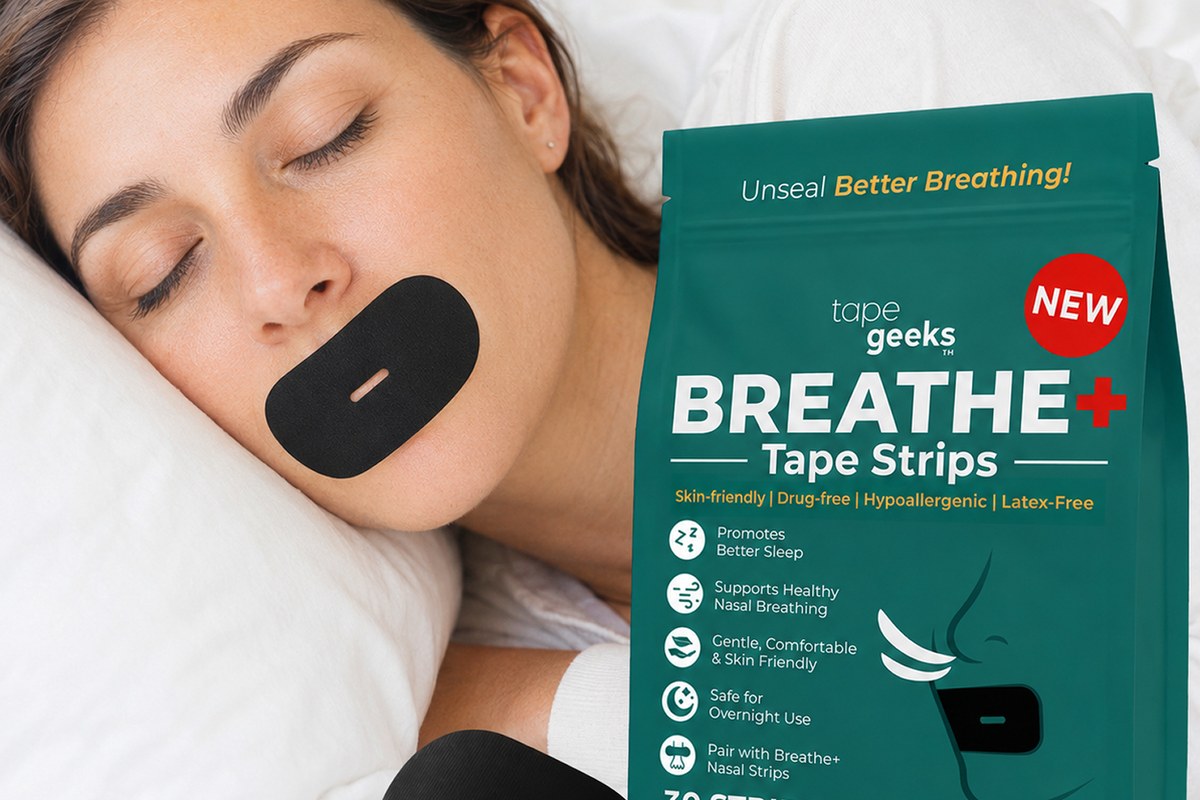
Mouth tape gently keeps your lips closed during sleep. It does not force anything - it just removes the option of mouth breathing so your body defaults to the nose. But mouth tape only works if your nose can handle the airflow.
Stack them and you get both: a wider airway and a closed mouth. Nasal breathing all night, with less resistance.
The analogy that helps: Nasal strips are like opening a door wider. Mouth tape is like closing the window. If the door is barely cracked open and you close the window, you struggle. Open the door wide and close the window, and you get clean, filtered air through one good path.

The Breathe+ Sleep Stack: Step-by-Step
Here is how to build your stack, in order.
Step 1: Test Your Nose First (30 Seconds)
Before you use any product, answer this: can you breathe comfortably through your nose for 30 seconds with your mouth closed, while sitting upright?
- If yes (easy, calm): You can try mouth tape, with or without a nasal strip.
- If no (strained, stuffy, one side blocked): Start with a nasal strip. Do not tape your mouth until your nose passes this test.
Step 2: Apply the Nasal Strip
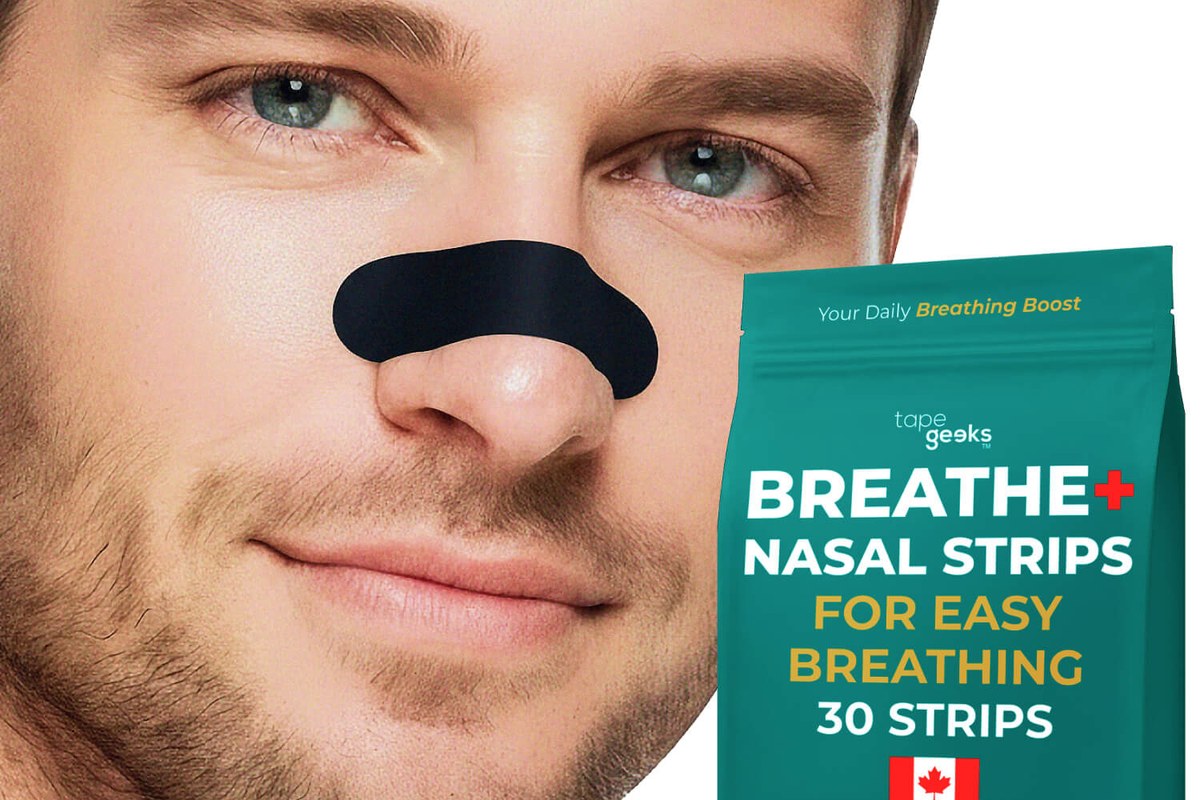
Clean and dry the skin on your nose - no moisturizer, no sweat. Center the strip across the bridge of your nose, roughly halfway between the tip and the bridge. Press firmly for 15-20 seconds. You should feel a gentle outward pull. If you do not, reposition.

Product to use: Breathe+ Adult Nasal Strips - designed for all-night wear with hypoallergenic adhesive.
Step 3: Re-Test Your Nose (30 Seconds)
With the strip on, close your mouth and breathe through your nose again. Most people notice an immediate difference - more air, less effort. If your nose still feels blocked with the strip on, do not add mouth tape. Address the congestion first (saline spray, humidity, allergy management).
Step 4: Apply the Mouth Tape
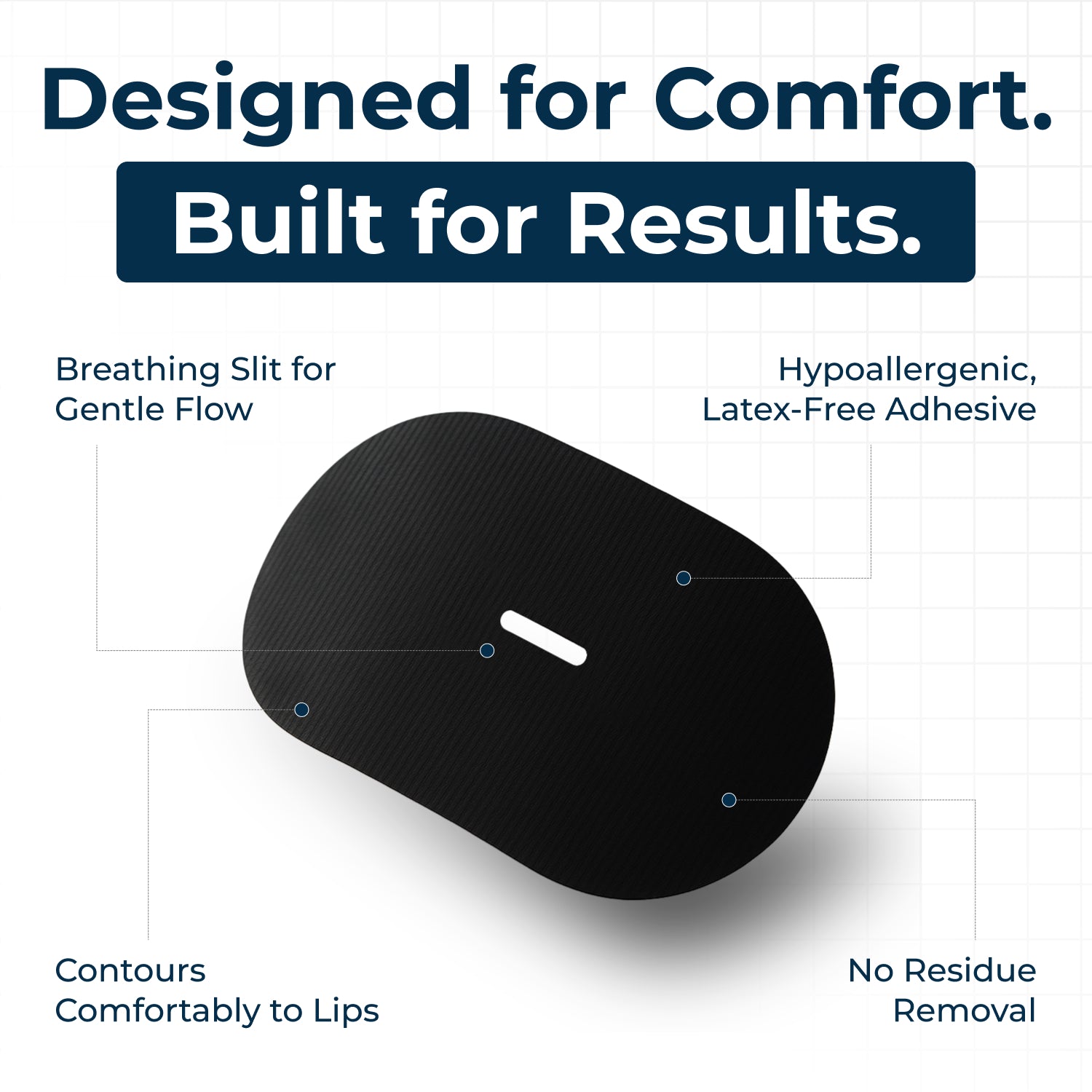
Take one Breathe+ Mouth Tape strip and apply it vertically over the center of your lips. The tape should be gentle - you should be able to open your mouth if you need to. Breathe+ Mouth Tape includes a small breathing slot in the middle of the strip — so you are never fully sealed. If you panic, need a little air, or one side of your nose is more clogged than the other, you can still breathe through that center vent.
What makes Breathe+ Mouth Tape different: a small slot in the middle of the strip.
- If you start to panic or need emergency airflow, you can still breathe through the slot.
- If one side of your nose is a little more clogged, leftover air can still pass through the tape vent.
- You get a gentler seal than fully closed strips — confidence without a fully sealed mouth.

Do a 10-minute awake test first. Sit up, mouth taped, breathing through your nose. If you feel calm, you are ready for overnight. If you feel anxious or air-hungry, remove the tape and stick with the nasal strip alone for now.
Step 5: Go to Sleep - and Evaluate in the Morning
Wake up and ask yourself:
- Dry mouth gone?
- Fewer wake-ups?
- Feel more rested?
- Partner says snoring is quieter?
If yes to most, the stack is working.
Which Breathe+ Product Should You Choose?
Not everyone needs the full stack. Pick based on what is actually happening:
Breathe+ product chooser
- Nose feels blocked or narrow at night start with Adult Nasal Strips, then add mouth tape only after the nose passes the awake test.
- Nose is clear, but mouth falls open (dry mouth, drooling, bad taste) start with Breathe+ Mouth Tape; add a nasal strip if you want even easier airflow.
- Child ages 5+ with stuffy nose, snoring, or restless sleep Kids Nasal Strips. Do not add mouth tape for children without clinician guidance.
- Want the full routine and nose is clear stack adult strips + mouth tape, or compare everything in the Sleep Collection.
For families: Kids under 5 should not use mouth tape. Start with Breathe+ Kids Nasal Strips - sized for smaller noses, drug-free, hypoallergenic. If snoring or breathing problems persist, see a pediatrician. Nasal strips are a comfort aid, not a diagnosis.
Already comparing options side by side? Read our guide: Nasal Strips vs Mouth Tape for Sleep.
Safety Rules: When NOT to Stack
Do not use mouth tape (with or without nasal strips) if you have:
- A cold, sinus infection, or completely blocked nose
- Moderate to severe sleep apnea (unless guided by a sleep specialist)
- Nausea, heavy alcohol before bed, or sedating medication
- Panic or claustrophobia when your mouth is closed
Do not use mouth tape on children unless a clinician has explicitly recommended it for a specific diagnosis. Kids airways are smaller and more reactive - the risk/reward math is different.
Nasal strips are safe for most people, including children 5+ and pregnant women, because they are external, drug-free, and non-invasive.
Red flags - remove the tape and talk to a doctor if:
- You wake up gasping or fighting the tape
- Your partner hears choking or stop-start breathing
- You feel worse in the morning than without the tape
A $15 strip or tape pack should not be asked to answer a medical question. Use it as a breathing aid, not a diagnosis.
What to Expect: Week 1 vs Week 4
Night 1-3: You might be aware of the tape. Some people find it slightly strange. Your nose may feel surprisingly open with the strip. Stick with it.
Night 4-7: Your brain adjusts. The tape becomes background sensation. You may notice less dry mouth in the morning. Snoring may drop.
Week 2-4: This is where most people report the biggest change. Nasal breathing becomes the default. Morning energy improves. Wearable sleep scores often tick up once the habit sticks.
Not working after 2 weeks? Re-evaluate:
- Is your nose actually clear? Try the awake test again without the strip.
- Is the tape too aggressive? Breathe+ Mouth Tape uses a gentler adhesive than KT tape.
- Are you a mouth-breather due to structural issues (deviated septum, large tonsils)? Strips and tape can help but will not cure structural problems - see an ENT.
Why TapeGeeks for Your Sleep Stack?
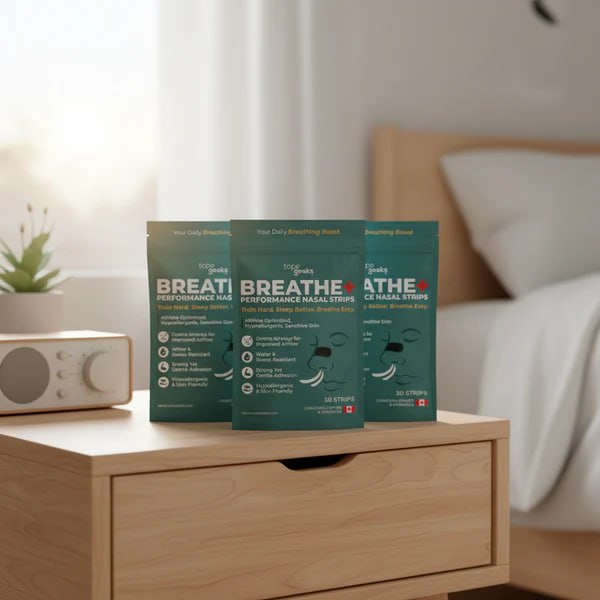
Most sleep brands sell either nasal strips or mouth tape. TapeGeeks makes both - plus a kids-specific option - so you can build your full stack from one brand, with products designed to work together.
- Breathe+ Mouth Tape - gentle adhesive, center breathing slot for emergency airflow, designed for lips (not muscles).
- Breathe+ Adult Nasal Strips - spring-loaded external dilator, hypoallergenic, all-night hold.
- Breathe+ Kids Nasal Strips - sized for ages 5+, same drug-free design, gentler adhesive for young skin.
Shop the full Breathe+ Sleep Collection
FAQ
Can I use mouth tape and nasal strips at the same time?
Yes. Nasal strips open the airway. Mouth tape keeps your breathing nasal. For healthy adults with clear nasal airflow, using both together is safe and often more effective than either alone.
Should I use nasal strips or mouth tape first?
Nasal strip first. Open the nose. Then - and only then - consider mouth tape. If your nose is blocked, taping your mouth makes breathing harder, not easier.
What happens when you combine mouth tape and nasal strips?
You get two complementary effects: reduced nasal airflow resistance from the strip plus enforced nasal breathing from the tape. Most users report less dry mouth, quieter snoring, and better morning energy when both are used correctly.
Do I need both nose strips and mouth tape?
Not always. If your nose is naturally clear but your mouth falls open at night, you may only need mouth tape. If your nose feels narrow or congested but you already breathe through your nose, a nasal strip alone may be enough. Try one first, then add the other if needed.
Can kids use mouth tape and nasal strips together?
Kids ages 5+ can use Breathe+ Kids Nasal Strips. Do not use mouth tape on children unless a pediatrician or sleep specialist has specifically recommended it. Children's airways are smaller and more vulnerable to obstruction.
Is mouth taping safe if I have a stuffy nose?
No. If your nose is blocked - from a cold, allergies, or congestion - do not tape your mouth. Use a nasal strip to open the airway, treat the congestion, and only consider mouth tape when your nose is clear again.
Can I use kinesiology tape instead of mouth tape?
Technically yes, but it is not ideal. KT tape is engineered for muscle groups - its adhesive is stronger than what lips need. Breathe+ Mouth Tape is purpose-made: gentle hold, easy morning removal, center breathing slot for panic or partial congestion. Use the right tool for the job.
How long does it take to get used to mouth tape?
Most people adjust within 3-7 nights. Do a 10-minute awake test the first time. If you feel anxious, remove the tape and try again the next night. Your body needs time to trust the setup.