




Quick answer: Mouth taping means putting a small strip of skin-safe tape over closed lips at night so you breathe through your nose. The evidence is thin: a 2025 systematic review found only 2 of 10 studies showed a significant improvement in sleep apnea measures. It may help healthy adults who mouth-breathe and snore lightly. It is unsafe if your nose is blocked or you may have sleep apnea.
Key takeaways
- Mouth taping is a nose-breathing aid, not a treatment for sleep apnea.
- The best-known study (20 people with mild sleep apnea, 2022) found snoring and breathing pauses roughly halved. Other studies found no difference.
- The American Academy of Sleep Medicine has called it a "dangerous" trend; the real risk is a blocked nose with a taped mouth.
- If you try it, use vented or vertically placed hypoallergenic tape, and only if you breathe easily through your nose.
- No study shows mouth taping changes your jawline.
In this guide: What it is · Myth or fact quiz · Does it work? · Is it safe? · What doctors and dentists say · The jawline claim · Why Amazon stopped selling it · 60-second nose test · How to try it safely · FAQ
A note on who is writing this. TapeGeeks sells mouth tape, so you should read this page on mouth taping knowing that. My background is engineering, not medicine. My job here is to lay out what the research actually measured, including the parts that don't help us sell anything.
What is mouth taping?
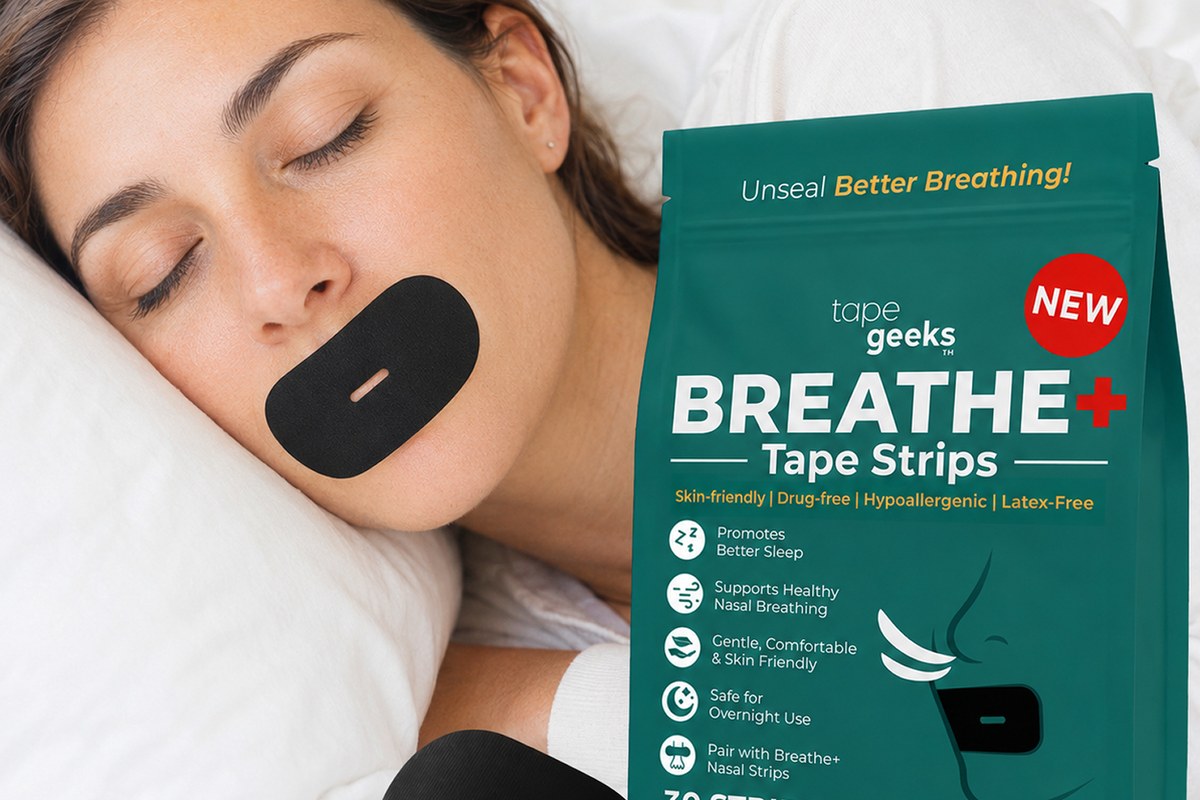
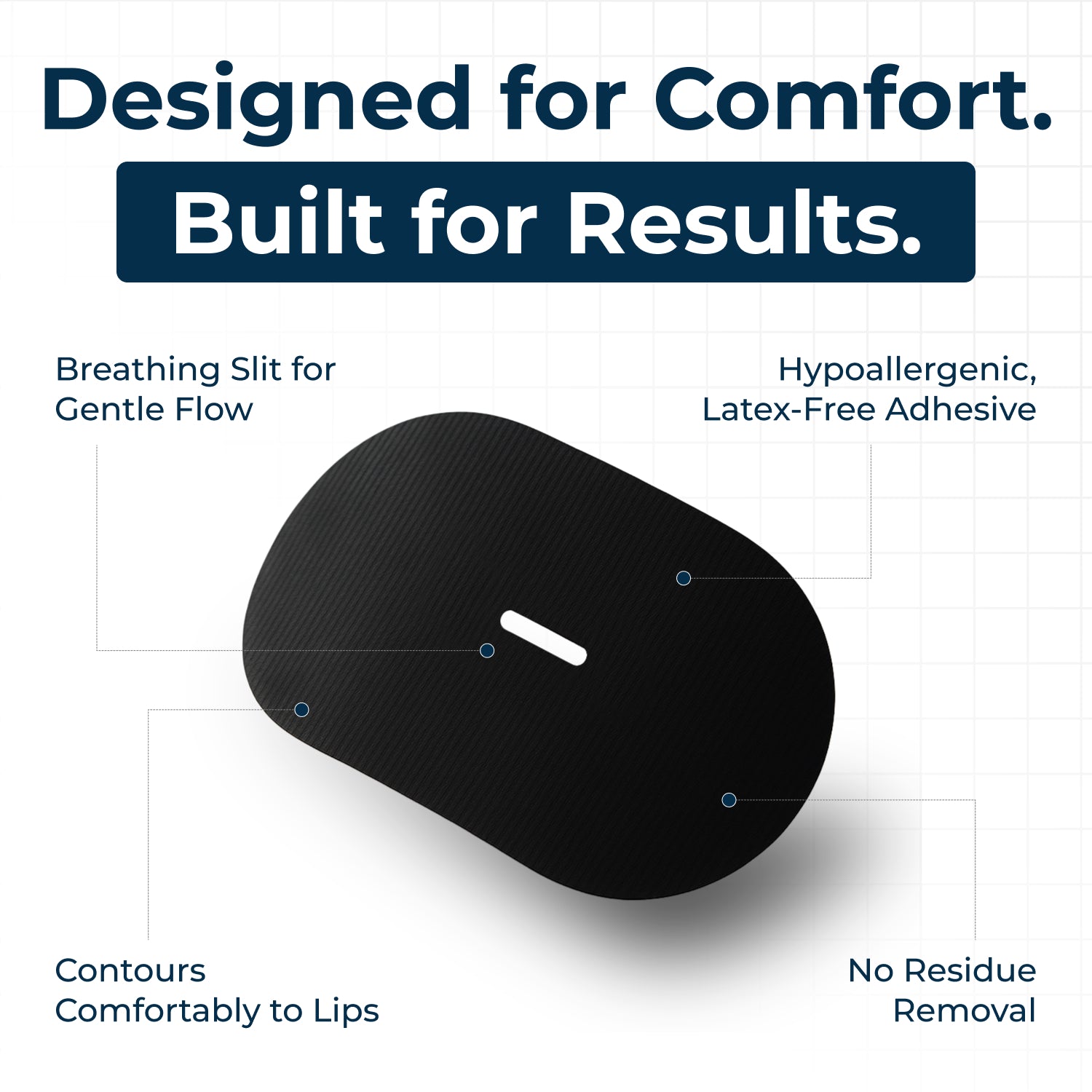
Mouth taping is the practice of sealing the lips with a small piece of tape before sleep so that breathing happens through the nose instead of the mouth. The tape is meant to hold the lips together gently, not to make breathing through the mouth impossible. Purpose-made sleep tapes use a skin-safe adhesive, and many have a vent or slit in the middle.
The idea behind it is simple. Your nose filters, warms and humidifies air; your mouth doesn't. People who sleep with their mouth open tend to wake up with a dry mouth and often snore. Taping is meant to train the habit back toward the nose.
See it: where the air goes
👆 Tap a step


Mouth open: much of each breath skips the nose, so it arrives dry, cold and unfiltered. That's why mouth breathers often wake with a dry mouth, and why many of them snore.
Taped, clear nose: the tape keeps the lips together, so every breath goes through the nose, which filters, warms and humidifies it. This is the only situation mouth taping is meant for.
Taped, blocked nose: if a cold or allergy blocks the nose overnight, the air has nowhere to go. This is the asphyxiation risk the 2025 PLOS ONE review warned about, and why you never tape with a stuffy nose.
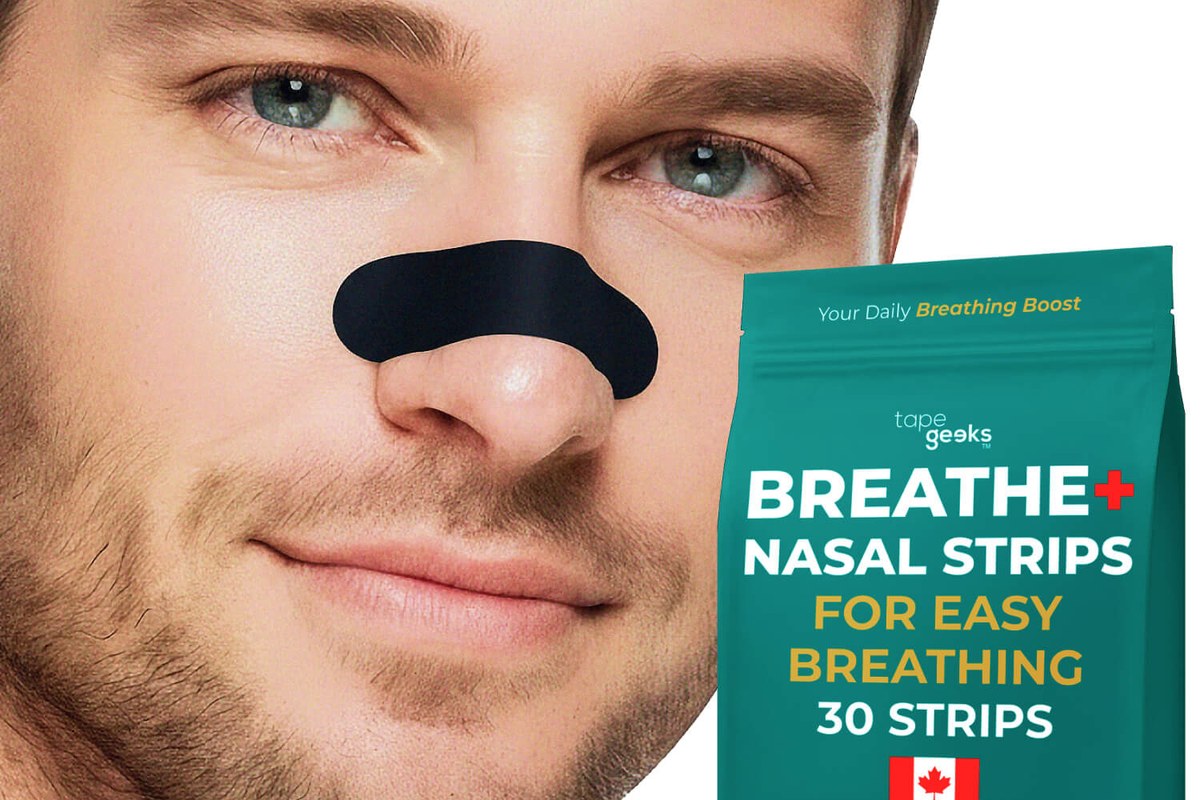
Taped + nasal strip: the strip gently lifts the sides of the nose so the passage stays open and breathing in takes less effort. In a 1999 Laryngoscope study of 20 adults, nasal strips raised peak airflow in through the nose by about 12% (2.55 to 2.86 litres a second), and a 1997 study found more nasal airflow in all 20 people tested. A strip is a good partner for mouth tape, but it doesn't make taping a blocked nose safe. See Breathe+ Nasal Strips.
Anatomical illustration, simplified. Each glowing dot is part of a breath: lime is nose air, orange is mouth air, white is the breath going back out.
It went viral on TikTok around 2022 and 2023. An American Academy of Sleep Medicine survey published in July 2023 found that 12% of Americans had already tried the mouth taping trend. That's a lot of people experimenting with something the research hadn't caught up with.
Myth or fact? Five mouth taping claims, tested
Most of what social media says about mouth taping has never been tested, so here are five common claims to sort before you read the research. Tap your guess on each one.
Quick quiz: myth or fact?
Your score: 0 of 5
Mouth taping is a treatment for sleep apnea.
Show the answer
Mouth taping can reduce snoring in some mouth-breathers.
Show the answer
Taping your mouth gives you a sharper jawline.
Show the answer
Any tape will do, even duct tape.
Show the answer
Amazon stopped selling mouth tape.
Show the answer
Does mouth taping work? What the research found
Mouth taping has a small amount of evidence for one group, adults with mild obstructive sleep apnea who breathe through the mouth, and almost no evidence for the broader claims made online. Here is every study-level source this page relies on.
| Study | What was studied | What it found |
|---|---|---|
| Lee et al., 2022, Healthcare | 20 mouth-breathers with mild sleep apnea, one week of taping with 3M silicone hypoallergenic tape | 13 of 20 (65%) cut their snoring at least in half. Median breathing-pause index fell from 8.3 to 4.7 events per hour. |
| Rhee et al., 2025, PLOS ONE (systematic review) | 10 studies, 213 patients, searched 1999 to 2024 | Only 2 studies showed significant improvement. Others found no difference and raised the risk of asphyxiation with a blocked nose. |
| Fangmeyer et al., 2025, Am J Otolaryngol (scoping review) | 177 studies identified, 9 included, plus 50 TikTok videos | 2 studies found significant sleep apnea improvements. One asthma study found no benefit. Most TikTok claims have never been tested. |
The evidence, in two numbers
Mouth taping studies that showed a significant benefit
Two review teams searched separately and landed on the same picture: a couple of positive studies, both measuring sleep apnea, and a lot of inconclusive work. The positive results are real but small, and they don't support the energy, immunity or jawline claims you see online.
Source: PubMed abstracts, PMID 40397877 (PLOS ONE) and 39662104 (Am J Otolaryngol).
The 2022 Lee study is the one most mouth tape brands quote, and it's worth knowing its limits. It had 20 participants, no control group, and lasted one week. The people were carefully screened: they had to tolerate the tape and have mild sleep apnea. That's a promising pilot, not proof.
My honest read: mouth taping can plausibly help a habitual mouth breather snore less and wake with a less parched mouth. Beyond that, nobody has shown it does much.
Is mouth taping safe? Risks and who should never try it
Mouth taping is low-risk for a healthy adult with a clear nose, and genuinely risky for anyone whose nose can block overnight. The Rhee 2025 review, led by otolaryngologists at London Health Sciences Centre in Ontario, concluded there is "a potentially serious risk of harm for individuals indiscriminately practicing this trend."
The serious risk is simple: if your nose blocks during the night and your mouth is sealed, you can't get enough air. Many of the studies excluded anyone with nasal obstruction for exactly this reason, so the evidence doesn't even cover the people most likely to get into trouble.
Do not try mouth taping if you:
- have a cold, allergies, a deviated septum or any nasal blockage
- snore loudly, gasp or choke at night, or feel exhausted every day (get tested for sleep apnea first)
- have been diagnosed with sleep apnea and aren't working with a doctor
- have been drinking alcohol or taken sedatives
- feel panicky or anxious with the tape on
- are a child (don't tape a child's mouth)
At TapeGeeks we tell customers the same thing: mouth taping is only for people whose nose is clear all night.
The everyday side effects are minor: skin irritation, adhesive residue, chapped lips and a few nights of broken sleep while you adjust.
What do sleep doctors and dentists say about mouth taping?
Most sleep medicine bodies treat mouth taping with caution, and none endorses it as a sleep treatment. The American Academy of Sleep Medicine's July 2023 news release put it bluntly: "At best, these viral trends are unproven, but at worst – like mouth taping – they can be extremely dangerous."
The dental side is more mixed. A 2017 consensus paper published in the American Academy of Dental Sleep Medicine's journal says that, for patients with dry mouth during oral appliance therapy, "suitable medical tape may be placed over the lips" if the nasal airway is open, and that it is "prudent to place the tape vertically" so air can pass around the sides. That's a narrow, supervised use, not a blanket recommendation.
In Canada, we could find no published position on mouth taping from the Canadian Dental Association or the Canadian Sleep Society as of October 2026. So when someone says "dentists recommend mouth taping," the honest answer is: some individual dentists do, in specific cases, and no professional body does in general.
Does mouth taping change your jawline?
No study has shown that mouth taping changes jawline or face shape in adults. The two 2025 reviews measured breathing and sleep outcomes, not facial structure. Adult bone doesn't remodel because your lips were taped for eight hours. If your face looks less puffy after a good night's sleep, that's the sleep, not the tape.
Why did Amazon stop selling mouth tape?
Amazon stopped allowing mouth tape sales on Amazon.com from July 31, 2023, and on Amazon.ca from September 26, 2023, citing customer safety. The Canadian Seller Central notice reads: "Effective September 26, in the interest of safety, Amazon will no longer allow the sale of mouth tape, also known as sleep tape."
That's why searching Amazon for mouth tape now turns up mostly surgical tape and nasal strips. Mouth tape is still legal to sell in Canada and the US; it's just sold through pharmacies, specialty sleep shops and brands' own websites. That's one reason TapeGeeks sells its mouth taping strips directly on tapegeeks.com.
Should you try mouth taping? Take the 60-second nose test
The most important safety check for mouth taping is whether you can breathe comfortably through your nose with your mouth closed. Do it right here, then answer one more question.
Try it now: the 60-second nose test
Close your lips and breathe only through your nose for 60 seconds while sitting still. If that feels easy, your nose passes the first safety check. If you feel short of air or need to open your mouth, don't tape tonight.
Keep your lips together. Press and hold the button while you breathe IN through your nose. Let go to breathe OUT.
How did that feel?
For reference, a resting adult takes about 12 to 18 breaths a minute (MedlinePlus). This test checks comfort, not a diagnosis.
Should you try mouth taping? Tap to find out
The two red boxes cover the people the research excluded or warned about. If you land in one, mouth taping isn't the next step; a conversation with your doctor is.
Based on exclusion criteria in Rhee 2025 and AADSM 2017 guidance. Not medical advice.
How to try mouth taping safely
Safe mouth taping comes down to four checks: a clear nose, the right tape, a daytime trial, and a willingness to stop.
Follow one night, step by step
Now: Step 1, check your nose.
Check your nose
Close your mouth and breathe through your nose for a few minutes while awake. If that's hard, don't tape. Treat the congestion or see a doctor.
Use skin-safe, vented tape
Pick hypoallergenic tape with a vent, or place plain medical tape vertically so air can pass at the sides. Never duct, packing or masking tape.
Practise awake first
Wear it for 15 to 20 minutes while reading. If you feel short of breath or anxious, take it off. That's your answer.
Track and stop if needed
Note snoring, dry mouth and how rested you feel for two weeks. If nothing improves, or you wake gasping, stop and talk to a doctor.
Mouth taping vs nasal strips, chin straps and CPAP
Mouth taping only fixes where you breathe; it does nothing for a narrow nose or a collapsing airway. Each option targets a different problem.
| Option | What it does | Best for | Not ideal for |
|---|---|---|---|
| Mouth tape | Keeps lips closed so you breathe through the nose | Healthy mouth-breathers with a clear nose and light snoring | Blocked nose, suspected or untreated sleep apnea |
| Nasal strips | Lift the sides of the nose to open the nasal passage | Snoring from a stuffy or narrow nose | Snoring that starts in the throat |
| Chin strap | Holds the jaw closed | CPAP users with mouth leak, under guidance | Anyone with nasal blockage |
| CPAP / oral appliance | Keeps the airway open | Diagnosed obstructive sleep apnea | Self-treatment without a sleep study |
Many people pair nasal strips with mouth tape: the strip opens the nose so the tape is safer and more comfortable. We compare the two in detail in nasal strips vs mouth tape.
Our take on mouth taping
TapeGeeks thinks mouth taping is a reasonable experiment for a narrow group of people and a bad idea for everyone else. That's not the most commercial position for a company that sells mouth tape, but it's what the studies support.
If you're a healthy adult who wakes with a dry mouth, your nose is clear, and nobody has ever told you that you stop breathing at night, a two-week trial is low-risk. If you're shopping, our guide to the best mouth tape in Canada compares the brands you can actually buy here, and how to choose a mouth tape covers what to look for. If you were planning to use kinesiology tape instead, read can you use kinesiology tape for mouth taping first.
Breathe+ Mouth Tape
Hypoallergenic, latex-free strips with a central breathing slit, 30 per pack. TapeGeeks designed them for mouth taping by healthy adults with a clear nose. Not a treatment for sleep apnea.
Shop Mouth Tape →Breathe+ Nasal Strips
Lift the sides of the nose so breathing in takes less effort. The easiest way to make sure your nose is clear before you tape, or to use on their own.
Shop Nasal Strips →Taping for the whole house? The Family Sleep Kit bundles mouth tape with adult and kids nasal strips (kids get the strips only, never tape).
Frequently asked questions about mouth taping
What is mouth taping?
Does mouth taping really work?
Is mouth taping safe?
What are the benefits of mouth taping?
What are the risks of mouth taping?
Do dentists recommend mouth taping?
Do doctors recommend mouth tape?
Does sleeping with mouth tape improve your jawline?
Why did Amazon stop selling mouth tape?
Can you use mouth tape if you have sleep apnea?
References
- Lee YC, Lu CT, Cheng WN, Li HY. The Impact of Mouth-Taping in Mouth-Breathers with Mild Obstructive Sleep Apnea: A Preliminary Study. Healthcare. 2022;10(9):1755. PubMed 36141367
- Rhee J, Iansavitchene A, Mannala S, Graham ME, Rotenberg B. Breaking social media fads and uncovering the safety and efficacy of mouth taping in patients with mouth breathing, sleep disordered breathing, or obstructive sleep apnea: A systematic review. PLOS ONE. 2025;20(5):e0323643. PubMed 40397877
- Fangmeyer SK, Badger CD, Thakkar PG. Nocturnal mouth-taping and social media: A scoping review of the evidence. American Journal of Otolaryngology. 2025;46(1):104545. PubMed 39662104
- American Academy of Sleep Medicine. Viral TikTok trends are not the answer for better sleep. July 25, 2023. aasm.org
- Sheats RD, Schell TG, Blanton AO, et al. Management of Side Effects of Oral Appliance Therapy for Sleep-Disordered Breathing. Journal of Dental Sleep Medicine. 2017;4(4). doi:10.15331/jdsm.6746. aadsm.org
- Amazon Seller Central (Canada). Sales of mouth tape no longer permitted, as of September 26. 2023. sellercentral.amazon.ca
- Amazon Seller Central (US). Sale of mouth tape no longer permitted, effective July 31. 2023. sellercentral.amazon.com
- Di Somma EM, West SN, Wheatley JR, Amis TC. Nasal dilator strips increase maximum inspiratory flow via nasal wall stabilization. Laryngoscope. 1999;109(5):780-4. PubMed 10334230
- Gosepath J, Mann WJ, Amedee RG. Effects of the Breathe Right nasal strips on nasal ventilation. American Journal of Rhinology. 1997;11(5):399-402. PubMed 9768323
Ready to breathe through your nose tonight?
Check your nose, pick a vented tape, and give it two honest weeks.
This article is for general information and is not medical advice. If you snore loudly, stop breathing during sleep, or feel exhausted during the day, see a doctor about a sleep study.