



Kinesiology Taping Guide PDF: 31 Techniques, Free and Co-Branded for Your Clinic

You tape a patient's knee on Tuesday. It works. They come back the following Tuesday with the tape long gone, having never reapplied it, because by the time they got home they could not remember whether the anchor went above or below the kneecap — and the photo they took on their phone was blurry and from the wrong angle.
This is the most ordinary failure in taping, and it has nothing to do with clinical skill. The technique was fine. The handover was the problem. So we built a kinesiology taping guide PDF covering 31 techniques, and we brand it with your clinic's name and logo, host it, and give it to you for free.
Quick answer: what is the co-branded taping guide?
- A 31-technique kinesiology taping guide, photographed step by step
- Co-branded with your clinic's name, logo, and accent colour
- Delivered as a hosted web page and a printable PDF
- Free — no setup fee, no subscription, no minimum tape order
- Includes access to Tappy, our free AI taping assistant, for the questions a handout can't answer
The gap between the treatment room and the living room
Kinesiology tape does its work over days, not minutes. A well-applied strip stays on for two to five days, keeps supporting the tissue through full range of motion, and gives the patient continuous sensory feedback while they go about a normal week. That is the entire point of an elastic tape over a rigid one — it keeps working while the patient keeps moving.
Which means the value is realised at home, days after the appointment, by someone who is not a clinician. If the patient cannot reproduce the application, the tape stops being a treatment and becomes a single-use novelty that wore off on Thursday.
Most clinics already know this and try to close the gap. The usual attempts: a verbal explanation at the end of a session the patient is only half-listening to, a phone photo taken at an angle that hides the anchor point, a printout from a tape manufacturer with another brand's logo on it, or a YouTube link that lands the patient on a video of variable quality made by someone with no clinical training.
None of these are bad instincts. They are all just under-resourced. A proper reference — one that covers the techniques you actually use, is legible at arm's length, and carries your clinic's name rather than a stranger's — is a genuinely useful thing to hand someone. It is also an annoying thing to build yourself, which is why almost nobody does.
What the research says about home-program adherence
Adherence to home programs is a well-studied and consistently disappointing area of musculoskeletal care, and the findings point directly at what a good handout can and cannot fix.
A systematic review in Manual Therapy examined twenty high-quality studies on barriers to treatment adherence in musculoskeletal physiotherapy outpatients. It found strong evidence that poor adherence is associated with low self-efficacy, a greater perceived number of barriers to exercise, and increased pain during exercise, among other factors (Jack et al., 2010).
Two of those are things a reference document genuinely moves. Self-efficacy — the patient's belief they can do it correctly — rises when they have a photograph of the finished result to check themselves against. Perceived barriers fall when "I can't remember how" stops being one of them. The third, pain during exercise, is a clinical problem and stays yours.
There is also good evidence that clinicians systematically overestimate what happens at home. In a study published in the Journal of Orthopaedic & Sports Physical Therapy, 54 adults with chronic knee pain were prescribed a home strengthening program and asked to keep exercise diaries, while a triaxial accelerometer was concealed in the ankle cuff weight they used. Over twelve weeks the diaries recorded a median of 220 completed exercises. The accelerometer recorded 176 (Nicolson et al., 2018).
Patients were not lying. Self-report is simply a poor instrument, and the authors concluded that diaries showed questionable validity against objective measurement. The practical implication for taping is uncomfortable: when a patient says they reapplied the tape twice last week, the real number is probably lower, and the gap is largest precisely where the technique was hardest to remember.
A handout will not solve adherence. Motivation, pain, and competing priorities are bigger levers than any document. But removing the recall problem is one of the cheapest interventions available to a clinic, and it is the one that currently goes undone in most practices for want of a decent asset.
What's inside the 31-technique library
The library covers 31 kinesiology taping techniques across six clinical categories. Every technique includes numbered steps, a note on whether the patient needs a second pair of hands, and a photograph of the completed application — so the patient is matching their result against a picture, not against a memory.
Here is the full breakdown, so you can judge whether it covers what walks through your door:
| Category | Techniques | Count |
|---|---|---|
| Lower Limb Pain | Groin, quadricep, hamstring, knee, calf, foot, ankle | 7 |
| Upper Limb Pain | Bicep, tricep, lateral elbow, medial elbow, wrist, shoulder | 6 |
| Spine Pain | Lower back, full back, abdominal, unilateral neck, bilateral neck | 5 |
| Scar Taping | Basic, linear, zigzag, star, scar tab | 5 |
| Posture Correction | Humeral fault, upper cross, T-L hinge, lower cross, valgus collapse | 5 |
| Edema Taping | Ankle edema, thigh edema, arm edema | 3 |
An honest limitation worth stating: this is a patient-facing reference, not a clinical education resource. It will not teach a practitioner anything new, and it deliberately avoids assessment, differential diagnosis, and dosage decisions. Those stay with you. The guide's only job is to let a patient reproduce, at home, a technique you have already chosen for them.
How the co-branding works
Co-branded means your clinic's identity leads the page. Your logo sits top-left, your clinic name is the first thing a patient reads, your city appears in the header, and your accent colour runs through the section headers. TapeGeeks appears as a partner credit. A patient's takeaway is that their clinic gave them a professional resource — because that is what happened.
You send four things
Clinic name, logo file, city, and a preferred accent colour.
We build it
Your branding is applied across all 31 techniques. Usually a few business days.
You get a link and a PDF
A hosted page we maintain, plus a print-ready PDF for your treatment rooms.
You hand it out
Email it, print it, put the QR code on your wall, or link it from your site.
You can see a finished example rather than take our word for it. Physio Sport Med of Oakville's guide is live — their logo, their name, their patients. That is exactly what yours would look like with your details in place.
Which pack fits your clinic?
The full 31-technique guide suits general physiotherapy, chiropractic, and multidisciplinary sports clinics. For a narrower scope of practice, a shorter pack usually gets used more — a podiatry clinic handing out a guide that opens with neck taping looks slightly off, and patients skim past what is not for them.
| Pack | Techniques | Best for |
|---|---|---|
| Complete guide | 31 | Physiotherapy, chiropractic, multidisciplinary sports clinics |
| Foot & ankle | 4 | Podiatry and chiropody |
| Lower limb | 7 | Running clinics, sports medicine, gait-focused practices |
| Upper limb | 6 | Hand therapy, shoulder rehab, racquet and overhead sports |
| Spine | 5 | Chiropractic and back-pain-focused practices |
| Posture | 5 | Desk-worker caseloads, ergonomic and movement programs |
| Scar | 5 | Post-surgical rehab, burn and scar management |
| Edema | 3 | Lymphatic and swelling management |
Clinics can take more than one. A multidisciplinary practice might hand the complete guide to physio patients and the foot-and-ankle pack to the chiropodist's caseload.
Getting it actually used, not filed
A resource nobody hands out is worth nothing. Having watched how clinics use these, the difference between a guide that gets used and one that sits in a folder comes down to when it is given, not how good it is.
Four distribution methods, roughly in order of how well they work:
| Method | How it works | Best for |
|---|---|---|
| In-room, at the moment of taping | Open the guide on your screen or a wall QR code while you apply the tape, and point at the technique they are about to be responsible for | Highest recall — the reference is tied to the physical memory |
| Follow-up email | Send the link the same day with one line naming the specific technique used | Patients who process information at home; leaves a searchable record |
| Printed pages in treatment rooms | Print the relevant technique and send it home in their hand | Older patients and anyone who will not open an email link |
| Linked from your website | Add it to your patient resources page as a permanent, branded asset | Prospective patients evaluating your clinic before booking |
One thing consistently beats the rest: name the specific technique when you hand it over. "Here's our taping guide" gets filed. "Here's our taping guide — you want technique 4, the knee one, page two" gets used. Thirty-one techniques is broad enough to be useful and long enough to be intimidating, so do the narrowing for them.
Tappy handles the questions a handout can't
A printed guide is fixed. Patients are not. They ask things a static document was never going to cover — can I shower with this on, my skin went red, it peeled at the edge after one day, can I tape over a healing blister, how long before I reapply.
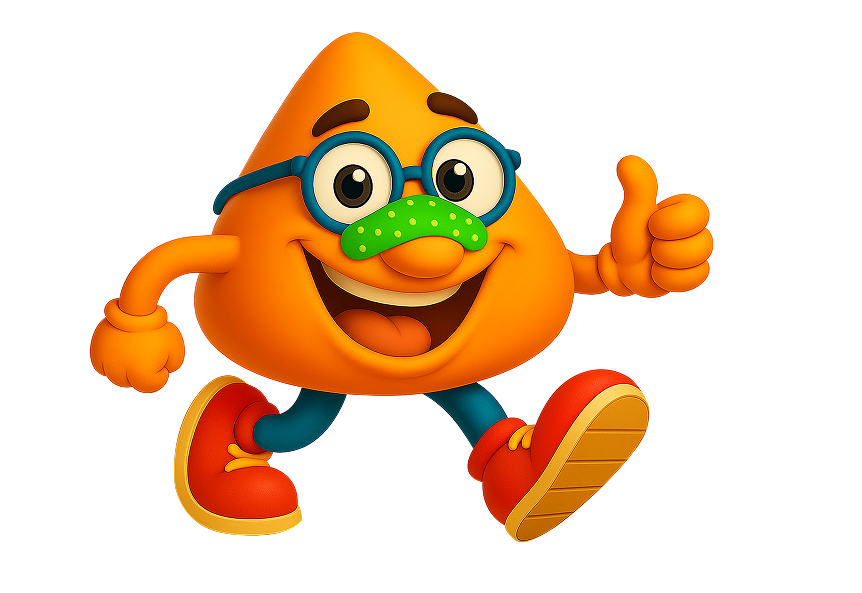
Tappy is our free AI taping assistant, and he lives in the chat bubble at the bottom-right corner of tapegeeks.com. No login, no account, no cost. He answers taping questions in plain language, any hour, which matters because patients tend to notice a problem at 9pm on a Sunday rather than during your opening hours.
What patients typically ask Tappy:
- Which tape suits a specific injury, and how much stretch to apply
- Application, wear time, showering, swimming, and clean removal
- What to do about skin irritation or early edge-peeling
- Whether taping is appropriate at all for what they are describing
Tappy is also useful on your side of the counter. He handles wholesale and bulk order questions, so a clinic manager pricing out a term's worth of tape can get an answer without waiting on an email reply.
Worth being clear about the boundary: Tappy answers product and technique questions. He does not diagnose, and he is built to point people back to their practitioner when a question is clinical rather than practical. He reduces the volume of low-value admin questions reaching your front desk — he does not intercept your patients.
Talk to Tappy on TapeGeeks.com →
Why we give this away
Reasonable question, and a vague answer would be a bad sign. So, directly: TapeGeeks sells kinesiology tape. Clinics that hand out a taping guide tape more patients, and patients who successfully reapply tape at home buy more of it. Some of that lands with us. That is the whole model.
What we are not doing is using the guide as a trojan horse. There is no email capture on it, no gate, no drip sequence waiting for your patients, and no obligation attached to accepting it. If you take the guide, hand it out for two years, and never buy a roll of tape from us, nothing happens. We think that is unlikely at scale, which is why the offer works without any strings.
The second reason is SportClinicFinder, our free directory of 12,700+ Canadian sports health clinics. Building genuinely useful things for clinics is how a directory earns the right to exist. A listing is free there too, and the two offers are designed to sit together — the guide gives your patients something concrete, the listing helps new patients find you.
Two free things for Canadian clinics
1. Your co-branded taping guide — 31 techniques, your name and logo, hosted and printable.
2. Your SportClinicFinder listing — free profile in Canada's sports clinic directory, no account required. sportsclinicfinder.com
How to request your clinic's guide
Message Tappy on tapegeeks.com and say you want a co-branded clinic taping guide, or reach us through the contact form. Include your clinic name, city, a logo file (PNG or SVG, transparent background if you have one), your preferred accent colour, and which pack you want from the table above.
If you are unsure which pack fits, describe your caseload and we will suggest one. Most clinics that start with a specialty pack end up taking the complete guide within a few months anyway, so there is no wrong first answer.
Shop TapeGeeks Kinesiology Tape →
Free shipping on orders over CA$50 in Canada and US$40 in the United States. Wholesale and clinic pricing is available — ask Tappy for current rates.
Frequently asked questions
Patient education is one of the few things in a clinic that costs almost nothing and compounds. A patient who can reproduce their taping at home gets a better outcome, needs fewer remedial appointments for the same complaint, and tells people where they went. The guide is our attempt to make that easy enough that it actually gets done.
For the clinical side of this — the patient-facing case for handouts and how Canadian clinics are using them — see our companion piece on SportClinicFinder: Patient Education Handouts for Canadian Sports Clinics.