





When to Use Kinesiology Tape vs. When to See a Physio

Written by: Professor Geek (The Geek Educator)
Edited by: Greg Kowalczyk, CEO & Co-Founder, TapeGeeks Inc.
Most athletes treat this as an either/or decision. They roll an ankle, grab some kinesiology tape, and hope it resolves on its own — or they skip the tape entirely and immediately book a physio appointment. The reality is more useful than either extreme: kinesiology tape and physiotherapy are two different tools for two different jobs, and the best injury outcomes use both deliberately.
This guide explains exactly when each is appropriate, when you need to prioritize clinic care, and how TapeGeeks kinesiology tape fits into a proper rehab plan alongside sports clinic treatment.
Quick Answer
- Use kinesiology tape when: You have a diagnosed injury and need management support between clinic appointments, joint support during return-to-sport, or swelling control in the early acute phase
- See a physio when: The injury is new and undiagnosed, pain isn't improving after 5–7 days, the injury keeps recurring, or you need clearance to return to training
- Use both when: You're in active rehab — tape manages symptoms, physio resolves the underlying cause
What Kinesiology Tape Actually Does (and What It Doesn't)
Kinesiology tape is an elastic therapeutic tape designed to support muscles and joints while allowing full range of motion. It's not a rigid brace. It doesn't immobilize. Applied correctly, it lifts the skin slightly to improve fluid circulation, stimulates sensory receptors to improve proprioception (joint position awareness), and provides mechanical support without restricting movement.
What the research supports:
- Reducing swelling and bruising in the acute phase of soft tissue injuries
- Improving proprioception — your body's ability to sense joint position during movement
- Providing mild mechanical support to a joint or muscle group
- Reducing pain perception through sensory input (gate control theory)
- Allowing continued activity during recovery when combined with proper rehab
What kinesiology tape cannot do:
- Diagnose an injury or tell you what's wrong
- Fix tissue damage, tendon tears, ligament sprains, or muscle strains
- Correct a movement pattern that's causing chronic pain
- Strengthen weakened muscles or rebuild joint stability
- Replace the manual therapy and progressive exercise that physiotherapy provides
Tape is a management and support tool. It's not a treatment. That distinction is the key to using it correctly.
When Kinesiology Tape Is the Right Call
These are the scenarios where TapeGeeks kinesiology tape is genuinely the right tool — either alone or alongside clinic care.
1. You have a diagnosed injury and are managing between clinic appointments
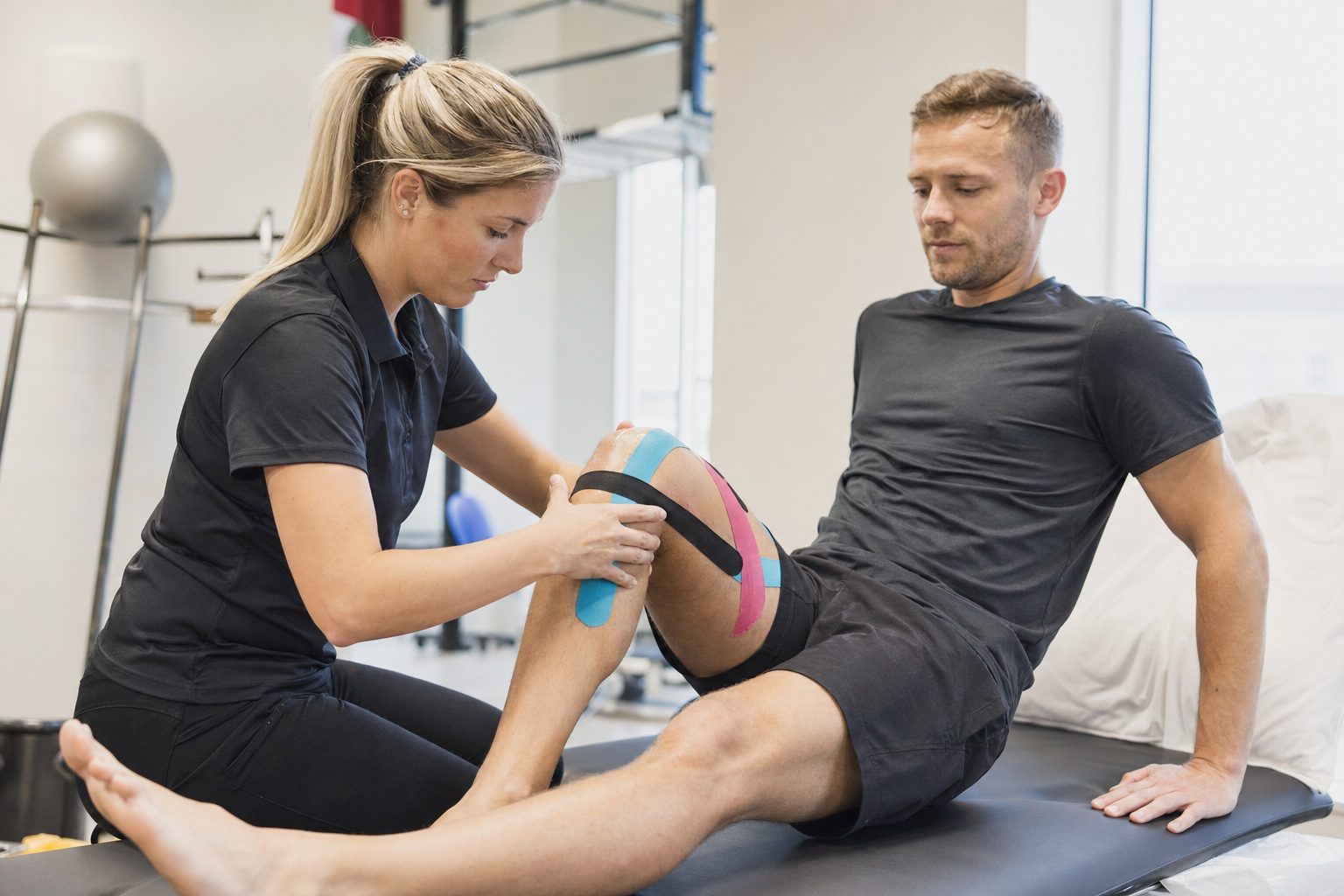
Your physio has assessed you, you have a diagnosis, and you're doing your home exercises — but your next appointment is four days away and your knee is still swollen. This is kinesiology tape's ideal use case. Applied correctly for swelling management (the "lifting" application), tape keeps fluid moving and can meaningfully reduce the discomfort between sessions. You're not skipping the physio — you're managing the gap.
2. You're returning to sport and need joint support
You've done the rehab, your physio or AT has cleared you, and you're heading back to practice or competition. A kinesiology tape application on your ankle, knee, or shoulder gives you proprioceptive support — improved joint position awareness — during the period when the tissue is healed but your movement confidence is still rebuilding. It's not a security blanket. It's a tool for the transition phase.
3. Early acute management — the first 24–72 hours
You rolled your ankle in a weekend soccer game, it's minor, and your clinic appointment isn't until Tuesday. Applying a lymphatic drainage taping technique in the first 24–72 hours can meaningfully reduce swelling and bruising. This buys you time before your appointment without masking pain or preventing a proper assessment.
4. Your physio or athletic therapist has prescribed a specific taping technique
Many physios and ATs teach their patients specific kinesiology tape applications as part of the home program. Patellar tracking correction, rotator cuff support, plantar fascia taping — these are prescriptive applications. If your practitioner has shown you a technique, that's a green light. You know what you're doing and why.
5. Preventive application on a historically vulnerable joint
You've had three ankle sprains over the years. Your physio has cleared you. You're about to run a trail race. Applying a preventive kinesiology tape job to your ankle before the event is a reasonable choice — not because it will prevent every sprain, but because the proprioceptive input helps your nervous system respond faster to unstable surfaces.
When You Absolutely Need to See a Physio
Kinesiology tape is not a substitute for professional assessment and treatment. These situations require a sports clinic, not a roll of tape.
1. The injury is new and you don't know what you're dealing with
If you don't have a diagnosis, tape is guesswork. You can't apply a meaningful taping application to an unknown injury. More importantly, some injuries that feel mild — particularly ligament injuries and stress fractures — have serious consequences if you train through them unassessed. Get the assessment first. Then tape appropriately.
2. Pain isn't improving after 5–7 days
Minor soft tissue injuries typically show meaningful improvement in the first week with rest, ice, and basic self-care. If you're at day seven and things aren't getting better — or are getting worse — that's a clinic appointment. Taping a lingering injury without assessment just masks the problem.
3. You have pain at rest
Pain that's present at rest — not just with movement or activity — is a red flag for more significant tissue involvement. This could be a partial tear, an inflammatory condition, or something that needs imaging to rule out serious pathology. Book the physio or sports medicine physician.
4. The same injury keeps recurring
Recurrent injuries — same ankle, same shoulder, same knee — aren't bad luck. They're a movement pattern problem, a strength imbalance, or a structural issue that hasn't been properly addressed. Tape won't fix the root cause. Physiotherapy can. This is exactly what a good physio is built for.
5. You need clearance to return to training or competition
Return-to-sport decisions shouldn't be made unilaterally. A physiotherapist or athletic therapist can assess whether your movement quality, strength, and joint stability are at the level needed to return safely. Taping yourself back to training without that assessment risks re-injury at a higher severity.
6. The joint locked, gave way, or made a pop
Locking, giving way, and audible pops at the time of injury all suggest involvement of structures beyond soft tissue — ligaments, cartilage, or meniscus in the knee. These need imaging and a proper diagnosis. Tape cannot address any of these.
⚠️ Skip the clinic and go to emergency if:
You cannot bear weight, suspect a fracture, see visible deformity, have numbness or tingling below the injury site, or injured your head or neck. Emergency first — sports clinic after.
The Smart Approach: Using Tape and Physio Together
The best outcomes — faster recovery, lower re-injury rate — come from combining both deliberately. Here's how the two tools fit together in a typical rehab cycle:
| Phase | Physiotherapy Does | Kinesiology Tape Does |
|---|---|---|
| Acute (days 1–5) | Assessment, diagnosis, manual therapy, treatment plan | Swelling and bruising management between appointments |
| Subacute (weeks 2–4) | Progressive loading, manual therapy, exercise rehab | Joint support and proprioception during daily activity |
| Return to sport | Sport-specific loading, clearance assessment | Preventive support during training and competition |
| Maintenance | Check-in appointments, ongoing strength work | As-needed for high-load training days or events |
The simplest framing: physiotherapy resolves the underlying problem. Kinesiology tape helps you function better while that process happens.
Common Sports Injuries: Tape, Physio, or Both?
| Injury | Right approach |
|---|---|
| Ankle sprain (Grade 1–2) | Physio for assessment + tape for swelling management and return to sport |
| Knee pain (runner's knee, patellar tendinopathy) | Physio for diagnosis and loading program + tape for patellar support between sessions |
| Plantar fasciitis | Physio for assessment and treatment + tape for pain management during daily activity |
| Rotator cuff strain | Physio first — diagnosis needed before any taping approach is applied |
| IT band syndrome | Physio for root cause (hip strength, gait analysis) + tape for lateral knee support during training |
| Lower back pain | Physio or chiro for assessment — tape has a limited role here without a clear diagnosis |
| ACL injury or suspected ligament rupture | Emergency / sports medicine physician — imaging required. Tape is not appropriate here. |
Finding a Sports Clinic in Canada for Your Injury
If this guide has made it clear that you need a clinic appointment, the fastest way to find a qualified sports clinic in Canada is SportClinicFinder — Canada's free directory of 13,000+ verified sports health clinics, searchable by city, injury type, or specialty.
Etobicoke athlete note: when kinesiology support fits
Short answer: if you are in Etobicoke and need exercise-based rehab, movement screening, or return-to-sport programming, tape can support the sore area between sessions — but the plan should come from a local clinician who can assess how you move.
For west-GTA runners, gym-goers, court-sport athletes, and active workers, SportClinicFinder's Etobicoke kinesiology clinic guide is the right next step when recurring pain, weakness, or return-to-training confidence needs more than a tape application. Compare kinesiology, physiotherapy, chiropractic, athletic therapy, and sports medicine options before you decide how to combine clinic care with TapeGeeks kinesiology tape.
Hamilton athletes dealing with tight calves, sore backs, or post-race muscle pain can also find a massage therapy clinic in Hamilton before deciding whether taping, hands-on care, or a full rehab plan is the right next step.
Province-specific guides to sports clinic options across Canada:
- Sports Clinics in Ontario — OHIP coverage, city-by-city directory
- Sports Clinics in BC — MSP coverage, Vancouver to Prince George
- Sports Clinics in Alberta — AHCIP coverage, Calgary and Edmonton guide
- How to Find a Sports Clinic in Canada — complete national guide
TapeGeeks Kinesiology Tape — For the Gaps Between Appointments
When you're in active rehab, TapeGeeks kinesiology tape is designed to hold up through training, sweat, and multiple days of wear. Latex-free, hypoallergenic, with a gentle adhesive that won't damage skin on removal.
Taping guides for common sports injuries:
- How to tape a lateral ankle sprain with kinesiology tape
- Patellar taping: kinesiology tape for knee pain
- Kinesiology taping for heel pain and plantar fasciitis
Frequently Asked Questions
Can kinesiology tape replace physiotherapy?
When should I use kinesiology tape for a sports injury?
When should I see a physiotherapist instead of taping?
Can I use kinesiology tape and see a physio at the same time?
Does kinesiology tape work for sports injuries?
Where can I find a sports clinic in Canada?
The Bottom Line
Kinesiology tape and physiotherapy aren't competing. Tape manages your injury between clinic visits, supports your joints during return to sport, and keeps you active through recovery. Physio assesses, diagnoses, and resolves the underlying problem. Used together, you recover faster and more completely than with either alone.
The rule is simple: if you don't have a diagnosis, get one first. Use SportClinicFinder to find a sports clinic near you, get assessed, then use TapeGeeks kinesiology tape to manage and support your recovery between appointments.
Shop TapeGeeks Kinesiology Tape →