






Written by: Professor Geek (The Geek Educator)
Edited by: Greg Kowalczyk, CEO & Co-Founder, TapeGeeks Inc.
Written by: Professor Geek (The Geek Educator)
Edited by: Greg Kowalczyk, CEO & Co-Founder, TapeGeeks Inc.
How to Tape for a 5K Race: Race-Day Taping Tips for the Mercedes-Benz Oakville Bronte Harbour Classic
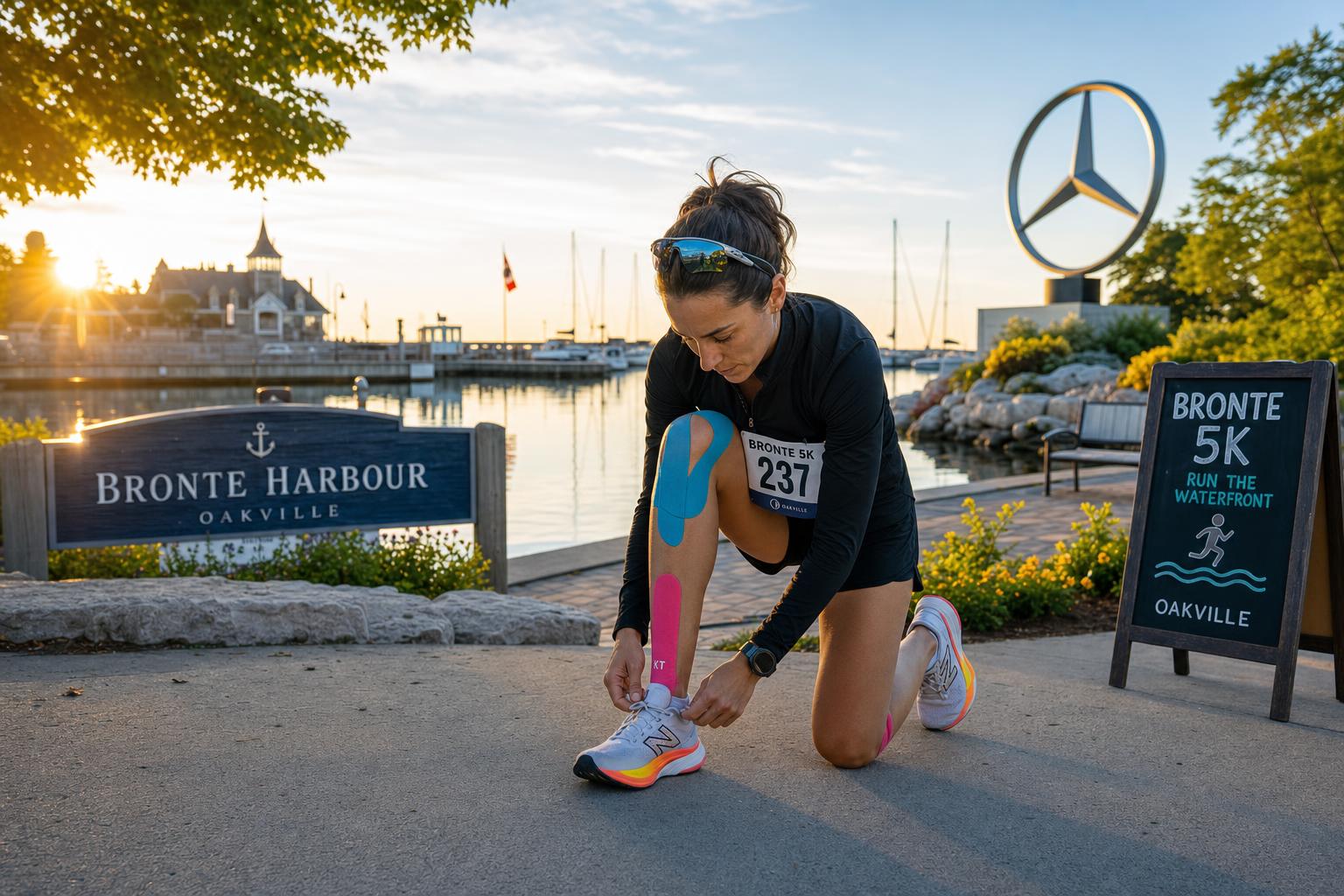
When preparing for a 5K race like the Mercedes-Benz Oakville Bronte Harbour Classic, you must consider all aspects of race preparation, including the often-overlooked element of taping. Taping can be an integral part of your race day routine, offering support, enhancing performance, and aiding in injury prevention. This guide will walk you through how to effectively use kinesiology tape for the race, ensuring you're ready to tackle the scenic course along Lake Ontario.
Quick Answer: How should you tape for the Mercedes-Benz Oakville Bronte Harbour Classic 5K?
Use kinesiology tape to support key muscles and joints, focusing on areas prone to strain, such as the knees and ankles. Apply the tape at least 30 minutes before the race to ensure adhesion, and use RunMate Pro for tracking recovery and performance.
Understanding Kinesiology Tape
Kinesiology tape is designed to facilitate a natural healing process while providing support and stability to muscles and joints without restricting the body's range of motion. For runners, this tape is particularly useful in addressing issues like IT band syndrome, plantar fasciitis, and general joint support.
Pre-Race Taping Techniques
The days leading up to the race are crucial for proper preparation. Start by identifying any previous injuries or areas of discomfort. Common areas that benefit from taping include the knees, ankles, and lower back.
Knees
For knee support, cut two strips of kinesiology tape approximately 10 inches long. Apply the first strip below the knee cap, then cross the knee diagonally with the second strip. This provides lateral stability and helps in patella tracking.
Ankles
To tape your ankle, start with the foot in a neutral position. Cut a strip of tape long enough to wrap around the heel and up the sides of the ankle. This taping method supports the ankle joint and helps prevent sprains.
Shop KT Tape →| Feature | KT Tape Pro Synthetic Precut Strips | Leukotape P + Cover-Roll Stretch | Best for |
|---|---|---|---|
| Tape type and stretch | Elastic kinesiology tape; synthetic fibres; about 140% stretch for moving joints and muscles | Rigid zinc-oxide sports tape over hypoallergenic Cover-Roll; minimal stretch for firm support | KT Tape for mobility; Leukotape for strong stabilization |
| Typical 5K race use | Light support for runner’s knee, Achilles irritation, calf tightness, shin discomfort, or IT-band cueing | Blister prevention, arch support, plantar fasciitis taping, or limiting ankle/foot motion | Oakville Bronte Harbour runners choosing comfort vs control |
| Real product specs | Usually sold as 20 precut strips, each about 10 in / 25 cm long; latex-free; water-resistant | Leukotape P commonly 1.5 in x 15 yd roll; Cover-Roll Stretch commonly 2 in x 10 yd roll | Precut convenience vs customizable taping |
| Approx. price | About CAD $25-$35 per 20-strip roll, depending on retailer | About CAD $15-$25 for Leukotape P plus CAD $12-$20 for Cover-Roll | KT Tape for single-race simplicity; Leukotape setup for multiple applications |
| When to apply before the start | Apply 30-60 minutes before the race on clean, dry skin; rub adhesive to activate | Apply the night before or at least 60 minutes before running; use Cover-Roll underlayer to protect skin | Early-morning race prep near Bronte Harbour |
| Sweat, water, and removal | Good for sweat and light rain; may last several days; remove slowly with oil or warm water | Very strong adhesive; holds well in sweat; remove carefully, especially from sensitive skin | Humid or rainy 5K conditions |
Race-Day Taping Tips
On the morning of the race, ensure you apply your kinesiology tape at least 30 minutes before the start to allow it to adhere properly. Clean the skin thoroughly to remove oils and sweat, which can affect the tape's adhesion. Avoid stretching the tape too much, as over-tension can reduce its effectiveness.
Hydration and Nutrition
While taping can provide physical support, don't neglect the basics of race preparation. Stay hydrated with water or electrolytes provided by Natrilyte, the event's hydration sponsor. Balance your nutrition to avoid cramps or fatigue during the race.
Post-Race Recovery
After crossing the finish line, your focus should shift to recovery. Remove the kinesiology tape gently to avoid skin irritation. Use the RunMate Pro app to track your recovery metrics, including heart rate variability and muscle soreness. This data can help optimize your post-race rest and recovery strategy.
Cool Down and Stretch
Spend at least 10-15 minutes cooling down after the race. Incorporate gentle stretching to aid in muscle recovery and prevent stiffness. Staying active with a light walk can also be beneficial.
Shop KT Tape →FAQs About Taping for the Bronte Harbour Classic
What type of tape is best for running?
Kinesiology tape is ideal for running as it offers support and stability while allowing for a full range of motion. It can help alleviate pain, improve circulation, and enhance performance.
How soon before the race should I apply the tape?
Apply the tape at least 30 minutes before the race. This allows time for the adhesive to bond with the skin, ensuring it stays in place throughout the run.
Can I use KT tape if I have sensitive skin?
Yes, but it's recommended to test a small area first. If irritation occurs, discontinue use. TapeGeeks offers hypoallergenic options for those with sensitive skin.
Will the tape stay on if it rains on race day?
Kinesiology tape is generally water-resistant. However, ensure the skin is dry and oil-free before application. For heavy rain, consider applying a waterproof adhesive spray for extra security.
How do I remove the tape after the race?
To remove the tape, gently pull it back in the direction of hair growth. You can use baby oil or warm water to help dissolve the adhesive, minimizing discomfort.
Can taping help prevent injuries?
Yes, taping can provide additional support to muscles and joints, reducing the risk of injury. It helps maintain proper alignment and stabilizes the affected areas during physical activity.
Is taping only for injuries?
No, taping can also be used to enhance performance by improving proprioception and providing support to prevent fatigue in critical areas like calves and quads during a race.
Shop KT Tape →Best for
- 5K runners logging 15–30 km per week who get mild knee tracking discomfort after 3–4 km but can run without limping
- Bronte Harbour Classic participants using tape for familiar hot spots, such as arch support for mild plantar fascia tightness or blister prevention on the heel
- Runners with minor shin or calf fatigue from recent speedwork, especially if symptoms stay below 3/10 and improve during warm-up
- First-time 5K racers who have tested kinesiology tape on at least one 4–5 km training run before race day
- Masters or recreational runners wanting light proprioceptive support for ankles on turns, curbs, or uneven lakeside pavement
Not ideal for
- Anyone with sharp pain, swelling, bruising, numbness, or pain above 5/10 before the start line
- Runners with suspected stress fracture symptoms, such as pinpoint shin or foot pain that worsens with each step
- People with adhesive allergy, fragile skin, eczema flare-ups, open cuts, sunburn, or blisters where the tape would sit
- Racers trying a new taping pattern for the first time on race morning without testing it in training
- Anyone using tape to “push through” a limp, recent ankle sprain, calf tear, or pain that changes their stride during a 5K
Frequently Asked Questions
Should I tape before running the Mercedes-Benz Oakville Bronte Harbour Classic 5K?
Taping can help if you have a known issue, such as mild ankle instability, kneecap discomfort, or arch irritation, but it is not required for every 5K runner. Test any tape at least 7 days before race day during a short run. A 5K is 3.1 miles, so comfort, circulation, and skin tolerance matter more than adding tape “just in case.”
What kind of tape is best for a 5K race?
For a 5K, kinesiology tape is commonly used for light support and comfort, while rigid athletic tape is better for stronger joint restriction, such as an ankle sprain history. A 2012 meta-analysis in Sports Medicine (Williams et al.) found little quality evidence that kinesiology tape outperforms other elastic taping, rating its effect on pain as trivial while noting small benefits for strength, active range of motion and proprioception. Choose tape based on your goal: flexible movement, firm support, or blister protection.
How long before a 5K should I apply kinesiology tape?
Apply kinesiology tape about 30 to 60 minutes before warming up so the adhesive bonds to clean, dry skin. Rub the tape for 10 to 20 seconds after application to activate the adhesive. Avoid lotion, sunscreen, or heavy moisturizer under the tape. If the Oakville morning is humid near Bronte Harbour, give the tape extra setting time before sweating.
Can taping help runner’s knee during a 5K?
Taping may reduce pain from patellofemoral pain, often called runner’s knee, during a short race, but it should not replace strengthening or proper training. The Journal of Orthopaedic & Sports Physical Therapy clinical guideline on patellofemoral pain notes that exercise therapy is strongly recommended, with taping sometimes used as an adjunct. Test knee taping on a 20-minute run before race day.
Should I tape my ankles for a flat road 5K?
Ankle taping may be useful if you have had a previous ankle sprain or feel unstable on turns, even on a mostly flat road 5K. Research indexed on PubMed shows external ankle supports can reduce recurrent ankle sprain risk in athletes. Use rigid tape or a lace-up brace only if you have trained with it, because too much restriction can change your stride.
Can I use tape to prevent blisters during the Oakville Bronte Harbour Classic?
Yes, low-friction tape or blister-specific tape can help protect hot spots on the heel, arch, or toes during a 5K. The Mayo Clinic recommends covering friction-prone areas and keeping feet dry to help prevent blisters. Apply tape smoothly with no wrinkles, trim corners round, and test it in the same socks and shoes you plan to wear for the 3.1-mile race.
How do I remove running tape after the race without hurting my skin?
Remove tape slowly after the race, ideally after a shower or with a small amount of oil to loosen the adhesive. Pull the tape back over itself while supporting the skin with your other hand. Do not rip it off quickly, especially after sweating for 30 minutes or more. Stop using tape if you see redness, blistering, itching, or broken skin.
When should I avoid taping before a 5K?
Avoid taping if you have an adhesive allergy, open cuts, active rash, infection, numbness, or unexplained swelling. The Cleveland Clinic advises seeking medical care for pain with major swelling, deformity, or inability to bear weight. For a 5K, tape should support a minor, familiar issue, not hide a new injury. If pain changes your gait, skip taping and get assessed.