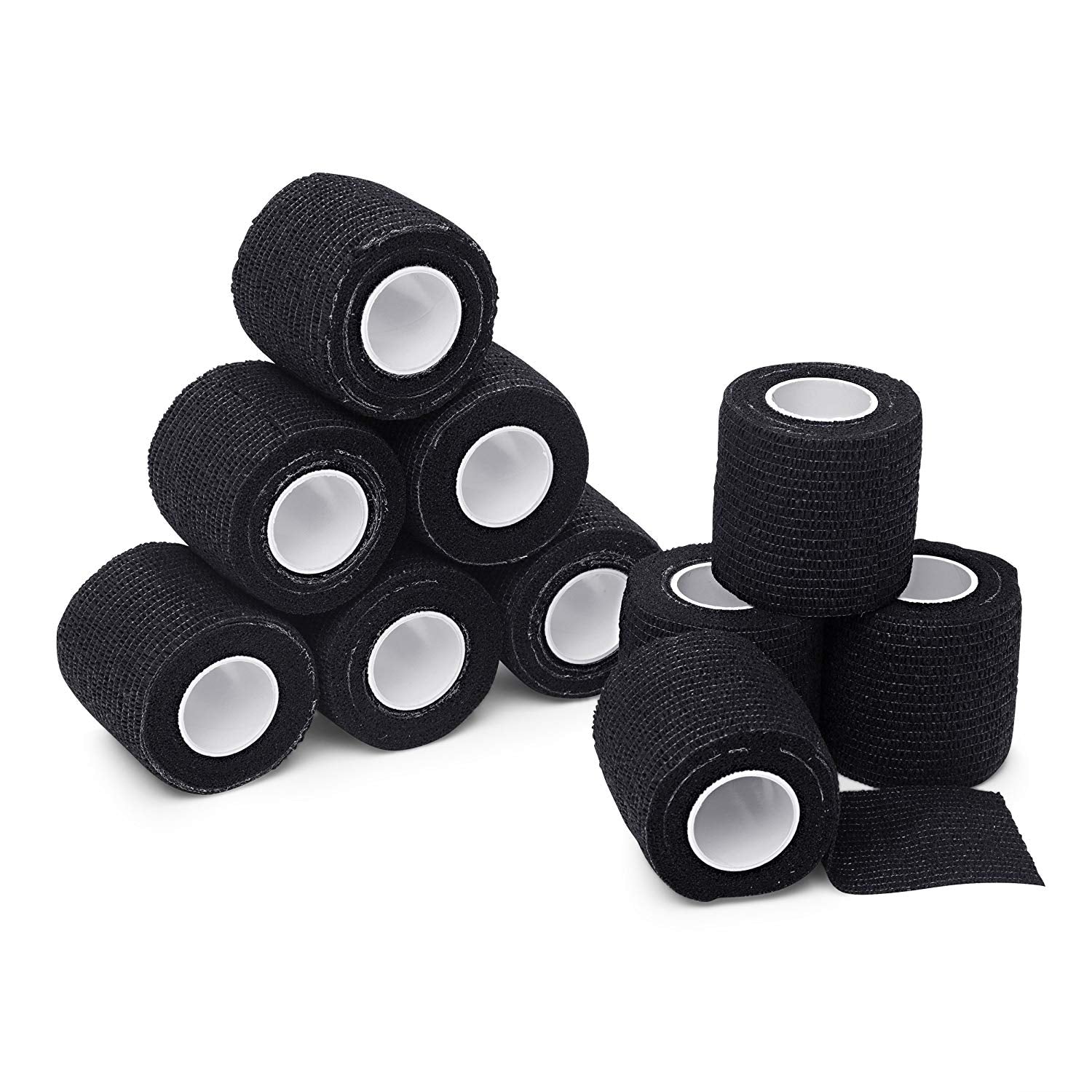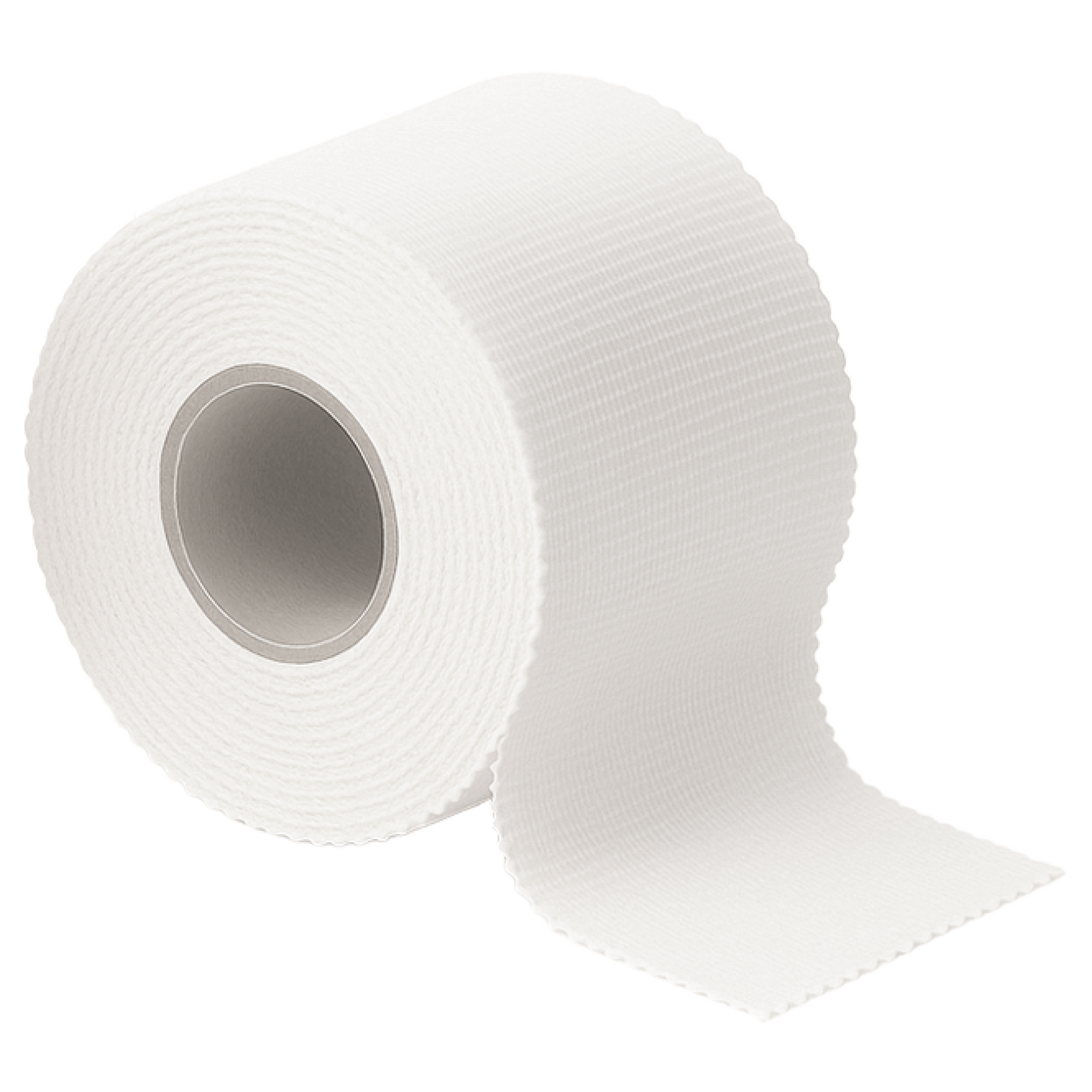





Rigid athletic & sports tape for firm support and grip. Unlike stretchy kinesiology tape, athletic tape is a strong, non-elastic cotton tape that restricts movement to stabilize a joint or protect skin — the classic white tape you see on ankles, wrists, thumbs, and fingers. TapeGeeks athletic tape tears cleanly by hand, holds through sweat and training, and is trusted by athletes, coaches, and trainers across BJJ, CrossFit, weightlifting, climbing, gymnastics, and team sports.
This collection also includes finger/weightlifting tape, foam underwrap, elastic adhesive bandage, and cohesive wrap — everything you need to build a tape job. Not sure whether you want rigid athletic tape or stretchy kinesiology tape? The two do opposite jobs, and the guide below explains exactly when to use each, how to apply and remove athletic tape, and how to protect your grip and skin. Deciding between tape and a self-adherent wrap? See cohesive bandage vs athletic tape compared.
A complete guide to athletic & sports tape — what it is, how it differs from kinesiology tape, how to tape wrists, thumbs, fingers and ankles, how to protect your grip, and how to apply and remove it safely. This is educational information, not medical advice.
Athletic tape (also called sports tape or, in its classic form, white zinc-oxide tape) is a strong, non-stretch cotton tape with a firm adhesive. Because it doesn't stretch, it limits how far a joint can move — which is exactly the point: it provides rigid support and protection. It's the tape trainers use to strap an ankle before a game or lock down a sore thumb.
They're opposites. Athletic tape is rigid and restricts movement for firm, short-term support — think stabilizing a joint during a single game or lift. Kinesiology tape stretches with you and is worn for days to give light support and sensory feedback without limiting motion. If you want to lock a joint down, use athletic tape; if you want gentle, moving support, use kinesiology tape. Many athletes keep both.
Common uses: stabilizing a sprained or weak ankle, supporting a wrist for pressing and lifting, locking a thumb in grappling and ball sports, protecting and supporting fingers, and shielding skin from blisters and mat burn. It's a staple in BJJ, judo, boxing, CrossFit, weightlifting, climbing, gymnastics, football, and basketball.
Finger taping is one of the biggest reasons athletes buy sports tape. Grapplers tape finger joints for support and to reduce strain; climbers tape to protect pulleys and skin; and weightlifters and CrossFitters tape thumbs for the hook grip and wrap the palm and knuckles to guard against tears. Narrow finger tape (or athletic tape torn to width) does all of this. It supports the joint and adds a protective layer — it won't fix an injured tendon, so painful or swollen fingers should be assessed.
It helps. For pull-ups, barbell work, and gymnastics, taping the palm and the base of the fingers adds a protective barrier that reduces friction and can help prevent (or protect an already-torn) callus and hand rip. It's not a substitute for managing your calluses (filing them down) and grip volume, but as a barrier during high-rep sessions it works well.
Foam underwrap is a thin, non-adhesive foam layer you apply before rigid tape. It protects the skin from the strong adhesive and from friction, makes removal far more comfortable, and is especially useful over hairy areas or sensitive skin. Trainers wrap underwrap first, then anchor the athletic tape over it. It's the trick that makes a firm ankle tape job bearable to take off.
The fundamentals: start with clean, dry skin (add underwrap if desired), lay an anchor around the limb first, then build overlapping strips — each covering about half the previous one — toward the area you're supporting. Keep tension firm but never so tight that it cuts off circulation. Finish with a closing anchor. Smooth the tape down. The joint should feel supported, not throbbing or tingling — if fingers or toes go pale, numb, or cold, it's too tight; take it off and redo it.
Good athletic tape tears cleanly without scissors. Pinch the tape between the thumbnails and forefingers of both hands, keep your hands close together, and snap one hand down and forward with a quick, sharp motion (a slight twist helps). Tearing slowly bunches the tape; a fast, decisive snap gives a clean edge. For precise cuts — and to save your nails — a pair of taping scissors is handy.
Athletic tape is a short-term tool. Most tape jobs go on right before activity and come off the same day — a few hours at most. Because it's rigid and stuck firmly, it isn't meant for multi-day wear like kinesiology tape. Remove it after your session, and never leave a tight wrap on overnight.
Peel slowly in the direction of hair growth, pressing the skin down and away from the tape as you go rather than yanking up. Warm water or a little oil loosens the adhesive. This is exactly why underwrap is worth it — tape over underwrap lifts off in one comfortable piece. Take extra care over knuckles and hairy areas.
| Tape | Feel | Best for |
|---|---|---|
| Athletic (white) tape | Rigid, non-stretch, sticks to skin | Firm joint support; fingers, thumbs, ankles, wrists |
| Elastic adhesive bandage (EAB) | Stretchy, sticks to skin | Support that still allows some movement |
| Cohesive bandage (vet wrap) | Stretchy, sticks to itself only | Light compression; no residue; pets, grip, multi-use |
| Kinesiology tape | Elastic, multi-day wear | Light support + feedback without restricting motion |
Don't wrap so tightly that you restrict circulation — pale, numb, cold, or tingling fingers/toes mean take it off now. Avoid taping over broken skin, wounds, or a rash, and use underwrap or a hypoallergenic option if the adhesive irritates your skin. Rigid taping supports and protects, but it doesn't heal — a joint that's swollen, unstable, or painful from a specific injury should be assessed by a professional rather than just taped and pushed through.
A quick orientation (learn the full technique from a trainer): for a wrist, anchor around the forearm and wrist and add a few overlapping strips to limit bending. For a thumb, use a figure-eight or “spica” wrap around the thumb and wrist to stop it bending back. For an ankle, apply underwrap, anchor above the ankle and under the arch, then add stirrups and figure-eights for lateral support. Keep it firm, not strangling.
Athletic tape is for support and protection, not treatment. See a professional if you have a joint that's swollen, unstable, or gives way, pain from a specific injury, numbness or tingling, or a finger/thumb injury that isn't improving. And always loosen or remove tape immediately if circulation is affected.
 Tappy AI assistant