





Can You Shower With KT Tape? Yes, Here's How to Make It Last

Quick Answer: Yes. Kinesiology tape is water-resistant and made for showers, swimming and sweat. Wait about an hour after applying before it gets wet, rinse with warm water rather than hot, avoid scrubbing the edges, and pat it dry instead of rubbing. Expect three to five days of wear with daily showering.
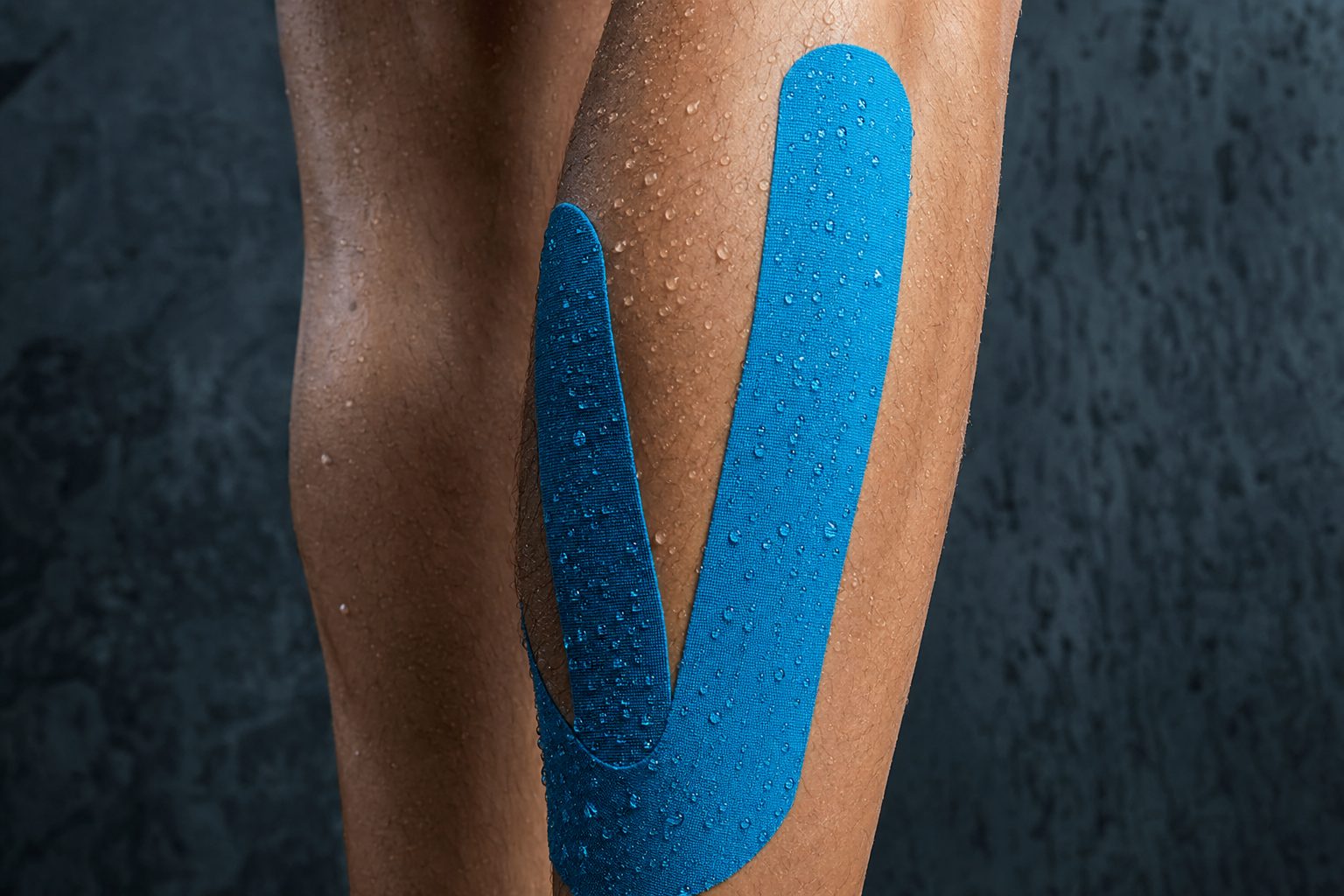
Yes — you can shower with KT tape on. Kinesiology tape is built to be water-resistant: it handles daily showers, heavy sweat, rain, and most swimming without coming off. What it is not is waterproof, and the 90 seconds after you step out of the shower decide whether your tape lasts the full 5 days or peels off overnight.
This guide covers exactly what water does to kinesiology tape, how to shower and swim without wrecking the adhesive, how to dry it properly afterward, what water exposure means for your skin, and how to remove tape cleanly once it's done its job.
Quick answer: can you shower with KT tape?
Yes. Wait 30–60 minutes after applying before any water, shower in warm (not hot) water, keep the spray off the tape edges, then pat dry and finish with a hair dryer on low for 30–60 seconds. Done consistently, TapeGeeks kinesiology tape holds through daily showers for 3–5 days.
Is KT tape waterproof or just water-resistant?
Kinesiology tape is water-resistant, not waterproof — the cotton-elastic fabric absorbs some water while the acrylic adhesive underneath resists it. That distinction is the whole story. A shower runs water over the tape for a few minutes; a hot bath soaks water into it for half an hour. The first is a non-event. The second measurably shortens wear time.
Here's what each kind of water exposure realistically does:
| Activity | Effect on the tape | What to do |
|---|---|---|
| Daily shower | None, if dried properly after | Warm water, pat dry, brief low heat |
| Sweating through a workout | None — the adhesive is designed for it | Nothing special |
| Pool swim, 30–60 min | Usually fine; edges are the weak point | Press edges down before entering |
| Ocean swim | Salt residue stiffens the fabric as it dries | Rinse with fresh water after, then dry |
| Hot bath or hot tub | Heat + soak loosens the adhesive — the worst combination | Keep the taped area out, or accept 1–2 days off the wear life |
One honest caveat: nobody has run a controlled trial on showering with kinesiology tape. The wear-time numbers in this guide come from manufacturer adhesion testing and a decade of clinic and customer feedback, not from published research — which is why different brands give slightly different advice, and why we tell you what we know versus what we've measured. The wider tape literature deserves the same honesty: a Sports Medicine meta-analysis that screened 97 articles and pooled the 10 qualifying controlled studies found little quality evidence that kinesio tape beats other elastic tapes for treating sports injuries (Williams et al., 2012). We sell TapeGeeks tape on what it reliably delivers — comfortable support, sensory feedback, and days of wear through showers and training — not on miracle claims.
So — can you shower with KT tape from TapeGeeks on day one and still have it holding on day five? Yes, provided the drying habit further down becomes automatic.
How long after applying KT tape can you get it wet?
Wait at least 30–60 minutes after applying kinesiology tape before it touches water — longer is better. The acrylic adhesive is heat-activated and bonds to skin gradually, and water hitting a half-set bond is the single most common reason tape "just fell off in the shower."
Two things make that first hour count:
- Rub every strip firmly for 20–30 seconds right after applying. The friction heat from your palm is what activates the adhesive. Skipped rubbing shows up as lifted edges by the next morning.
- Apply to clean, dry, oil-free skin. Lotion, sunscreen, or sweat under the tape halves its life before water is even involved. Our KT tape application chart covers prep, anchors and stretch for every body area.
Taping the night before a race? Apply after your evening shower and the adhesive gets 8+ hours to bond before it sees water. Athletes who do this consistently report reaching the full 5-day wear window — it's the easiest win in tape care.
How to shower with KT tape on, step by step
Showering with TapeGeeks kinesiology tape comes down to four habits. None of them add time to your shower — they just redirect it.
Warm water, not hot
Heat is what softens the adhesive. Keep the temperature moderate, especially where water hits the tape directly.
Spray off the edges
High-pressure water catching a tape edge peels it like a label. Angle the showerhead so water runs over the tape surface, not into the ends.
Wash around, not over
Soap breaks down adhesive and loofahs catch edges. Use your hand to wash around the taped area and let rinse water do the rest.
Pat dry, then low heat
Press a towel into the tape — never rub. Then a hair dryer on low, 6–8 inches away, for 30–60 seconds. Details below.
Drying KT tape after it gets wet
How you dry kinesiology tape after water exposure matters more than the water itself. Wet tape isn't damaged tape — it's tape in a vulnerable state, and the next few minutes decide which way it goes.
The drying sequence after every shower or swim. Step 3 is the one most people skip — and in our experience it's worth an extra 1–2 days of wear, which makes it the most underrated 60 seconds in tape care.
A note on the hair dryer, because brands genuinely disagree here: KT Tape advises against reheating their synthetic tape. TapeGeeks tape is a cotton-elastic weave with a heat-activated acrylic adhesive, and a brief pass on low reliably firms the bond back up. Whichever tape you use, follow its care instructions — and keep the heat low either way.
Swimming with kinesiology tape
Can you swim with TapeGeeks kinesiology tape? For most athletes, yes — triathletes shower and swim with it through daily pool sessions. The difference from showering is longer soak time and water moving across the tape with real force. Chlorine itself isn't the problem; soak duration and edge-lift are.
- Apply tape 1–2 hours before the session, minimum
- Press every edge down firmly right before entering the water — a slightly lifted corner catches current and peels
- After the session, run the full drying sequence above
- After ocean swims, rinse the tape with fresh water first — dried salt stiffens the fabric and works the edges loose
- Expect swimming to cost 1–2 days of wear life; daily swimmers typically replace tape every 2–3 days instead of 4–5
What water exposure means for your skin
The skin under kinesiology tape matters more than the tape itself, and water is part of that picture. Skin that stays damp under tape for hours — wet tape under compression sleeves, tape never dried after swims — gets soft and white (maceration) and becomes easier to irritate. It's another reason the drying sequence isn't optional.
Skin reactions to taping are real and worth respecting. A meta-analysis of kinesiology taping trials in cancer-related lymphoedema — patients wearing tape on fragile skin for extended periods — found skin complications in 10–21% of taped patients across five studies (Gatt et al., 2017). Healthy athletic skin tolerates tape far better than that, but the signal is clear: skin condition drives tolerance. True adhesive allergy — the kind that blisters — is much rarer and usually traces to rosin-based adhesives; dermatology case reports have documented bullous reactions to colophonium in medical adhesives (Christoffers et al., 2014). TapeGeeks tape is latex-free and uses a hypoallergenic acrylic adhesive — no rosin.
The rule: itching that stops when the skin dries is normal. Itching that builds, burns, or blisters means the tape comes off now — wet or not. Our guide to KT tape rash covers how to tell irritation from allergy and what to do about each.
How long does KT tape last with daily showering?
With correct application and the drying routine, TapeGeeks kinesiology tape lasts 3–5 days through daily showers. Where you land in that range depends on a few factors, most of which are set before water ever touches the tape:
| Factor | Effect on wear time |
|---|---|
| Clean, dry, oil-free skin at application | The biggest single factor — skin prep beats everything below |
| Rounded tape corners | Square corners lift within 12–24 hours; rounded ones don't catch |
| Daily shower + drying sequence | Full 3–5 days maintained |
| Daily swimming | 2–3 days |
| Hot tubs and long baths | 1–2 days off the total |
| High-movement areas (wrist, ankle, sole) | 2–3 days regardless of water habits |
If your physio or athletic therapist applied the tape, it usually needs to survive until your next appointment — which is a slightly different problem than a self-applied strip you can redo anytime. Our companion guide on SportClinicFinder, Getting the Most From Between-Visit Taping, covers that side: what clinician-applied tape is doing across the week, when early peeling matters, and when it's fine to just let it go.
How to remove KT tape cleanly (wet or dry)
Removal is where most tape-related skin damage actually happens, and water changes the rules in your favour here: the one time you want the adhesive soft is when you're taking the tape off.
- Remove after a warm shower, or oil the tape first. Warm water — or baby oil, coconut oil, or olive oil worked into the fabric for a few minutes — softens the adhesive so it releases instead of tearing at skin.
- Peel low and slow, in the direction of hair growth. Fold the tape back over itself and pull it close to the skin, not up and away.
- Press the skin down behind the peel line. Your other hand anchors the skin so the tape leaves it, not the reverse.
- Never rip it off dry. Fast removal takes the top layer of skin cells with it — that's the red, raw stripe people blame on "tape allergy" when it's really just removal technique.
Any adhesive residue left behind rubs off with a little more oil. If the skin underneath looks angry rather than briefly pink, give it a day of air before re-taping the same spot — and if you're not sure whether what you're seeing is irritation or something that needs eyes on it, our guide on when to tape vs. when to see a physio is the honest version of that call.
Still got a specific situation — tape on a kid who swims twice a day, taping over freshly shaved skin, a strip that's half-peeled after one shower? Tappy, our free AI taping assistant, lives in the chat bubble at the bottom-right of tapegeeks.com and answers exactly this kind of question, no login required.
Frequently asked questions
Kinesiology tape and water get along fine — the tape was built for sweat, showers and pools, and every rule in this guide is really the same rule: protect the edges, then dry it like you mean it. Do that and the 3–5 day wear window takes care of itself.
Shop TapeGeeks Kinesiology Tape →
Free shipping on orders over CA$50 in Canada and US$40 in the United States. Wholesale and clinic pricing is available — ask Tappy for current rates.