




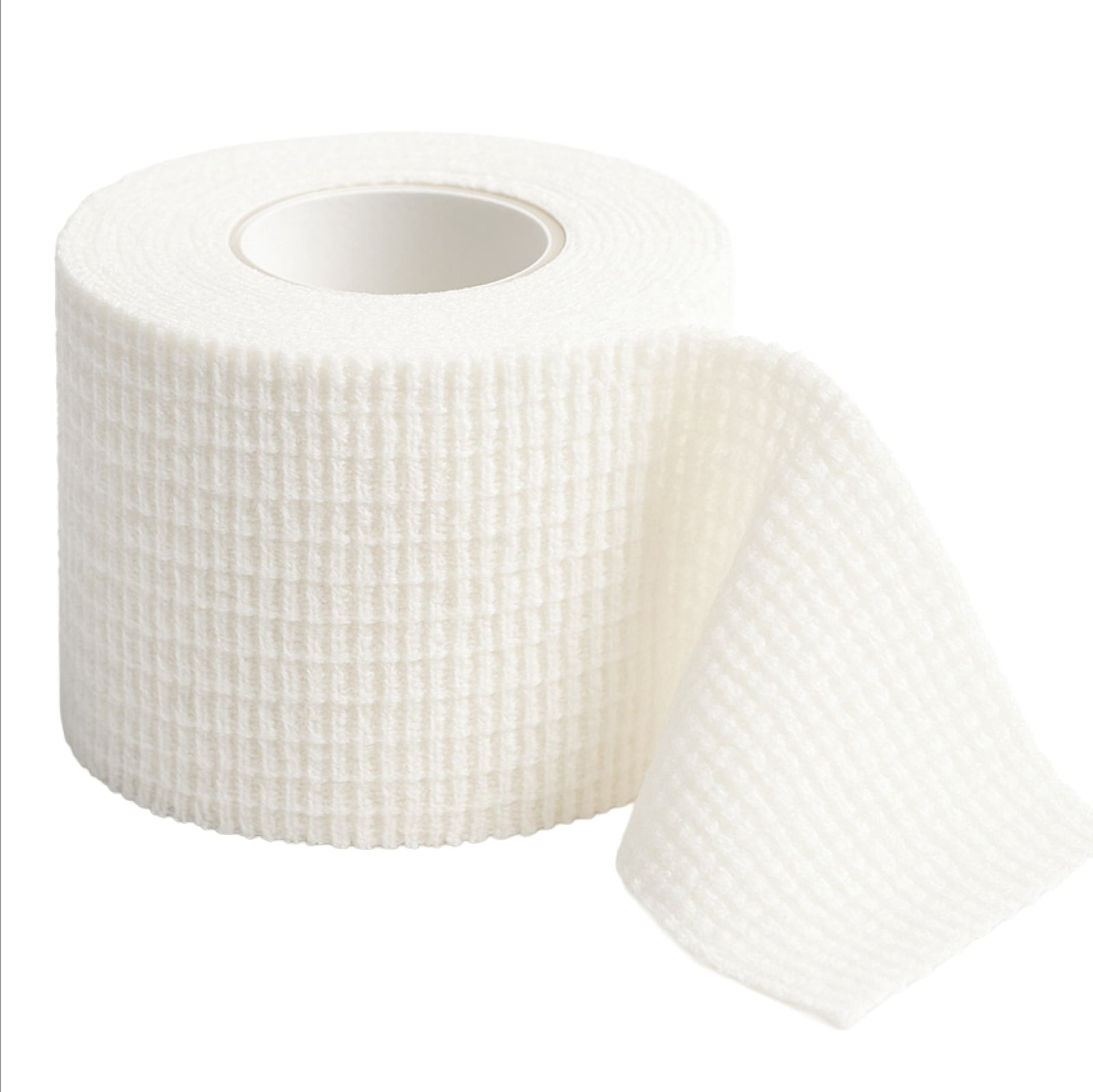

How to Tape Toes for Pointe Shoes: A Step-by-Step Guide

Quick answer: The TapeGeeks method for taping toes for pointe shoes is simple: wrap each toe that rubs once with a strip of finger tape, snug but not tight, starting and finishing on top of the toe so the overlap never sits underneath. Smooth every wrinkle, check the toe keeps its colour, then add your toe pad and shoe. Never tape over an open blister.
Taping toes for pointe shoes is a five-minute job that saves a lot of class time. Done well, the tape is one thin, smooth layer between your skin and the box. Done badly, it rolls into a ridge, bunches under the toe pad and gives you the exact blister you were trying to stop. This guide is TapeGeeks' method for taping toes for pointe shoes, taken from our Tape Like a Geek Dance Edition guide, plus the fixes for everything dancers complain about: tape that slides off, tape that makes the shoe too tight, and the blister that comes back on the same toe every week.
If you want the bigger picture on tape for dancers (ankles, arches, which colour hides on stage), start with our pillar post, Kinesiology Tape for Dancers. This one is just toes.
What you need to tape toes for pointe
You need four things to tape toes for pointe: finger tape, scissors, clean dry feet and short toenails.
- Finger tape, 1.5 inch. TapeGeeks finger tape is a thin cotton and spandex tape that tears by hand. For small toes, cut a strip in half lengthwise so it's about 3/4 inch wide. It comes in white or black. Inside a pointe shoe nobody sees it, so colour matters less than you'd think.
- Sharp scissors. Rounded ends peel less. Non-stick taping scissors stop the glue gumming up the blades.
- Dry skin. Wash off lotion, dry between the toes, and tape before your feet start to sweat.
- Trimmed nails. Cut them short and straight across the day before, not five minutes before class.
How to tape toes for pointe shoes, step by step
TapeGeeks breaks taping toes for pointe shoes into four steps: cut, wrap once, protect the tip if needed, then smooth and check before the shoe goes on.
Cut and round
Cut a strip long enough to go once around the toe plus a small overlap. Round both ends with scissors.
Tip strip (only if needed)
Sore tip or nail? Lay a short strip from the top of the toe, over the tip, to the underside. The wrap holds its ends down.
Wrap once, overlap on top
Wrap the toe once, snug but not tight. Start and finish on top of the toe so the overlap never sits underneath.
Smooth, check, then shoe
Smooth every wrinkle (wrinkles make blisters). Check the toe keeps its normal colour. Then toe pad and shoe.
The overlap is the part that fails. When it sits under the toe, every rise onto pointe grinds it against the platform until the edge lifts and the tape rolls. On top of the toe it has nothing to catch on.
Two more rules. Tape only the toes that rub, not all ten. And give yourself a minute: if the toe throbs once the shoe is laced, the wrap is too tight, because feet swell as class goes on. Pointe Magazine's blister guide makes the same point, quoting UCSF podiatrist Monara Dini, who recommends taping any spot where the shoe rubs but warns that feet swell through the day, so you shouldn't wrap too tightly (Pointe Magazine).
Which toes to tape, and how toes sit in a pointe shoe
In a well-fitted pointe shoe the toes lie straight and close together in the box, and most of the load goes through the big toe and the toes next to it.
Fit guides put it simply. Dance Spirit's Pointe Shoes 101 says a properly fitted shoe should feel snug when you're standing flat, with the toes touching the inside of the box, "but toes should be straight, not crunched" (Dance Spirit). A 1985 pressure study in the journal Foot & Ankle found that the big toe side of the foot always bore the most pressure en pointe, and that pressure on the second toe changed with toe length and padding (Teitz et al., 1985).
So the toes that usually need tape are predictable:
- Big toe tip and nail. It takes the most load. A tip strip under the wrap helps a sore nail.
- Outer side of the little toe. It gets squeezed against the side of the box. This is the classic pointe blister spot.
- A second toe that's longer than the big toe. It can end up carrying more than its share, so its tip rubs.
- Any toe with a corn or an old hot spot. Tape it before it becomes a blister, not after.
Your own rub spots are the ones that count. Check your feet after class for a week: red, shiny or tender spots are where tape goes next time. If a toe has to curl to fit in the box, the shoe is too short, and no tape fixes that.
Toe tape, finger tape, kinesiology tape, gel pads or Second Skin?
Toe tape, finger tape and kinesiology tape are tapes, while gel toe pads and Second Skin are padding or dressings that need tape or a toe cap to stay put.
Dancers mix these up all the time. This is how they compare inside a pointe shoe.
| Product | What it is | Best for | Watch out for |
|---|---|---|---|
| Dance "toe tape" | Thin fabric or foam tape sold for pointe | A light single wrap | Foam versions add bulk in the box |
| Finger tape (TapeGeeks 1.5") | Thin cotton/spandex tape, tears by hand | The single snug wrap in this guide; halve it for small toes | White or black only; wrap too tight and toes go pale |
| Kinesiology tape | Stretchy cotton tape with acrylic glue | Ball of the foot for barefoot work; some dancers wrap toes with a narrow strip, no stretch | Thicker than finger tape; edges lift if not rounded |
| Gel toe pads / caps | Silicone or gel padding, not tape | Cushioning the whole box | Changes fit; can trap sweat |
| Second Skin | Hydrogel pad, not tape | A hot spot or a closed blister, held by tape | Slides unless something holds it down |
| Lambswool / paper towel | Loose padding | Dancers who want to feel the floor | Bunches if it shifts |
Second Skin surprises people. Spenco describes its moist pads as a water-based hydrogel barrier, 96% water, which is why they feel cool and why they need tape over them (Spenco). Professionals combine them. Los Angeles Ballet's Jasmine Perry told Pointe Magazine she puts 2nd Skin squares on a hot spot and tapes around the toe for extra cushion (Pointe Magazine). That's tape doing its proper job: holding something in place and cutting friction, not padding the whole shoe.
My take: start with one wrap of finger tape on the toes that rub plus whatever toe pad you already use. Change one thing at a time. If you swap the tape, the pad and the shoe in the same week, you'll never know which one fixed it.
What goes wrong when you tape toes for pointe, and the fix
Most toe-taping problems come from the same four mistakes: damp skin, the overlap underneath, too many layers, and wrapping too tight.
| Problem | Why it happens | Fix |
|---|---|---|
| Tape rolls or slides off | Sweat, lotion, wrinkles, or the overlap sits under the toe where it grinds on the platform | Dry skin, tape before you warm up, start and finish on top, round the ends, smooth every wrinkle |
| Shoe suddenly feels too tight | Tape plus a thick pad adds up, especially on several toes | One layer only, tape fewer toes, try a thinner pad. Don't size the shoe around the tape |
| Same blister, same toe, every week | Usually the shoe, not the tape: wrong length, width or box shape | See a pointe shoe fitter and bring the shoes you dance in |
| Toe goes pale, purple, numb or tingly | Wrap is too tight, and feet swell during class | Take it off now and rewrap looser |
| Removal hurts or leaves residue | Ripping tape off fast pulls skin, especially over a blister | Soak in baby oil or warm water, peel slowly back along the skin while holding the skin down |
The recurring blister deserves its own line. Pointe Magazine quotes UCSF podiatrist Diana Werner: "Chronic blisters are a sign that your feet have changed," and if blisters suddenly become a problem, consider getting refitted (Pointe Magazine). Tape can cover a fit problem for a while. It can't fix it.
On residue: if tape leaves your skin red or itchy every time, read our guide to tape and sensitive skin before you try another brand.
When not to tape your toes for pointe
Don't tape over an open blister, raw skin or a fresh toe injury, and don't use tape to keep dancing through sharp pain.
An open blister needs a dressing first. Victoria's Better Health Channel puts it plainly: "Don't use tape alone for the dressing, as removing the tape may rip the roof skin off the blister" (Better Health Channel). Cover it with a non-stick dressing or blister plaster, and let it heal. HSS gives the same rule for kinesiology tape: it should not be put on open wounds (HSS).
A toe that's suddenly painful, swollen, bruised under the nail or won't let you push off is not a taping job. Stop, and get it assessed. That's the approach in the IADMS First Aid for Dancers paper, and it's our studio rule too: tape is for the achy, not the injured. Need someone who treats dancers? Search a physio or podiatrist near you.
Red boxes are the times tape makes things worse. The lime box at the bottom is the only path where taping is the answer, and even then you check again in two weeks. If the spot keeps coming back, the fitter visit is cheaper than another month of blisters.
Does taping your toes for pointe really work?
Taping your toes for pointe works as a friction barrier on known hot spots, but no study has shown that toe tape prevents blisters or injuries in dancers.
I'd rather tell you that than oversell it. What the research does show:
- Dancers' feet take a beating. A 2023 pilot study published in Medical Problems of Performing Artists examined 51 professional ballet dancers and found that every one had at least one skin lesion on the feet, with hyperkeratosis (thick, hard skin) in 96.1% (Zahn et al., 2023).
- Feet and ankles are where dance injuries pile up. A JOSPT study of 204 pre-professional dancers aged 9 to 20 found that 53% of their injuries were to the foot or ankle (Gamboa et al., 2008).
- Padding changes where pressure lands. The 1985 Foot & Ankle study found second-toe pressure varied with padding, and its authors said more research was needed before anyone could claim padding cuts toe problems (Teitz et al., 1985).
So TapeGeeks' view of taping toes for pointe shoes is plain: it's a sensible, cheap layer of protection, backed by how blisters form (friction, pressure and moisture) rather than by a trial. It won't straighten a toe, fix a bunion or make a bad fit good. Anyone selling it as more than that is guessing.
Bonus: taping the ball of the foot for barefoot classes
Barefoot dancers protect the ball of the foot with one short strip of kinesiology tape laid with no stretch, which is TapeGeeks' Dance Edition guide 2.
This one's for contemporary, lyrical, modern and jazz days, when the problem is split skin or floor burn under the toes, not the pointe box.
- Wash and alcohol-wipe the sole, and let it dry fully.
- Cut a 4-inch strip of 2-inch TapeGeeks kinesiology tape and round the corners. Beige disappears on stage.
- Sit with the toes gently pulled back. Lay the strip across the ball of the foot just below the toes, no stretch, ends wrapping a little up each side.
- Bigger area? Add a second strip overlapping the first by half, also with no stretch.
- Rub for 20 seconds. Tape at least an hour before class so the glue sets.
Turns are hard on tape, so rub the edges down well. Skin that has already split needs a dressing and time, not tape on top.
For dance teachers and studios
Dance teachers can teach the TapeGeeks method for taping toes for pointe shoes in one class and keep finger tape in the studio kit for the whole pointe group.
The TapeGeeks Club & Studio Program gives your studio one code for 40% off: no minimums, no expiry (it can't be combined with other offers). Our free taping guides are there for students and parents too. Our guide to common dance injuries (what tape can and can't do) publishes November 17, and a full dance studio first aid kit list follows on November 24.
Frequently asked questions
What do ballerinas use to tape their feet?
Does taping your toes really work for pointe?
Why does my toe tape fall off in pointe shoes?
How do toes sit in pointe shoes?
Can I straighten my toes with tape?
Do you need toe pads for pointe shoes if you tape your toes?
How do I treat a blister on my little toe from pointe shoes?
How do you tape a toe injury for dance?
Can I use kinesiology tape on my toes for pointe?
Before your next pointe class
Check your feet tonight, mark the toes that rubbed, and tape only those before your next pointe class.
Got a toe-taping trick that works for you, or a problem this didn't cover? Tell us. We update this guide with what dancers send in.
Educational content only, not medical advice.