



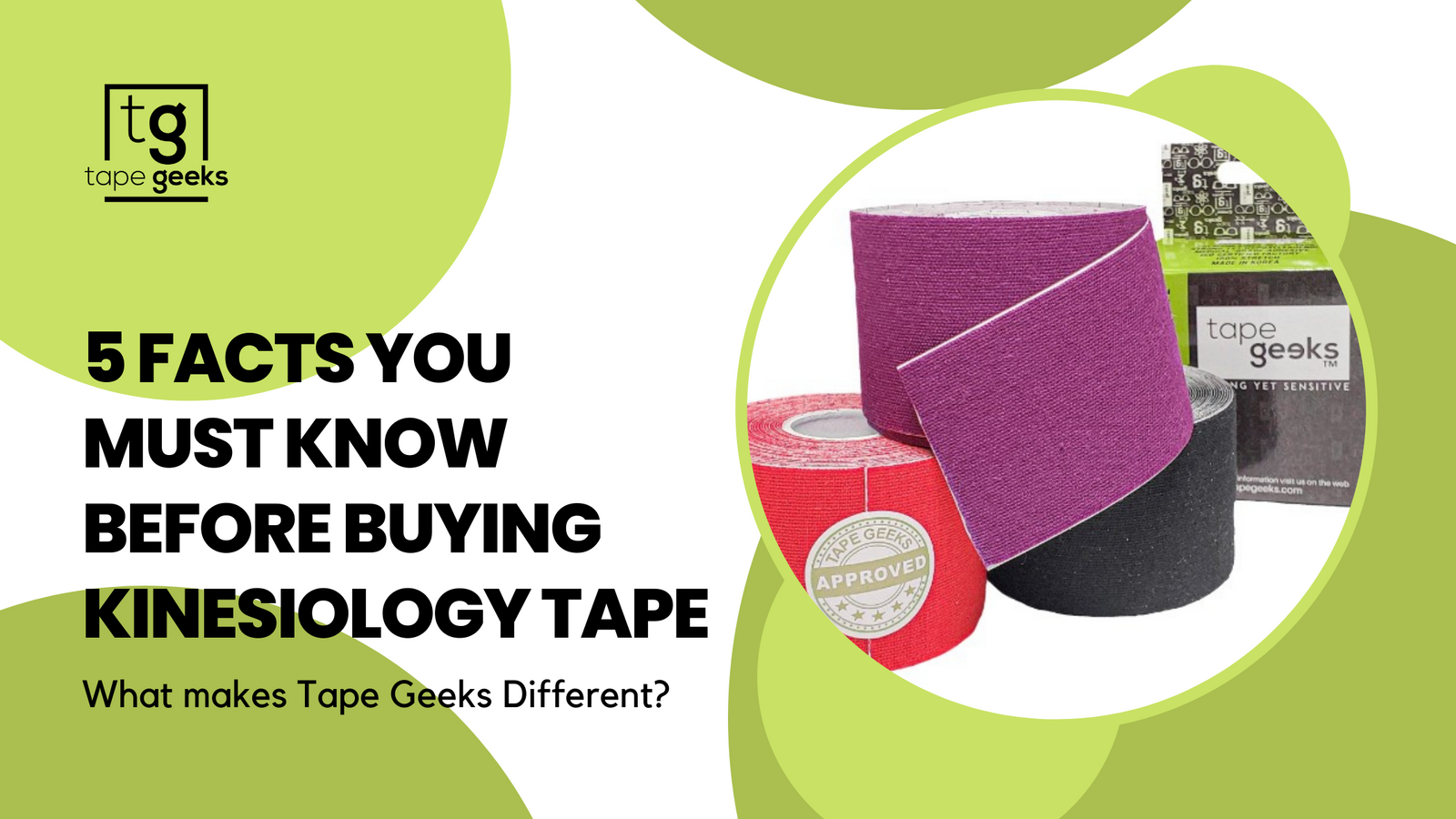
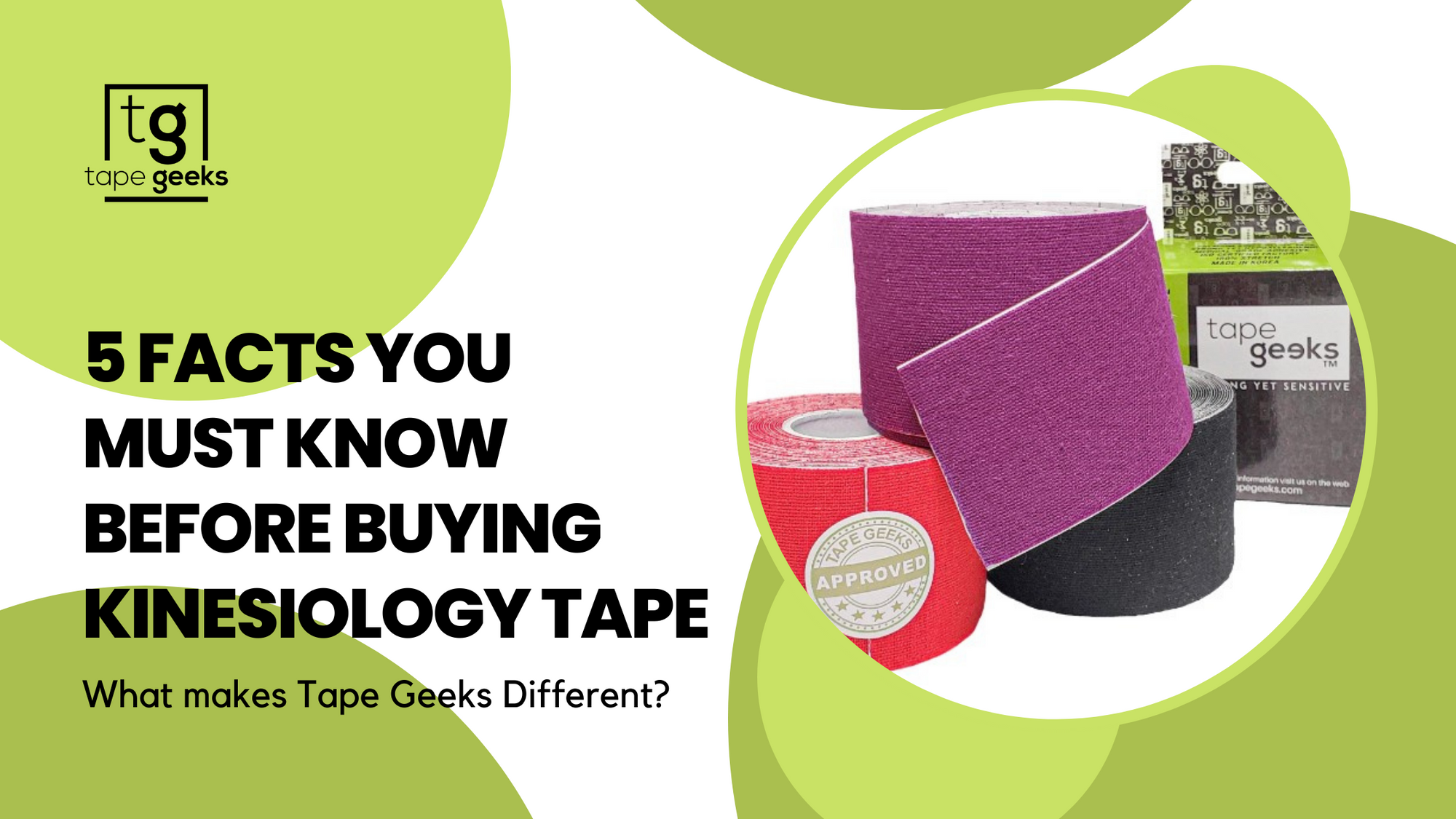
Not all kinesiology tape is the same. Walk into any pharmacy or scroll through Amazon and you'll find dozens of brands ranging from $6 to $30 a roll — and the price difference is not random. Before you buy kinesiology tape, there are 5 facts that will determine whether you get real results or just sticky disappointment. TapeGeeks kinesiology tape is built around every one of these principles.
The 5 things to know before buying kinesiology tape: 1) elasticity must be 130-160% for skin-lifting to work, 2) cotton backing outperforms synthetic for breathability, 3) tension applied during taping determines what the tape actually does, 4) the tape must stay on through water and sweat for 3-5 days to be worth using, 5) it works best for pain, proprioception, and swelling — not structural joint immobilization.
Fact 1: Elasticity Percentage Is the Single Most Important Spec
Kinesiology tape works because it stretches — and then recoils. The elastic tension creates a lifting force on the skin that increases the interstitial space between the skin and underlying fascia. This is what reduces pressure on pain receptors, stimulates lymphatic drainage, and provides the proprioceptive feedback that makes the tape clinically useful.
The target elasticity range is 130-160% of resting length. This matches the natural extensibility of human skin. Tape with less elasticity won't create sufficient lift. Tape with more elasticity becomes a compression bandage and can restrict circulation.
How to Check Elasticity Before Buying
Cut a 10cm strip. Measure it relaxed. Then stretch it to resistance and measure again. It should reach 13-16cm at full stretch. Cheap tape often reaches only 120-125%, which significantly reduces its therapeutic effect. TapeGeeks kinesiology tape is manufactured to 150% elongation — within the clinical sweet spot used by physiotherapists worldwide.
A 2021 study examining kinesiology tape properties confirmed that tape elasticity directly influences cutaneous mechanoreceptor stimulation intensity, which is the primary neurological mechanism behind proprioception improvement and pain modulation.
Fact 2: Cotton vs. Synthetic Backing Changes Everything
The fabric layer of kinesiology tape — the part that sits against your skin — comes in two main types: 100% cotton and synthetic (usually nylon or polyester blends). This choice directly affects how long the tape lasts, how your skin feels under it, and whether it's suitable for long wear during exercise.
Cotton Backing: The Clinical Standard
Cotton-backed kinesiology tape, like TapeGeeks kinesiology tape, is the gold standard for therapeutic applications. Cotton allows the skin to breathe — moisture vapor escapes through the fabric, preventing the maceration (skin softening) that leads to irritation and early tape edge lifting. For multi-day wear and high-sweat activities, cotton-backed tape stays adhered longer and causes fewer skin reactions.
Synthetic Backing: Performance in Short Bursts
Synthetic-backed tape can be more water-resistant for single-session aquatic activities, but it traps heat and moisture against the skin during prolonged wear. Athletes who wear synthetic kinesiology tape for 48+ hours often report edge peeling, skin redness, and folliculitis (hair follicle inflammation). For multi-day recovery applications, cotton wins every time.
Adhesive quality matters too. Cheap tape uses lower-grade acrylic adhesive that either fails in humidity or leaves adhesive residue that damages skin on removal. Medical-grade acrylic adhesive — the standard in TapeGeeks kinesiology tape — is designed for 72-120 hour wear, releases cleanly, and is latex-free and hypoallergenic.
Fact 3: How You Apply It Determines What It Does
This is the most misunderstood aspect of kinesiology tape. The same roll of tape does completely different things depending on the tension applied during application. Buying a quality product like TapeGeeks kinesiology tape and then applying it incorrectly will give you zero results.
Tension Guide for Different Goals
| Goal | Tension Level | How to Apply |
|---|---|---|
| Lymphatic drainage / swelling | 0% (no stretch) | Fan-cut strips applied relaxed over swollen area |
| Pain modulation | 25-50% | Along the painful muscle or fascia in lengthened position |
| Muscle facilitation | 25-35% | Origin to insertion direction |
| Muscle inhibition | 15-25% | Insertion to origin direction |
| Mechanical joint support | 50-75% | Over the joint in functional position |
The anchors (first and last 2-3cm of each strip) are always applied with 0% tension — no stretch at the ends. This prevents skin shearing and blistering at the tape edges.
A 2022 study on kinesiology taping technique confirmed that tension level is the primary variable that determines whether the tape facilitates or inhibits muscle activity, and whether it achieves a decompression or compression effect on underlying tissue.
Fact 4: "Waterproof" Has a Specific Meaning — Know What to Expect
Every quality kinesiology tape brand — including TapeGeeks — claims to be water-resistant. Before you buy kinesiology tape based on this claim alone, understand what it actually means in practice.
What "Water-Resistant" Kinesiology Tape Can Handle
- Showering (normal water pressure, brief exposure)
- Sweating during exercise — including heavy training
- Swimming laps (brief pool sessions)
- Rain and outdoor moisture exposure
What Degrades Kinesiology Tape Adhesion
- Chlorine exposure for extended periods — pool water degrades acrylic adhesive over time
- Hot tub or spa water — high temperature and jets both accelerate adhesive failure
- Rubbing with a towel immediately after water exposure — pat dry, don't rub
- Oil-based lotions or sunscreen applied over the tape — these penetrate the fabric and break down adhesive
- Hair in the application area — shaved or clipped skin gives dramatically better adhesion (24-48 hours longer wear)
TapeGeeks kinesiology tape applied correctly to clean, dry, oil-free, and ideally hairless skin will reliably last 3-5 days through normal activity including daily showers. For competitive swimmers or patients in extended aquatic rehab, reapplication every 48 hours is more realistic.
Maximizing Tape Longevity
After applying TapeGeeks kinesiology tape, firmly rub your hand back and forth over the entire tape surface for 30 seconds. The adhesive is heat-activated — body heat combined with friction activates maximum adhesion. Wait at least 30-60 minutes before exercising or showering after a fresh application.
Fact 5: Know What It Can and Cannot Do
The marketing around kinesiology tape sometimes oversells what it's clinically proven to do. Before you buy kinesiology tape for a specific purpose, make sure you understand where the evidence is strong versus where claims outrun the data.
Strong Evidence: What Kinesiology Tape Does Well
- Pain reduction — clinically significant in multiple meta-analyses (SMD = -0.42, p < 0.001 for knee OA in 1,509 patients)
- Lymphedema and swelling reduction — 14-RCT meta-analysis confirmed significant improvements in limb volume and function (Yang et al., 2024)
- Proprioception enhancement — multiple studies confirm improved joint position sense and balance in athletes with ankle instability
- Isokinetic muscle strength support — SMD = 0.72 for knee OA patients (Mao et al., 2021)
- Postural cueing — continuous tactile feedback for thoracic and cervical posture correction
Weak or No Evidence: What Kinesiology Tape Does NOT Do
- Structural joint immobilization — for ligament instability requiring mechanical stabilization, rigid athletic tape or bracing is needed
- Isometric muscle strength improvement — the Mao 2021 meta-analysis found no significant effect on isometric strength
- Long-term pain relief after removal — benefits are active only while the tape is worn
- Performance enhancement in healthy athletes — most studies show no statistically significant performance gains in uninjured subjects
- Treatment of structural damage — torn ligaments, stress fractures, and labral tears require medical intervention; tape is an adjunct, not a cure
Who Should NOT Use Kinesiology Tape
- Open wounds, burns, or broken skin in the application area
- Known acrylic adhesive allergy (always do a 24-hour patch test first)
- Active deep vein thrombosis — do not use lymphatic taping without medical clearance
- Active skin infections or fungal conditions under the tape area
- Fragile elderly skin — use minimal tension and remove with oil-based remover
TapeGeeks Kinesiology Tape: How It Measures Up
TapeGeeks kinesiology tape is designed to meet clinical standards on all 5 facts above:
- 150% elongation — within the 130-160% therapeutic range
- 100% cotton backing — breathable, skin-friendly, suitable for 3-5 day wear
- Medical-grade acrylic adhesive — latex-free, hypoallergenic, wave-pattern coating for consistent adhesion
- Available in pre-cut and roll formats — for body-specific applications and custom cuts
- Used by physiotherapists, athletic trainers, and coaches — not a drugstore product with drugstore quality
Frequently Asked Questions
 Tappy AI assistant