




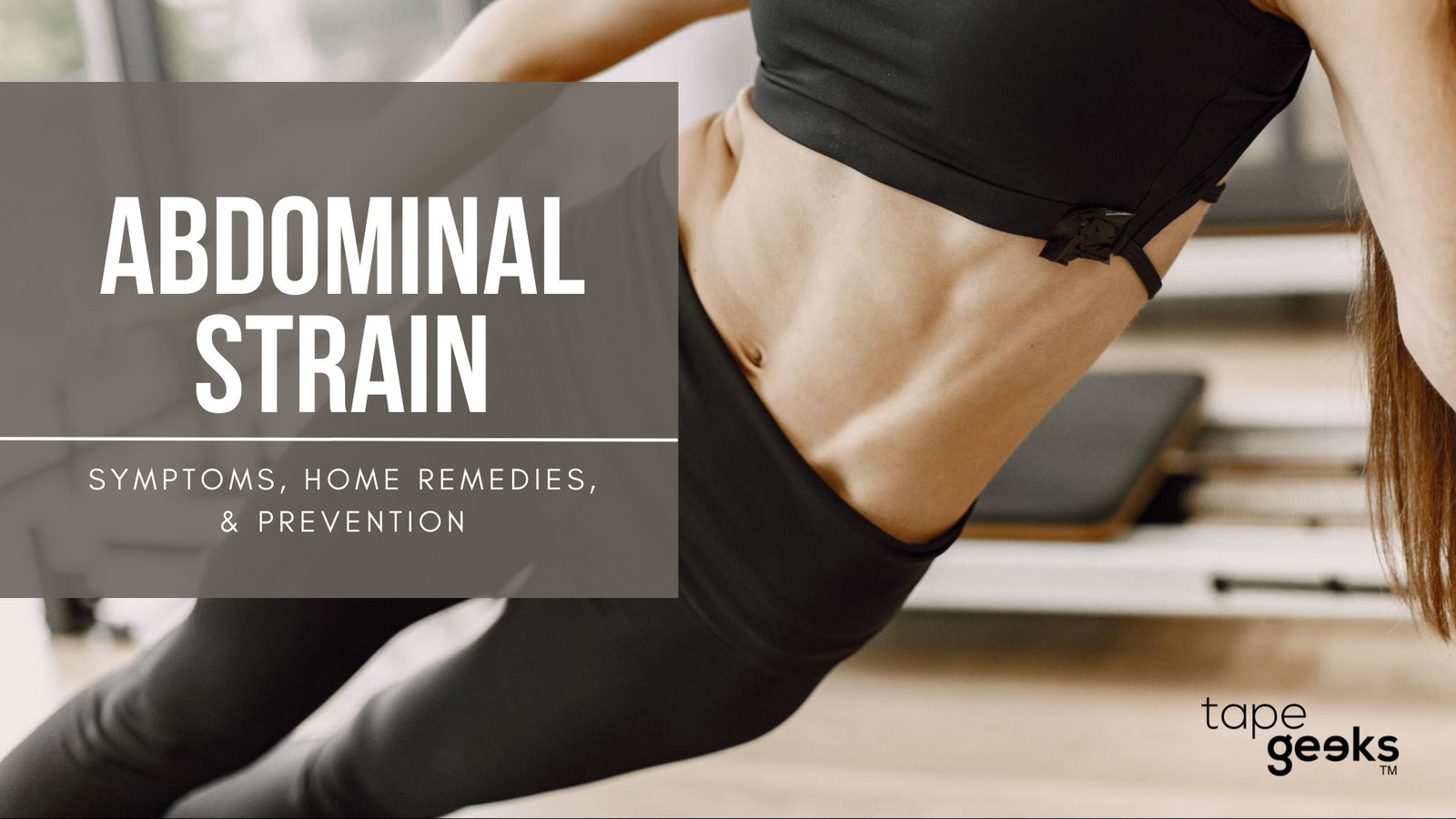

An abdominal strain is a tear or overstretching of one or more of the abdominal muscles — the rectus abdominis, internal obliques, external obliques, or transversus abdominis. It happens most often during explosive rotational movements, heavy lifting, or high-intensity sport, and it can make everything from coughing to getting out of bed genuinely painful. TapeGeeks kinesiology tape is one of the most effective ways to support a strained abdominal muscle during recovery — reducing pain, protecting the tissue from further damage, and helping you get back to full activity faster.
Abdominal kinesiology taping involves applying TapeGeeks kinesiology tape in a fan or I-strip pattern over the affected abdominal muscle with 25–50% tension to decompress the injured tissue, reduce pain, and support movement. Combined with the PRICE protocol and progressive core rehabilitation, most Grade 1–2 abdominal strains resolve in 2–6 weeks. Grade 3 tears require medical evaluation and a longer recovery of 6–12 weeks.
The Abdominal Muscles: What Gets Injured?
The abdominal wall is made up of four distinct muscle layers, each with a different orientation and function. Understanding which muscle is injured helps determine the right taping technique and rehabilitation approach.
| Muscle | Location | Function | Most Common Injury Cause |
|---|---|---|---|
| Rectus Abdominis | Central "six-pack" muscle, runs vertically | Trunk flexion (forward bending) | Sit-up overload, crunching, rowing |
| External Obliques | Outer abdominal wall, diagonal fibres | Trunk rotation and lateral flexion | Swinging sports (baseball, golf, tennis) |
| Internal Obliques | Beneath external obliques, opposite diagonal | Rotation to same side | Throwing, explosive rotation |
| Transversus Abdominis | Deepest abdominal layer, wraps horizontally | Core stability and intra-abdominal pressure | Heavy lifting with poor bracing technique |
In sports and fitness settings, the oblique muscles are the most commonly strained. Baseball pitchers, tennis players, golfers, and rowers are particularly vulnerable due to the high-velocity rotational loads their sport demands. The rectus abdominis is more commonly strained during exercises like sit-ups, leg raises, and rowing where repetitive trunk flexion is involved.
Abdominal Strain Grades
Like all muscle strains, abdominal strains are classified in three grades based on tissue damage:
| Grade | Damage | Symptoms | Recovery Time |
|---|---|---|---|
| Grade 1 | Mild fibre microtears (<10%) | Mild ache or tightness, minimal strength loss, painful only at end range | 2–3 weeks |
| Grade 2 | Partial tear (10–50% of fibres) | Sharp pain during activity, pain with coughing/sneezing, visible bruising, weakness | 4–6 weeks |
| Grade 3 | Complete rupture | Severe pain, significant bruising/swelling, potential visible defect in muscle, may need surgery | 6–12+ weeks |
What Causes an Abdominal Strain?
Abdominal strains follow a predictable pattern: the injury occurs when a forceful contraction or sudden stretch of the abdominal muscles exceeds the tissue's capacity to handle the load. The most common causes are:
- Explosive rotational movements — throwing, swinging a bat or racket, or sudden twisting during contact sport is the most common cause of oblique strain
- Heavy overhead lifting — especially when the trunk isn't braced and the load is shifted laterally
- Repetitive trunk flexion — repeated sit-up or crunch exercises, particularly when volume is increased too quickly
- Valsalva maneuver under load — forceful breath-holding during heavy compound lifts (squats, deadlifts) spikes intra-abdominal pressure and can strain the deepest abdominal layers
- Direct blow — a hit to the abdomen in contact sports can cause contusion and underlying muscle strain simultaneously
- Poor warm-up — beginning high-intensity rotational sport without progressive warm-up significantly increases the risk of acute oblique strain
- Fatigue — late in training sessions or competitions when the core is fatigued, force is less efficiently distributed and individual fibres take more load
Symptoms of Abdominal Strain
The location and nature of pain from an abdominal strain depend on which muscle is affected and how severe the tear is. Common symptoms include:
- Sharp pain during the inciting activity — often described as a "pull" or "stab" that occurs suddenly during rotation, lifting, or throwing
- Pain with coughing, sneezing, or laughing — one of the hallmark complaints with abdominal strain; forceful diaphragm contraction loads the abdominal wall
- Difficulty sitting up from lying — trunk flexion under any load is painful with a rectus abdominis or oblique strain
- Pain with deep breathing — especially at the end range of inspiration, which stretches the obliques
- Localized tenderness — pressing on the strained muscle belly produces a sharp, point-specific pain response
- Bruising and swelling — more common in Grade 2 and Grade 3 strains; may appear 24–48 hours after injury
- Muscle guarding — the surrounding abdominal muscles tighten reflexively to protect the injury, creating a wider area of stiffness
Important: abdominal pain can also signal more serious conditions including appendicitis, hernia, or internal organ injury. If pain is severe, accompanied by fever, nausea, vomiting, or extends below the navel, seek emergency medical assessment immediately.
Treatment: Phase-by-Phase Abdominal Strain Recovery
Phase 1 — Acute (Days 1–3)
- Rest from aggravating activities — stop any sport or exercise that loads the injured muscle. Gentle walking is fine.
- Ice the area — 15–20 minutes every 2–3 hours for the first 48 hours to reduce acute inflammation and pain
- Compression — a compression garment or lightly wrapped TapeGeeks kinesiology tape can help manage swelling
- Pain management — NSAIDs (ibuprofen, naproxen) can manage pain and inflammation in the acute phase if appropriate for your health history
- Modify activities of daily living — log-roll when getting out of bed (roll to your side first, then push up) to avoid loading the injured muscle with a direct trunk flexion pattern
Phase 2 — Sub-Acute (Week 1–3): Gentle Loading + Taping
Once acute pain is settling, begin gentle, progressive core rehabilitation. The goal in this phase is to restore pain-free range of motion and begin low-load muscle activation without re-stressing the healing fibres.
- Diaphragmatic breathing — deep belly breathing that expands the lower ribcage; activates the transversus abdominis without loading the injured obliques
- Pelvic tilts — lying on your back with knees bent; gently flatten the lower back into the floor and release; activates the core in a very low-load pattern
- Dead bug (modified) — lying on your back, one arm and the opposite leg extended slowly; builds anti-rotation and anti-flexion core strength without oblique overload
- TapeGeeks kinesiology tape applied during this phase — supports the muscle belly, provides proprioceptive feedback, and allows higher-quality movement practice with less pain inhibition
Phase 3 — Progressive Loading (Week 3–6)
- Pallof press — anti-rotation cable exercise that loads the obliques progressively; one of the best sport-specific core rehab exercises
- Side plank (modified) — begins on knees and progresses to full side plank as strength returns
- Rotational medicine ball throws — introduced late in Phase 3 once trunk stability is established; replicate the rotational demands of sport
- Sport-specific movements — running, throwing, hitting are reintroduced at 50% intensity and progressed based on pain response
How to Apply TapeGeeks Kinesiology Tape for Abdominal Strain
Kinesiology tape applied to the abdominal region works by decompressing the injured muscle tissue, reducing local pain via sensory modulation, and providing proprioceptive cues that help the athlete move with more confidence and less compensation. Here are two proven application methods:
Method 1 — I-Strip for Rectus Abdominis Strain
- Position: Lie on your back, arms overhead to gently stretch the abdomen
- Cut: A full I-strip long enough to span from just below the sternum to the pubic area
- Anchor: Peel 5 cm of backing and anchor below the sternum with no stretch
- Apply: Peel the backing while applying 25–50% tension downward along the rectus abdominis muscle belly
- Finish: Lay the final 5 cm anchor above the pubic bone with no tension
- Activate: Rub along the strip briskly to activate the heat-sensitive adhesive
Method 2 — Fan Strip for Oblique Strain
- Position: Stand with the unaffected side gently bent away from the injury to slightly stretch the oblique
- Cut: Cut a Y-strip or a fan of 2–3 I-strips that will cover the oblique from the lower ribs to the hip
- Anchor: Begin the anchor at the lower ribs with no stretch
- Apply fans: Spread the fan strips diagonally across the oblique muscle belly following the fibre direction with 25–50% tension
- Finish: Lay each tail end down at the hip with no tension
TapeGeeks kinesiology tape should be worn for 3–5 days per application. Give the skin 12–24 hours to rest between applications. Avoid stretching or peeling the tape with force — soak in warm water to ease removal if needed.
Taping an abdominal strain?
Core taping uses longer strips, so grab 2” TapeGeeks K Tape (or two rolls for free shipping). Recovering athletes usually re-tape every 3–4 days through weeks 2–6 — the KT tape application chart for every body part shows the full protocol plus neighbouring areas like lower back.
Shop Kinesiology Tape →🚚 Free shipping on orders CA$50+ (Canada) • US$40+ (USA)
Preventing Abdominal Strains
Because most abdominal strains happen during explosive rotational movements or sudden loading spikes, the most effective prevention strategies target those specific risk factors:
- Progressive warm-up before rotational sport — include thoracic rotation mobility work, hip circles, and light medicine ball rotations before any swinging or throwing activity
- Anti-rotation and anti-lateral flexion core training — Pallof press, suitcase carries, and side plank variations build the obliques' capacity to resist the rotational forces that cause strains during sport
- Gradual load increases — avoid increasing training volume by more than 10% per week; oblique strains in throwing athletes are frequently caused by preseason spikes in throwing volume
- Breathing mechanics under load — learning to brace the core with a 360-degree breath (not just sucking in the belly) before heavy lifts protects all four abdominal muscle layers
- Adequate recovery — fatigued core musculature loses its ability to stabilize the spine and distribute load evenly; ensure adequate rest days between high-intensity sessions
Which TapeGeeks tape should you choose for abdominal strain?
For most abdominal taping, start with Shop All Kinesiology Tape so you can cut long I-strips or fan strips around the rectus abdominis and obliques. If you tape often for training or clinic use, Bulk Kinesiology Tape Roll is the better value because abdominal applications use longer strips than wrist, thumb, or ankle taping.
If you prefer faster repeat applications, keep Precut K Tape for smaller support jobs and use a standard roll when you need custom abdominal strip length. Runners and field-sport athletes can also use RunMate Pro to watch training load, shoe mileage, and return-to-run patterns while the core settles.
Quick rule: custom abdominal strips → standard K tape roll; frequent team or clinic taping → bulk roll; smaller repeat support jobs → precut tape; return-to-running habits → RunMate Pro.
Breathing changes the application. Abdominal taping with TapeGeeks tape is applied at partial exhale, because taping at full inhale leaves the strip slack for the rest of the day. Round the corners — abdominal taping with TapeGeeks strips tends to catch on clothing at the waistband. Expect abdominal taping with TapeGeeks tape to hold two to three days rather than the usual five, since the area flexes constantly.
Because the abdominal wall moves with every breath, abdominal taping with TapeGeeks tape should be applied at partial exhale rather than full stretch. TapeGeeks bulk roll suits abdominal taping better than precut strips, since the strips need to span the full length of the oblique.
Shop TapeGeeks bulk roll →Keep reading
Frequently Asked Questions
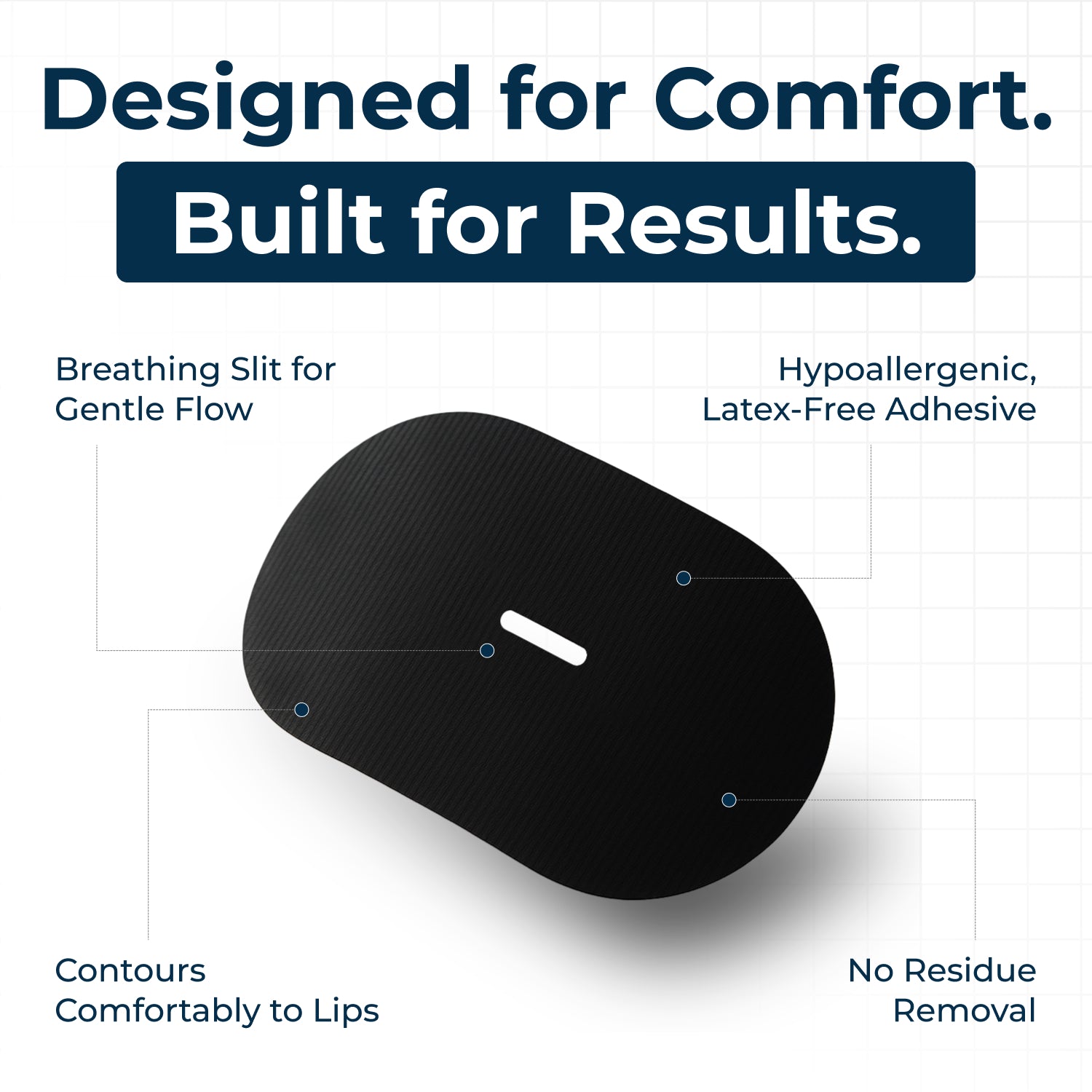

Mouth taping means taping your lips closed at night to breathe through your nose. Here is what the 2022-2025 studies actually found, who should never try it, what doctors and dentists say, and why Amazon stopped selling mouth tape.